Skip to content
  • Home
  • Writing Services
    • Ghost Writing
    • e-Book Writing
    • Fiction Writing Services
    • Non-Fiction Writing Services
    • Memoir Writing Services
    • Novel Writing Services
    • Biography Writing Services
    • Autobiography Writing Services
  • Publishing Services
    • E-Book Publishing
    • Amazon Publishing Services
  • Editing Services
    • Book Editing
    • Book Proofreading
    • Book Formatting
  • Other Services
    • Book Marketing
    • Audio Book
    • Book Formatting
    • Blog Writing
    • Website Content Writing
    • Book Cover Design
    • Book Video Trailer
    • Author Website Design
    • Article Writing
  • Resources
    • Blogs
    • Case Studies
    • Testimonials
    • FAQs
    • About Us
    • Contact Us
logo
  • Home
  • Writing Services
    • Ghost Writing
    • e-Book Writing
    • Fiction Writing
    • Non-Fiction Writing
    • Memoir Writing
    • Novel Writing
    • Biography Writing
    • Autobiography Writing
  • Publishing Services
    • E-Book Publishing
    • Amazon Publishing
  • Editing Services
    • Book Editing
    • Book Proofreading
    • Book Formatting
  • Other Services
    • Book Marketing
    • Audio Book
    • Blog Writing
    • Website Content Writing
    • Book Cover Design
    • Book Video Trailer
    • Author Website Design
    • Article Writing
  • Resources
    • Blogs
    • Case Studies
    • Testimonials
    • FAQS
    • Services Rate

    • About Us
    • Contact Us
  • +1 (855) 479-4213
  • Book a Call
  • Get a Quote
  • Live Chat

Author : Charles Maynes

05th Feb 2024

What is an Imprint in Publishing: Publishers Guide for 2026

imprint in publishing

Key Takeaways:

  • An imprint in publishing is a specialized brand within a large publishing house designed to cater to specific genres or reader interests that make it easier for books to reach their intended audience.
  • Imprints are crucial for authors looking to publish traditionally, as they help them target the right division within a publishing house that aligns with their book’s genre and audience.
  • For self-publishing authors, creating an imprint can help organize different genres or types of stories they write, enhancing their brand identity and making their work more discoverable to readers.
  • Imprints provide authors with specialized marketing, editorial support, and a boost in credibility, facilitating a better match between books and their potential readers.

An imprint in publishing is a particular brand name an extensive book publishing company uses to put out books. It is kind of like a team inside a big company that takes care of publishing certain types of books.

Something many people want to do is to write a book. However, actually finishing one shows real dedication. So, you have just finished writing your book. Now, you are thinking about how to publish a book in the traditional way. You may wonder about the difference between a publisher and an imprint.

Take the Big 5 publishers in New York:

  • Penguin Random House
  • HarperCollins
  • Hachette Book Group
  • Macmillan
  • Simon & Schuster

They all have smaller teams called imprints. For example, Del Rey is a team that publishes sci-fi and fantasy books under Penguin Random House. Harper Business does business books. However, it is part of HarperCollins.

So, when you publish your book, you should know about imprints. It can help you understand who might be interested in your book and how the publishing world is organized.

What is an Imprint in Publishing?

So, what is a publishing imprint? A publisher’s imprint is a unique brand name it uses to publish books. Suppose a big book company has several smaller brands under it. Each of these is called an imprint. These imprints are used to target different types of readers with specific interests. A big company might sometimes create these imprints by buying smaller book companies. Then, they use those names to reach particular groups of book lovers. Each imprint in publishing has its own style or goal that makes it easier for readers to find books they like.

How to Set Up Imprint in Publishing?

Suppose you’re a writer who enjoys writing different types of stories, and you publish your books on your own. In that case, you might want to think about making separate labels or brands for every kind of book you create. Here’s a simple guide to creating an imprint in publishing:

Define Your Purpose

Think about what you want your imprint to stand for. Do you want to publish mystery stories or perhaps focus on stories with strong female characters? Your mission will help shape your imprint’s identity.

Choose a Name

Pick a catchy and relevant name for your imprint. It could be related to the type of books you write or something unique to you as an author. For instance, if you write cozy mysteries, you might choose a name like “Cozy Whodunit Press.” Another good option can be your pen name for your imprint.

Create a Logo

Design a simple logo that represents your imprint. It doesn’t have to be fancy; a unique letter or symbol can work. You can try creating one yourself using user-friendly tools such as Canva or hire a designer if you prefer.

Build a Web Presence

Make it easy for readers to find information about your imprint in publishing and its mission. You can create a separate website for your imprint or add a dedicated page to your author website.

Promote Your Imprint

Whenever you release a book, make sure to include your imprint’s name in your marketing materials. For example, “Discover the latest adventure from Cozy Whodunit Press.” As you publish more titles, you can promote your imprint as a brand, attracting readers who enjoy your specific genre or style.

Expand Your Reach

If you have the opportunity, consider publishing books by other authors under your imprint. This can help your brand grow and benefit other writers by giving them access to your established brand name.

Publish Your Book Today!

Done writing your book and your book imprint! It’s time to showcase your book to the readers. Contact us to publish your literary work!

Hire Book Publishers

What are the Benefits of an Imprint in Publishing?

Imprints help a publisher for a book build notable brand names that make it easier to reach the right readers. Authors can enjoy several advantages by publishing a book under a certain imprint. These include specialized book marketing that speaks directly to their ideal audience, advice from experts who know their genre well, a boost in how trustworthy they appear, and access to tools and help they might not have on their own.

When authors choose an imprint in publishing that fits their book’s style and goals, they can make their book stand out more in the crowded world of publishing. This way, both the author and the publisher can work together more effectively to make the book a success.

FAQs

What is an imprint in publishing example?

An imprint is a smaller branch within a bigger publishing company. It is the name you see on a book as the publisher. Imprints usually focus on specific topics, types of readers, or book genres. For instance, Plume is an imprint under Penguin Random House known for publishing books related to the LGBTQ community, and it mainly releases paperbacks.

Why do publishers have imprints?

Publishers use imprints for branding and marketing. Imprints act as a branding strategy for publishing companies. They make it easier for them to promote and sell their books. A famous and trustworthy imprint can draw in authors, literary agents, and readers who recognize and have confidence in the brand. This way, publishers can better position their books in the market by appealing to specific audiences who are already interested in what the imprint in publishing is known for.

What is an imprint page in publishing?

The Imprint Page is found right behind the Title Page of a book and provides all the key details about the book. It tells us who wrote the book, the publishing company, how to contact them, where the book was printed, the book's ISBN (International Standard Book Number), and other relevant info. This page is a one-stop source for all the critical facts about the book's publication.What does it mean to make an imprint?

The word "imprint" means to leave a mark or stamp on something, such as putting a publisher's name on a book. But it's not just about physical marks; "imprint" can also describe leaving a lasting effect or influence on someone or something. Whether used as a verb ("to imprint") or a noun ("an imprint"), it's versatile. You could physically press a stamp with your initials onto a piece of paper, creating an imprint, or you might leave a more profound, symbolic imprint on someone's life through your actions or words.

Who are the Big 5 Publishers?

Five dominant publishing companies that control a large portion of the market are:

  1. Penguin Random House
    Hachette
  2. HarperCollins
  3. Macmillan
  4. Simon & Schuster

Conclusion

An imprint in publishing is crucial for authors of the publishing world, especially when they consider traditional publishing methods. Imprints serve as specialized brands within larger publishing houses, each with its own focus and audience. This structure allows publishers to cater to specific genres and reader interests more effectively.

It provides authors with a targeted book marketing plan and editorial support. No matter if you are a first-time author or an experienced writer and you want to publish your book, you should know the value of imprints. It can help you find the right home for your work. So, align with an imprint in publishing that resonates with your book’s genre and target audience. As a result, you can enhance your chances of success in the competitive publishing world.

Promote Your Book Effectively

Not just imprints, we, too, help you market your book. Get our services and make the most of your marketing efforts.

Hire Book Marketers

Author : Shirley Gibson

31st Jan 2024

What is Book Layout Design? A Comprehensive Guide For Authors

Book Layout Design

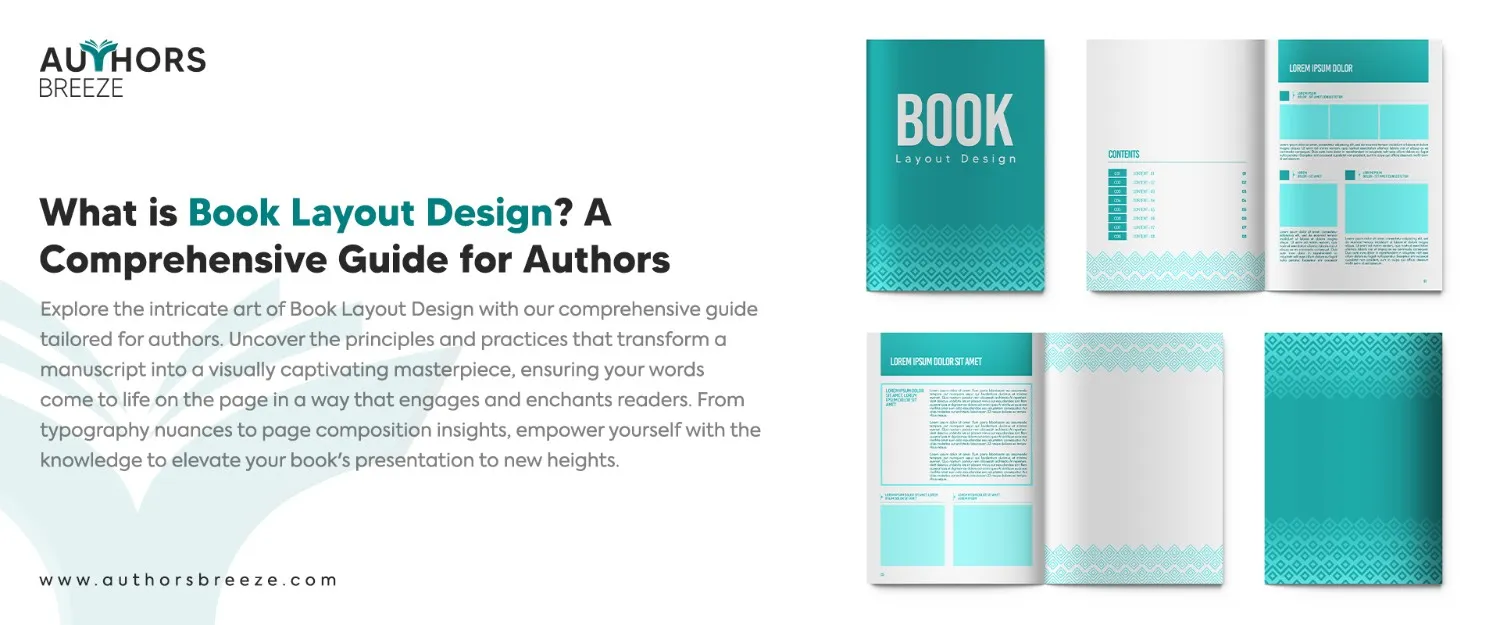
Book layout design, often known as typesetting, refers to the designing the interior of the book. It is where you choose to create your book that will affect how people feel when they read your printed book. This includes crucial decisions like picking the right fonts, deciding on spacing, designing chapter headings, and setting margins.

As an author, you should know the intricacies of the book, such as the interior, and we are here to guide you on that. After the outer elements of the book, such as the book spine, book jacket, and book cover, the most critical aspect is the interior. The interior of a book includes a lot of things, such as an acknowledgment page, but we will focus on the book layout design specifically.

Readers of fiction or non-fiction pay great attention to the interior of the book as it is the content that matters the most to them. In this blog, we will discuss the importance of book layout design and how to typeset a book.

Importance Of Book Layout Design

Enhanced Readability

A quality book layout design contributes to significantly improved readability. It ensures that readers can easily follow the flow of text and absorb information without any issues.

Reader Engagement

Layouts that are engaging and aesthetically pleasing gain the attention of the reader. This can include well-chosen fonts, spacing, and images. All of this combined can enhance the overall reading experience and encourage the readers to stay immersed in the contents of the book.

Conveying Tone and Mood

One of the benefits of a great layout is that it helps convey the tone and mood of the book. The color schemes and typography can be used to describe the intended tone and mood of your book while allowing the reader to understand everything easily.

The First Impression

The cover surely adds to attracting the readers, but it is the interior layout that keeps them engaged. As an author, you need to pay attention to a book layout design. This can highly contribute to the overall aesthetics of your book and set the tone for the reader.

Readability

The book layout design also helps improve the readability. From font selection and size to line spacing and margin width, it all contributes to the enhanced readability of the book. All of these factors influence the overall comfort and experience of the reader.

Design a Professional Book Cover

Ready to transform your book? Contact us today and let us create a book cover that captivates, inspires and helps you sell your book!

Hire Book Cover Designers

Key Elements Of Book Layout Design

Typography Mastery

One of the top element of a book layout design is the typography. Choosing the right font, its size, and its style is essential. A non-book person would not pay attention, but a reader would indeed lay their eyes on the fonts and the overall typography.

If you use fonts such as Papyrus and Comic Sans for your main copy, then your book is already going into the trash. You sell your books to readers to read, and they don’t buy them to see how round and edgy the text is. Therefore, it is vital to pick the right fonts.

Page Structure and Grid Systems

A grid system is a framework of horizontal and vertical lines that are used to align and organize elements on the page of a book. The grid provides a structure for the placement of book text, images, and other design elements. It helps maintain visual harmony and consistency throughout the book.

Imagery and Illustrations

Visual elements include images, illustrations, or graphics in a book. Thoughtful use of visuals enhances the reading experience. Proper placement, alignment, and resolution are also essential to maintain a connected and visually appealing book layout design.

How To Design A Book Layout – Tips For Authors

Here are the steps on how you can design a book layout:

1. Page Size And Orientation

Selecting an appropriate page size and orientation sets the foundation for a well-designed book layout. Consider the content and genre when you make the decisions. Standard sizes, such as 6×9 inches, are common for print books. Choose the orientation based on the type of your book. Usually, books are in portrait, whether they are fiction or non-fiction. At the same time, art books and children’s books are generally landscape-oriented.

2. Margins And Structured Grid System

Establish well-proportioned margins and implement a structured grid system to maintain visual harmony in the book layout. Margins provide white spaces and prevent the page from feeling crowded. The grid, on the other hand, guides the placement of text, images, and other elements. Consistency in margin widths and a structured grid system contribute to a polished and professional appearance.

Video Credits: Envato Tuts+

3. Typography

Typography is fundamental when it comes to a successful book layout. Choose suitable fonts for body text and headings. Adjust font size and line spacing, and maintain a consistent style to enhance readability. A rightly chosen font contributes to the overall aesthetic of the book.

You can use fonts such as Arial, Helvetica, Avenir Next, or IBM Plex Sans. For a more readable body copy, you can use Garamond, Georgia, and Sabon Next. Nonetheless, whatever font you choose, just make sure it is readable.

For font sizes, follow the rules below.

  • Large Headers: 30 pt. or above
  • Primary Headers: 16-24 pt.
  • Sub Headers: 12 pt. bold
  • Body Copy: 10-12 pt. regular
  • Footnote/Page Count: 8 pt.

4. Distinctive Chapter Openings

Create distinctive chapter openings to add visual interest. Unique chapter openings help guide readers through the book. You can try different elements such as drop caps, special fonts, or decorative separators to signal transitions. This creates a connected theme for each chapter and contributes to the overall book layout design.

5. Visual Elements

The integration of visual elements, which include images and illustrations, requires careful consideration. Thoughtful placement, alignment, and resolution all contribute to the overall design. Graphic elements should enhance the content, align with the book’s theme, and ensure a harmonious and engaging layout.

6. Color Palette

With images and illustrations, a color palette is essential as well. It helps convey the mood and theme of the book. Colors impact the reader’s emotional response. Therefore, select hues that complement the content and interest the reader. Consistency in the color scheme throughout the layout can enhance your book layout design exponentially.

7. Proofing And Ensuring Consistency Across The Layout

After completion of the initial design, thorough proofreading and consistency checks are essential. Ensure proper alignment, spacing, and font consistency. Pay attention to details such as headers, footers, and page numbers to maintain a professional and error-free book layout. Consistency across the entire layout enhances the overall reading experience.

Format Your Book Perfectly

We format books effortlessly and professionally. Reshape your written ideas into a beautifully formatted book!

Hire a Book Formatter

Frequently Asked Questions

How do you design a book layout?

Designing a book layout is a detailed process that involves careful consideration of various elements to create a visually appealing and reader-friendly design. It can include choosing the appropriate page size, margins, grid system, fonts, headers, footers, and folios for a professional touch.

What is a book layout designer called?

The professionals who are responsible for designing the layout of a book are known as "book designers" or "book layout designers."

How do you design a layout?

Pay attention to the following things for the best book layout design:

  • Size
  • Binding
  • Outline
  • Margins & bleeds
  • Typography
  • Body copy
  • Images

What makes a good book design?

A good book design means that the reader gets lost in it and is not aware of the pages in the book. A good book design includes appropriate font, font size, appealing graphics, and other such elements.

How many words are eight pages double-spaced?

The number of words on eight double-spaced pages can vary depending on factors such as font size, font style, and the specific formatting. However, as a general estimate, a double-spaced page typically contains around 250 to 300 words. Therefore, eight double-spaced pages might have approximately 2,000 to 2,400 words.

How to format a novel?

To format a standard novel size, keep the margins roomy, choose legible fonts, and use a comfortable novel font size. Here is a detailed guide on How to format a novel.

What is a typical book size?

The typical mass-market book trim size is 4.25 x 6.87, and trade paperbacks range from 5 x 8 to 8 x 10.

Conclusion

To summarize the key takeaways from this guide, your focus should be on the overall design aesthetics of the book layout design. As an author, think of your readers and your audience. Make every decision thoughtfully while considering your readers. Take book design inspiration from other books, too, for a better idea.

Choose the correct page size, fonts, and size. Keep the standard book margins consistent and follow a structured grid system. Choose unique and engaging chapter openings, and use outstanding visual elements and the right colors. After you are done with everything, check for any mistakes, improve where there is any space for it, and finalize it. You can also use book layout software to organize page layout, rotation of pages, etc.

Invest time and effort into thoughtful book page layout, as this can elevate your work and leave a lasting impression on your readers. You can also employ Authors Breeze for book layout design. We implement the best practices.

Author : Charles Maynes

06th Dec 2023

What is Line Editing, How to Do It, and how Can It Help You?

line editing

An exemplary piece of literary work is the result of flawless writing, and editing plays a major role in it. Whether copyediting or line editing, every edit matters when you write a book. So, what does edit mean, or how can we define edit? Editing is preparing a written work for publication by correcting and changing it. Among the various types of editing, line editing is the one that you should not pass over. Today, we will look at line editing and how you can line edit your book.

What is Line Editing?

One of the most common questions authors ask is what line editing is. Line editing refers to the process of fixing writing issues line by line with a focus on the content, language, and style. A line editor is responsible for all the line edits. When you line edit your work, you fix issues with the writing style, language use, paragraph level, and the overall content itself.

The line editor edits the manuscript carefully and acts as a reader while doing so in a way that exerts the feeling of the author through word choice, style, and sentence structure. They have to pay attention and enhance it line-by-line so the language of the manuscript is sharp and clear. The line editors look closely at how the author’s word choice, syntax, and writing style contribute to the tone of the book or article.

Who is a Line Editor?

The editor meaning, or the meaning of editor, is “A person who edits the lines and makes sure that the written work is effective.” But what is a line editor? A line editor is someone who edits the lines in a book or article and is responsible for authors’ specific writing styles; this is why it is also known as stylistic editing.

Line Editors vs Beta Readers

Editing is a skillful process aimed at enhancing a manuscript, carried out by professionals to refine it. Typically, writers collaborate with a single editor at a time. In contrast, beta readers capture the reader’s response to the existing story on the page.

Writing Coaches vs Line Editors

Editing focuses on spotting and fixing issues in a manuscript that already exists. Coaching, on the other hand, aims to prevent issues from arising in the manuscript in the first place. While editing helps writers enhance their ongoing work, a writing coach supports writers in improving their current projects and fosters long-term skill development and mastery.

Copy Editing vs Line Editing

Line and copy editing have significant differences. To define copy, it is a written matter, while copy editing means editing it. In contrast to that, a line edit is where you focus on the style and language used within the content.

Line editing happens first, focusing on style, while copy editing comes next, dealing with mechanics. A line editor looks at how the writing flows and its style. On the other hand, a copy editor ensures the language follows English standard rules and the house style guide. Although line editors and copy editors share attention to detail and a love for language, their roles are distinct.

Top of Form

It is important to note that copyediting should follow line editing; it should not take place at the same time or precede it. The refinement of the page-by-page and sentence-by-sentence content in your manuscript should be completed before engaging in the finer adjustments of a copyedit. This approach ensures that time and resources spent proofreading early draft sections are not wasted on material that might undergo significant changes or can be entirely omitted in the final draft.

A copyeditor is typically the final person to review the manuscript before it enters the production phase. In simplified terms, an editor’s responsibility is to enhance the overall storytelling. At the same time, a copyeditor focuses on grammatical correctness on every page.

Is Your Work Ready to Shine?

Transforming your writing into a masterpiece requires professional editing services. No matter if you want to polish a manuscript or refine a blog post, our expert editors are here to elevate your words.

Hire a Book Editor

How To Line Edit?

In line editing, we carefully read each sentence of the written content and look at how each word is used. For example, you can check for:

  • What tone does this part of the story have? Do the words make that tone well?
  • Are there extra words or things that don’t need to be here?
  • Do the sentences fit together nicely? Do they go from one to the next smoothly?
  • Are the words precise, and are not too common?
  • Is the way the story is told consistent throughout? If it changes, does it make sense?

The line editor might also talk with the writer to discuss the changes, solve problems, and understand what the writer meant. The editing process might happen all at once or in a few rounds between the writer and the editor.

When doing a line edit, it is a good idea to focus on the following things:

Dialogue

Can you make your characters talk in a shorter time? Does it sound real? Can you remove some words to make it more convincing?

Action

Look at what’s happening in the story. This is important, especially in scenes with a lot of action, like intimate moments. Are there too many details, or does the action make sense?

Long Sentences

Can you make your sentences shorter to make a bigger impact? Does the rhythm of the sentence guide you through the scene?

Unnecessary Words

Everyone has words they use too much. You can use the ‘find’ tool to see how many times you use them. You can often delete words like ‘just’ or many ‘that’s.’

Repetition

Check for saying the same thing in different ways. Sometimes, in the first draft, you might repeat things without realizing it. Remember that your reader is smart, and you only need to say something once.

Line Editing Tips

If you’re planning to edit your writing and publish a book on your own, here are some simple tips to make the process easier:

Change the Way You Read

Try to read in a different book format. For that, change the font style and color. It tricks your brain into thinking of the text as something new.

Take Breaks Between Edits

Give yourself some time between your last edit and the final review. It could be a few days or even a week. Your brain needs a break to look at the words with fresh eyes.

Read Aloud

Read your work out loud. How do the words sound when spoken? You can even ask someone to read it to you or use tools such as Microsoft Word’s read-out-loud function. Different voices can highlight areas that need improvement.

Ask for Help

Do not hesitate to seek help. Professional editors are available if you feel overwhelmed. Writing can be a solitary task, but that does not mean you have to do everything alone.

Avoid Overusing a Thesaurus

While a thesaurus can be helpful, do not rely on it too much. Sometimes simple words work best. If you find yourself searching for a ‘better word,’ reconsider if the word is the issue or if you need to clarify your message.

Don’t Overanalyze

Trust yourself and your readers. Avoid over-explaining, as your readers are often more intelligent than you might think. Trust that your writing is strong enough to convey your point without excessive explanation.

Break It Down

Editing does not have to be a daunting task for you. Break it into smaller steps. Remember, you cannot eat an elephant whole — take it in small, manageable chunks.

Done Refining Your Manuscript?

Now, it’s time to turn your polished work into published work. Whether you\’re a seasoned author or a first-time writer, we\’ve got the expertise to guide you through the publishing journey.

Hire a Book Publisher

FAQs

What is meant by line editing?

Line editing simply means addressing the writing. In line editing, one has to enhance the writing flow, improve its style, and ensure that it is easy to read. Unlike what some people might think, line editing does not involve fixing grammar, spelling, or punctuation mistakes.

What is the difference between copyediting and line editing?

Line editing always comes before copy editing. Line editors focus on the writing style, while copy editors focus on the technical details such as grammar. A copy editor makes sure that the language in a piece of writing follows the rules of the language and matches the specific style guide of the place where it is being published.

What is an example of a line edit?

A line edit makes sentences simpler and more effective. Here is an example of a line edit:

Original: "The large and imposing castle stood on top of the hill, and it looked really old and ancient."

Line Edited: "Atop the hill, the ancient and imposing castle loomed large."

This example showcases rephrasing and restructuring the sentence to make it more concise, fluent, and visually descriptive.

What is the difference between line editing and proofreading?

A meticulous line editor usually does both line and copy editing, considering elements such as voice, flow, pacing, and word choice. On the other hand, proofreading is less about improving word choice and more about catching typos and ensuring consistent formatting.

Conclusion

You would now know what is line editing who is a line editor and how you can line edit your content. To put it into simple words for you, it is the process that involves improving the overall written speech. In addition, a line editor is the one who line-edits your content. Follow the above-mentioned steps, focus on the tips, and you are good to go.

We hope our content helped you understand the intricacies of line editing. Now, you can polish and finalize your book, and if you want to self-publish it, you can ask Authors Breeze. We will not only help you publish it but also market it in order to reach the maximum number of readers.

Author : Charles Maynes

13th Nov 2023

Acknowledgements in a Book: How To Write Them in Your Book?

acknowledgements in a book

Writing acknowledgements in a book is an art form, and learning is a great and essential skill for all writers, authors, and literary editors. So, what book acknowledgements even are? What is an acknowledgement page? Where do acknowledgements go in a book? What do you write in acknowledgements? Let us find answers to all of these questions and more.

What are Acknowledgements in a Book?

So, first things first, what are acknowledgements in a book? Acknowledgements in a book come from the basic principle of thanksgiving (not that one). Acknowledgements in a book allow an author to thank all of the people involved or who helped the author in writing and publishing the book. It help can be any sort of help, which includes emotional, moral, financial, or research support.

An author knows that it takes a lot to write a book, and it needs a lot of support, too, no matter if it is emotional, financial, or research support. It means too much to the author. Therefore, they are necessary, too. The acknowledgements usually carry a list of around 5 to 10 people (it can be an organization, too). This list includes anyone who has made significant contributions to completing the literary work of the author.

While it may seem easy from an observer’s or reader’s point of view or even the author’s (before writing them), deciding who you should add or not in the acknowledgements section can be a source of anxiety for some, if not all.

As an author, you may struggle to make a list of all the people you wish to add. On the other hand, you are afraid that you may leave someone behind unintentionally. To make this part easy for you, we have a tip for you. When adding acknowledgements in a book, make a list of all the people who have helped or supported you in any sense. After you write it, one by one, checkmark all those who have helped you the most.

In earlier times, acknowledgements in a book were rarely featured. However, dedications were more common. They offered personal, concise tributes. At the same time, acknowledgements allowed for comprehensive expressions of gratitude.

What is an Acknowledgments Page?

Now that we know what acknowledgements in a book are let us understand what an acknowledgements page is. An acknowledgement page is a page that is dedicated to thanking all of those who have helped play a significant part in publishing your book.

The acknowledgements page is not a very old notion and got recognition in the 20th century. Before the 20th century, it was rare to see acknowledgements in books. Writers and scholars at that time often worked in solitude, and the concept of acknowledging help or support from others in their work was not common.

In modern literature, acknowledgments pages have become a standard feature and reflect the collaborative and interconnected nature of the writing and publishing process. They serve not only as an expression of gratitude but also as a window into the author’s journey of completing their work.

The acknowledgements page usually comes on the front matter of your book. The front section of your book may include the following pages:

  • The Title Page
  • The Copyright Page (For any legal issues)
  • The Dedication Page (if you want to dedicate your book to anyone)
  • The Epigraph (a short quote related to the book)
  • Table of Contents
  • The Acknowledgments Page
  • The Preface
  • The Introduction

The front section of your book demands attention. Among its elements, the page of acknowledgements in a book stands out for its heartfelt significance.

Who To Thank In The Acknowledgments?

It depends entirely on you. However, to help you in this process, add anyone who you feel contributed enough to your book. You can include:

  • Family members
  • Friends
  • Editors
  • Publishers
  • Coworkers or assistants
  • Contributors or advisers
  • Teachers and mentors
  • Inspirations

How to Write an Acknowledgement Section in a Book?

It can be a tricky task to write acknowledgements in a book. However, if you follow the below-mentioned guidelines, you can add an exceptional acknowledgements page to your book:

1. Write Names Properly

First thing first, when you are adding names of all those who helped you with your book, you have to be careful and pay attention to that. Suppose you write a wrong name, misspell a name, or even jumble the descriptions of the people. It would be not very pleasant. Therefore, pay utmost attention to the names of those you want to thank. Write the full names of all the people or organizations who helped in this regard.

2. Arrangement Of The Names

You can arrange the names in any way you want. However, there are some rules that you can follow for the better. One such rule is to rank people according to importance, closeness, and how much they have helped you. This can make the listing very clear.

With that, be careful that when you list them down, keep the ones who are the closest and who helped you the most at the very top. The list should follow an ascending order when writing acknowledgements in a book.

We follow the “leaving no one behind” policy too, thus, for all the people who get confused to prioritize or do not want to do it. You can also follow the alphabetical order as it is the best alternative in this situation. List down all the people in alphabetical order to avoid such a situation.

3. Keep An Eye On Your Tone

When you write acknowledgments, keep an eye on your tone. Now, one may ask what you even mean by this. Well, let us explain. When you write acknowledgements, do not be an author; instead, be yourself. Readers do not want to know how exceptional skills you have as a writer. They just want to understand who was involved in your journey in writing your book. So be calm and write in an informal tone, but do not overdo it and be too casual.

Do not write, “My buddy Jack, from the high school days, what a guy he is, I swear,” this is way too much. Do not go like this too: “I am honorable for my friend Jack, the companion from the high school days; he is an astounding man who supported me enormously.” Would people even read this? Not sure.

4. Be Yourself

Make full use of this page and show the audience who you really are apart from the book. It is an excellent opportunity for you as an author to go ‘off script’ and offer readers a bit of your personality or sense of humor. Your audience would love to learn more about you. Also, this is probably the best section where you can indeed be yourself. The acknowledgement section is the best section of the book. You can use it to forge a deeper bond with your readers.

You should take full advantage of this luxury of acknowledgements in a book and make a connection with your readers. Readers certainly want to know about you and a glimpse of what is under the hood. The acknowledgement in the book provides all of that to the reader. Therefore, use a more informal and conversational tone when you write acknowledgements. Feel free to use humor or a comedic bent when you write your acknowledgements.

5. Be Sincere

Acknowledgements are not stories of fiction; they are just thankful texts. When you write them, make sure that you are on point and remember to be honest. Acknowledgements are not for you to add anyone and fake them. Be original, genuine, and open when you write acknowledgements in a book.

The acknowledgements in a book carry a lot of emotional weight for the people mentioned. They will hold your book dear and treasure their memories of contributing to it. When you thank them, it is vital to be sincere and genuine. Be clear and avoid excessive sweetness that might make it seem insincere. Expressing gratitude is an art, too, and it should be heartfelt but not overly so.

Writing acknowledgements implies that you are writing a book, and you will have to publish it, too. Therefore, you need to find a publisher. So, if you want to know “How to Find a Publisher for a Book in 2026?” read our blog.

What to Avoid When Writing Acknowledgments in a Book?

When you write acknowledgements in a book, you should write carefully and avoid the following mistakes:

Do Not Omit Key Contributors

Make sure that you mention and thank everyone who has made any form of contribution towards your work. With that, avoid excluding anyone who played a part in your work, no matter how small, big, or small it is.

Do Not Be Vague

Acknowledgements are thank-you messages. So, they are meant to be on point. When you are writing acknowledgements in a book, be specific and to the point. Avoid any generic and vague statements that do not convey specific information about the person or entity who contributed to your work.

Do Not Add Any Excessive Personal Detail

As we said earlier, writing acknowledgements is an art in itself. When you write acknowledgements, remember that they can be personal. Therefore, avoid adding anything that is too private or any intimate detail that may not be appropriate to include in it.

Tone – Do Not Use An Extreme End

When you write acknowledgements, it is essential to maintain a proper tone that is not extreme. Use a style that is professional. Avoid using an informal or too formal tone. Do not be too funny, as well as don’t be too serious.

Using Exaggerations

Last but not least, when you write your acknowledgements in a book, avoid using any exaggerations and being too sweet. Be specific, be sincere, and be serious about the acknowledgements. Be honest and thank people in the best possible manner.

Remember, acknowledgements are a way to express gratitude and recognize those who contributed to your work. They should reflect your genuine appreciation and uphold the standards of professionalism associated with your field of work.

Publish Your Book Successfully

If you have your book written and you now want it to be published. Our book publishers can help you with the process of publishing.

Hire Book Publishers

Tips For Writing A Book Acknowledgement

Here are some tips for writing a book acknowledgement.

  • Write the full names of whomever you want to add to your acknowledgements.
  • Arrange the names in ascending order (from the most helpful to the least helpful) or in alphabetical order.
  • Specify why you are grateful to them.
  • Do not exaggerate and add syrup to candy.
  • Keep the acknowledgements as short as possible.
  • Reread and revise.

Acknowledgements Examples

Here are some of the acknowledgement examples:

To My Family

I am deeply grateful to my family for their extraordinary support and understanding throughout the long and often challenging process of writing this book. Your encouragement, patience, and belief in my work have been a constant source of inspiration.

To My Editor

My heartfelt thanks go to my dedicated editor, whose keen eye, insightful feedback, and tireless commitment to polishing this manuscript have transformed my words into a cohesive and compelling narrative. Your expertise has been instrumental in making this book a reality.

To My Readers

To all the readers who have supported me on this literary journey. Your curiosity and enthusiasm have been key to my achievements in writing this book. I write for you, and your support is the driving force behind every word on these pages. Thank you so much for staying with me throughout this journey and being patient and supportive. Love you all.

FAQ’s

How do you write acknowledgements in a book?

You write acknowledgements in a book in the first person. In the acknowledgement section of a book, you mention the names of those who helped you with your book and tell people what they did to support you. It is a way to show appreciation to those people.

Where does the acknowledgment page go in a Book?

The acknowledgements section usually consists of one or two pages. It is typically found in the front matter of the book. However, it is sometimes in some books found to be at the back of the book pages. Its focus is to thank all the people who helped in any way bring the book to life.

What is an example of an acknowledgement?

Here is an example of acknowledgement:

“I am grateful to all of those with whom I have had the pleasure to work while writing my book. Each of the people, namely (Jack, Jill, and Jones) have helped me immensely, personally, professionally, and financially.”

What is the difference between dedication and acknowledgement in a book?

Dedications in books are usually more personal and are often dedicated to family, friends, or community groups. On the other hand, the acknowledgments page lets you thank people for their specific contributions and can include both personal and professional connections that helped make the book possible.

Conclusion

Typically, there are acknowledgements in a book. It does not mean it is mandatory for you to include them in your book. However, it is a nice way to express your gratitude and feelings through acknowledgments. The key is to seize the chance to thank everyone who has contributed to your project. Acknowledging others is not required. But it is a thoughtful gesture that expresses gratitude for the support you’ve received.

If you’re an author and have a book idea to self-publish, consider partnering with us. Our expertise can enhance your book’s overall success and help you create a flawless acknowledgments page. Start your journey with Authors Breeze today!

Author : Charles Maynes

What is the Cheapest Way to Print a Book in 2026?

cheapest way to print a book

As an author or author-to-be, you will be really curious about the cheapest way to print a book. To be honest, there is no inexpensive way. You would ask, well, there should be a way, and yes, there are ways, but not in those terms that the layman would think.

Printing any book, regardless of the quality of materials and technique used, will cost you a hefty amount. However, you can cut costs and try different things to find the cheapest way to print a book. You can also search for the most affordable ways.

Books are an essential part of our lives. So, they should indeed be spread across. However, the question is how you would do it. No one is rich enough to print loads of books and also bear the cost of supply. In this blog, we will discuss the best and the cheapest ways to publish a book. Join us on this journey and spread your books across the globe.

Benefits Of Cost-Effective Solutions For Authors And Publishers

There are many benefits of finding the cheapest way to print a book, some of them are as follows:

  • Reduced Financial Burden
  • Higher Profit Margins
  • Risk Relief
  • Competitiveness
  • Wider Reach

1. Reduced Financial Burden

The cost of printing a book can be expensive. You have to bear the cost of everything from writing and publishing to designing and marketing. Therefore, cost-effective printing solutions help authors and publishers minimize expenses. It makes publishing more accessible to many authors and tiny publishing houses.

2. Higher Profit Margins

When the cost of per-time print is kept in check, authors and publishers can maintain better profit margins. It allows them to invest in marketing and distribution. As a result, they can ensure the sustainability of their projects.

3. Risk Relief

The costs of prints can also increase the financial risk associated with it. When you choose cost-effective solutions, you can reduce exposure to financial risks by a mile. It will make your investments more secure and sustainable.

4. Competitiveness

In a competitive market, price plays a huge role. It helps attract readers and buyers from everywhere. Cost-effective printing enables authors and publishers to offer their books at competitive prices. It increases the chances of sales.

5. Wider Reach

Cost-effective printing allows for larger print runs or more extensive distribution efforts. It helps increase the potential reach of a book to a broader audience.

Make Your Book Flawless

Before printing or publishing your book, you need to make it perfect. Our editing services exactly help you with it.

Hire a Book Editor

What is the Cheapest Way to Print a Book?

There are more than only these ways. Below, you can find the cheapest way to print a book.

1. Local Printing Shops

There are many ways of printing a book, but this one has stood strong among all and is one of the very best options. You can find local printing shops near you or you can search for “book publishers near me” online. They offer loads of benefits, and it is, without a doubt, the cheapest way to print a book in general terms. It cuts the cost by almost half because there are no supply costs involved.

Local print shops have lower overhead costs compared to commercial printers for obvious reasons. As we stated earlier, you can save on shipping costs since it is in your locality. Apart from this, they have no minimum order requirements as compared to other commercial printing service providers.

To prove our point, here is the last and one of the biggest benefits. As an author, when you are publishing your book, you want NO errors. Local printing shops have this benefit. Due to you being physically present during the printing process, you can catch any errors, reducing the chances of costly reprints. This also ensures that your books are flawless. Find the cheapest place to print your book in your locality, and you are good to go.

2. Amazon Book Printing

Amazon printing services are also one of the cheapest ways to print a book. However, it has its own pros and cons. If you want to get the best of Amazon printing books, then you should take care of some things. Amazon book publishing is best for single-book publishing.

There is another great benefit of self-publishing a book through Amazon. This benefit is that you can publish your book with it from anywhere in the world as it is international. To get the benefits of the cheapest way to print a book, you have to meet their guidelines.

The guidelines include the following:

  • Your book should have at least 40 pages
  • Should have a complete cover design
  • Lastly, it should be in PDF form

3. Digital Printing

One cannot possibly miss digital printing when it comes to the cheapest way to print a book. We are living in 2026, and being unaware of the digital world just does not make sense. The digital media is booming, and you should be taking all of its benefits.

Digital printing is the cheapest way to print PDF books as it is all digital. It is best for shorter print runs and is thus one of the best cheap book printing options. Digital printers use digital files to print in contrast to traditional offset printing. This eliminates the need for extra tools, and this makes it a cheaper option for small-scale printing.

4. Office Printing Department

You probably have access to the supply store of your office. You can find a surely find a printer there. Therefore, you can publish your books for nearly free. So, do you know how to get a book printed for personal use? You can get free printing for the first few copies of your book with your office supply store. So, it is an excellent option and the cheapest way to print a book if you don’t need many copies.

5- Home Printer

If you are low on budget, you can print your book at home. However, in order to do that, you need to have a high-quality home printer and printer ink in your house. It is not a good option if you want a more significant number of copies. However, it can be really worthwhile for small quantities or a personal copy. So, if you don’t know how to print a book at home, you should learn it in the first place. It is one of the cheapest ways to print a book.

Frequently Asked Questions

How can I reduce the cost of printing a book?

For most books, printing in black ink is more economical than printing in color. For this reason, many authors just use color on the cover and print black ink on all the inside pages.

What is the cheapest way to have a book printed and bound?

The least expensive method for binding is saddle stitching. It is typically utilized for books with fewer pages. Although it is a fairly straightforward binding technique, the volumes it creates are both aesthetically pleasing and functional. The cover and pages of a book are bound with wire staples in the saddle stitch method.

How much does it cost to print a book?

The cost to publish a book is based on factors like print run size, book size, page count, paper quality, and more. However, printing a standard paperback book with black and white pages and a simple cover can range from $3 to $8 per copy.

How much does it cost to print a 300-page book?

Depending on variables including size, length, and print quality, the cost of printing your book might range from $2 to $30 per copy. A 300-page paperback book will probably cost you $5 or $6 per copy.

How do you print books at a low cost?

Finding a local print shop may be your best option. Ideally, one that is close to you. Many offer binding services at very inexpensive pricing, with services like thermal binding scaling nicely with book size and extremely low prices for printing in quantity.

Conclusion

The options we have provided are the best for the cheapest way to print a book for you. Either you are a self-publishing writer and author or just an amateur who wants to write a book. These are all the options we found out to be the best. All of them have their own unique benefits. Therefore, choosing the best option for yourself depends on you. However, if you don’t know how to print your own book or publish it, Authors Breeze is here to help.

Author : Caroline Chartrand

26th Oct 2023

Effective Blog Writing Tips for Authors & Storytellers

Blog Writing Tips

Blogging helps authors and storytellers in many ways. It connects them with their audience, provides new writing opportunities, and helps promote their work. But with so many blogs out there, it can be challenging for you to stand out. That’s where you need blog writing tips to master blogging. There, we have gathered some of the working blog writing tips for authors and writers to attract the audience and rank well on search engines.

What is a Blog?

A blog, short for weblog, is a website or web page that is regularly updated. Usually written in a conversational style, it is typically run by a person or a small group of people. People often use blogs to share personal thoughts, opinions, and experiences. However, authors and writers can also use them to provide information and news on their work and books.

Typically, bloggers organize or arrange blogs in reverse chronological order. The most recent blog posts appear at the top. It allows readers to see what is new on the blog easily. As a result, they can follow the blogger’s progress over time.

In many blogs, bloggers allow readers to leave comments. It creates a sense of community and engagement. As an author or writer, you can utilize blogs to promote your books and services. However, they are most effective when you follow the best blog writing tips and provide valuable content to readers.

What are the Benefits of a Blog?

Blogging is an excellent way for you, as an author, to connect with your readers. So, what are the other benefits you can gain from starting a blog? Let’s look at some:

  • With blogging, you can share your ideas, stories, and thoughts with the world.
  • It can help you to connect with other people who share your interests.
  • A blog can be a platform to promote your books or expertise.
  • Writing blog posts can help you improve your writing skills.
  • It can also be a fun and rewarding way to express yourself.
  • If you have an author website, SEO-optimized blogs can bring traffic to it.
  • As a writer, having a blog establishes you as an expert and helps you build authority.
  • And so much more.

How to Start a Blog?

Are you interested or want to start a blog? There are many different platforms that you can use, such as WordPress, Blogger, and Wix. These platforms make it easy for you to create and manage a blog, even if you have no coding experience.

How to Write a Blog? – Blog Writing Tips

Blog writing can highlight your expertise as a writer or an author. When you try your level best and write the best blog posts that fulfill the needs of your readers, your blog not only ranks well but also helps you establish a community of people who support you throughout your writing journey. So, how do you write a blog post that can do wonders? Let’s look at successful blog tips for writing a blog post.

1- Choose a Topic

So, the first question that arises when you think of writing blogs is what to write in a blog. In order to write a blog post, you should choose a topic that is not only trending but also resonates with your readers. When you are writing a blog, you are writing for your audience. So, think about your readers. What are they looking for? What could be their problems that you can solve through your blog posts?

As a writer or an author, your audience will be more likely to be beginners at writing or people interested in writing books or related stuff. Therefore, you should pick a topic that can answer their queries, assist them in learning, and help them grow.

You will find many blog writing tips on the internet, but no one will tell you the topics that you should write your blog posts on. So, you should brainstorm ideas according to your interests and your readers and list them down. In addition, it should be aligned with what you offer or do. For example, as a writer, you can guide your readers about writing and publishing a book.

Let’s look at the topics that you can select for some of your first blogs:

  • How to Write a Book? A Complete Step-by-Step Guide
  • Things You Should Keep in Mind When Writing Anything
  • Skills Necessary To Have to Become an Expert Writer
  • Tricks and Tips to Write and Publish a Perfect Book
  • What is Blog Writing Style? Explore the Main Writing Styles

2- Create an Outline

After you have chosen the topic, it’s time to create an outline for your post. There is no specific blog writing format. You can try any structure or form you want to write your blog post. Think about the main points, details, or elements you want to discuss. Then, arrange them in an organized and logical order.

Choose how you want to organize your thoughts and create an outline for your post. This way, you can guide readers through your thinking and make it easier for them to understand your perspective.

For example, suppose you are writing a blog on types of editing. You should organize it in a clear, step-by-step manner that can guide them through the editing phases gradually. Your outline is like a rough plan. Therefore, you can add more details or take away things that don’t fit as you start writing.

3- Write Informative and Helpful Content

Your blog post is of no use if it does not provide value to the readers. That is where you need to do your research. It is not possible that you know everything you are writing about. So, you need authentic sources to help you get accurate and credible information. For example, if you are writing a blog post on “Where to Find a Writing Coach?”. You should research and make sure that you provide accurate and actual references where readers do find the writing coaches.

Now you have all the information about the topic you are writing about. Pen it down in your blog post. There are two ways in which you can write your blog post. One is that you can draft your whole blog post in a go. On the other hand, you can compose sections one by one. If you are facing difficulties writing a blog, you can also opt for blog writing services.

Usually, you will find blog posts written in a conversational style. Therefore, make sure you use personal pronouns. This way, readers feel like you are talking to them. As a result, it connects you with them. In addition, make your content skimmable. Write short sentences and use easy words. Also, a paragraph should not contain more than five sentences. It makes content more readable for the readers.

4- Edit and Proofread Your Blog

You write a blog post, but now, to make it perfect, you need to edit it well. It is not as hard to write a blog as it is to write it. In editing, you have to check grammar, spelling mistakes, and punctuation. In addition, you need to make sure you have written your blog post with clarity and coherence. You can follow the below tips for blog writing and editing and apply them to make your blog post flawless:

  • Make sure to avoid the exact words, phrases, or sentences.
  • Do not repeat the exact thing over and over again.
  • Read what you have written aloud. It will help you find mistakes.
  • Ask someone to read it and provide feedback.
  • Don’t hesitate to delete something at the last minute.

You should not edit your blog post just after you write it. When you’ve just written something, it is easy to miss mistakes because your mind automatically fixes them. You might not notice issues with how the text is structured. In addition, you can utilize online tools to help you with editing, such as Grammarly for mistakes and Yoast for readability.

A great way to lessen your burden is to hire a professional editor. They do not just help you eliminate errors but also provide valuable feedback. As a result, your message is conveyed more effectively to the readers. Moreover, It saves both your time and effort.

However, do not get confused between editors and beta readers. An editor is someone who checks and corrects grammar and punctuation errors. On the other hand, a beta reader reads the book and gives you feedback purely from a reader’s perspective.

5- Formatting

Formatting is the best way to emphasize the key message of the blog. If you format your blog nicely, it will keep your readers engaged. As a result, your blog conversions will increase, and it will fulfill the purpose of writing it.

People often have busy schedules and may not have the time to read blogs thoroughly. They prefer to grasp the main ideas quickly. So, you should format your blog in a way that emphasizes critical points. For this, you can use bullet points, bolded words, or other formatting techniques.

Here are some tips on writing a blog and how to format it well:

  • Begin your blog with a solid and attractive title.
  • Use headings and subheadings. It helps guide your readers through your blog.
  • Make sure to use easy words and short sentences. In addition, keep your paragraphs short.
  • Use bullet points where necessary. It helps make your content easy to scan and digestible.
  • Bold key points to make them stand out in your blog post. This helps readers quickly spot essential information.

6- Add Images

It is one of the excellent blog writing tips to add pictures to your blogs for a few reasons. First, it helps readers quickly understand your content because they can glance at the images. Second, photos can make your points more clear and more enjoyable.

If you’re sharing numbers or data, it’s wise to use charts or graphs instead of plain text because it’s easier to understand. Numbers can be a bit dull on their own, but a nice chart can make them exciting.

Even a simple picture can turn a boring blog into something fun and engaging. Sometimes, pictures can explain things that words can’t. It’s like a breath of fresh air in a sea of text that keeps readers interested for longer.

7- Include Call to Action

The only goal of writing a blog is not just to inform people but also to motivate readers to take a particular action. Therefore, do not forget to include a CTA in your blog where you think it is more understandable. However, be careful when you place CTA’s because readers people don’t come to your blog to buy from you.

You can gently guide your audience to take a small step through CTA in your content. For instance, you can urge them to subscribe to your author newsletter or offer them a chance to download an ebook.

A well-crafted CTA keeps the interaction going. Depending on your blog’s purpose, you can encourage readers to engage further in different ways. If it’s a discussion-based blog, you might want them to comment on or share your post. On the other hand, for more business-oriented blogs, you can suggest actions related to your product or services. For example, you could prompt them to acquire your professional article writing services.

Whatever you choose, ensure that it fits naturally with your blog post’s topic and purpose. As a result, you can smoothly lead your audience along the path you want them to take.

8- Publish and Promote Your Blog

Before you publish your blog, wait for a day and read your blog to yourself again, or you can have someone look at your blog for spelling and formatting. As a result, you can find errors and then you can correct them. But avoid wasting too much time and publish your blog post when you think you can not make it better than it is now. Remember, you need to publish your blog post not only at the peak but at the right time.

Now that you have published your blog, it’s time to share and promote it with the world. You can attract more readers by spreading the word on social media. If you’re looking to reach an even larger audience, consider platforms like Facebook, Twitter, and LinkedIn. Marketing can be really beneficial if your blog is connected to your business. On social media, you can start a podcast. In addition, you can build an email list or guest blogging on related websites to get more exposure.

Ready to Boost Your Blogging Game?

Unlock the power of captivating storytelling and authorial excellence with our proven blog writing tips. Whether you are an aspiring writer or a seasoned author, our expert insights will take your blog to new heights. Take the first step towards success today!

Hire Blog Writers

Some Effective Blog Writing Tips for Successful Blog Writing

In today’s digital age, just writing blogs is not enough. The online world has gone through a lot of changes. Blogging is a major and powerful tool for you to showcase your work and connect with your audiences. Therefore, you may need tips for blogging that can help you show up in search engines. As a result, you can make money writing a book.

Know Your Audience and Put Them First

Before you start typing away, you should know who your target audience is. So, you can tailor your content in order to suit their preferences, interests, and needs. When you understand your audience, it helps you create content that resonates with audiences and keeps readers coming back for more.

The reason for blogging is not all about you. It’s about your audience. As a blogger, your role is to choose a specific topic or niche. Then, consistently produce high-quality content that addresses the problems and needs of your audience within that niche.

Find Your Unique Voice

Your blog is an extension of your writing style, so make sure it reflects your unique voice. Readers should feel like they’re getting to know you as a writer. It makes them more likely to connect with your work.

Pay close attention to the style and tone of your writing. They can have a major impact. When you write in a conversational style, it creates a sense of connection with your readers. It’s like you’re right there with them, helping them solve problems you understand well.

Consistency is Key

Consistency is the cornerstone of famous blogs. Therefore, you need to develop a posting schedule and stick to it. Whether it’s once a week or once a month, if you post regularly, it keeps your readers engaged. It also signals to search engines that your blog is active and relevant, which improves your visibility.

Search engines rely heavily on content, and this applies to blogs as well. By consistently creating and publishing blog content, you not only refine your writing skills but also gain insights into what your readers desire and what they don’t. This knowledge allows you to adapt and provide content that resonates with your audience. It ultimately contributes to the growth and success of your blog.

Craft Captivating Titles

Suppose you are in a hurry. Now, which blog post are you more likely to read first? The one with a dull title that merely outlines the content of the post or the intriguing one that grabs your attention? Most people would opt for the captivating title that not only piques their interest but also provides a clear idea of what to expect.

So, make your titles interesting, concise, and relevant to the content. In addition, use language that sparks curiosity and encourages readers to click and explore further. There are expert blog writing tips you can use. For example, you can incorporate numbers into your title. It can be remarkably effective in order to draw readers in.

Write Engaging Content

Your blog posts should be well-written and engaging. Use storytelling methods to attract readers. Also, do not forget to structure your content for readability. Break up long paragraphs, use subheadings, and include images or multimedia when appropriate. Your goal should be to make your content easy to digest. So, when you write a blog post, remember to write in a way that feels like a friendly conversation.

One of the best blog writing tips is to present your ideas clearly and without unnecessary fluff. Your blog shouldn’t resemble a page filled with annoying CTAs, so avoid creating that impression. If you do, your audience may not stick around, your SEO performance could suffer due to high bounce rates, and your blog may struggle to thrive. Keep it simple, informative, and user-friendly to foster growth and engagement.

Optimize for SEO

There are many blog writing tips to follow. But the biggest one is that you should not neglect SEO and optimize the content of your blog for SEO (search engine optimization). As a result, it will improve the visibility of your blog on search engines. Use relevant keywords naturally throughout your posts and create descriptive meta titles and descriptions. In addition, ensure your blog is mobile-friendly. SEO can help attract new readers to your blog.

The basic principle to grasp about SEO for blog posts is that your primary focus should always be on writing for people. Search engines appreciate content that delivers value to readers. Ensure that your blog addresses a topic of genuine interest and provides valuable information. When your blog serves as a helpful resource for your audience, it not only satisfies search engine algorithms but also resonates with and engages your readers.

FAQs

What are the 8 Steps to Write an Awesome Blog Post?

The popular blogs follow the below blogging tips or steps:

1- Choose a Topic

2- Create an Outline

3- Write Informative and Helpful Content

4- Edit and Proofread Your Blog

5- Formatting

6- Add Images

7- Include Call to Action

8- Publish and Promote Your Blog

What are the 6 Rules of Blogging?

There are no hard and fast "rules" when it comes to blogging. However, there are several best practices and blog writing tips that you can make use of to create successful and engaging blog posts. Here are six commonly recommended guidelines or blogger tips:

  1. Be consistent and create content regularly.
  2. Write to the point.
  3. Analyze everything, such as competitors and audience.
  4. Be persistent, not only consistent.
  5. Self-learn, and don't be demotivated.
  6. Learn from criticism.

How Do You Write a Good Blog for Beginners?

Beginners can write a successful blog post if they obey the following blog writing tips:

  • Do keyword research.
  • Pick a strong title.
  • Outline your main points.
  • Write engaging, helpful, and informative content.
  • Use images where needed.
  • Optimize your blog for SEO.
  • Edit and proofread for perfection and publish.

What are the 5 Most Important Things for Writing a Successful Blog Article?

There are crucial elements and blog writing tips that help you craft a compelling blog post. If you include them all in your blog post, you can write and compose the perfect blog. You will see many blog writing examples that utilize them, such as:

  1. An Interesting Title.
  2. A Compelling Hook.
  3. Engaging Content.
  4. Visually Appealing Images.
  5. Keywords and Interlinking.

Conclusion

Blogging can be a powerful addition to your toolkit as an author or storyteller. If you follow the practical blog writing tips we provided, you can connect with your audience, showcase your unique voice, and build a thriving online presence. Your blog can be a bridge to building a loyal following for your writing endeavors. Blogging seems easy until you have to do it, and it will be hard to get started on a blog. However, with these blog writing tips, almost anyone, from beginners to expert authors, can be successful. Moreover, if you need blog writing services, you can have Authors Breeze at your disposal.

Author : Shirley Gibson

24th Oct 2023

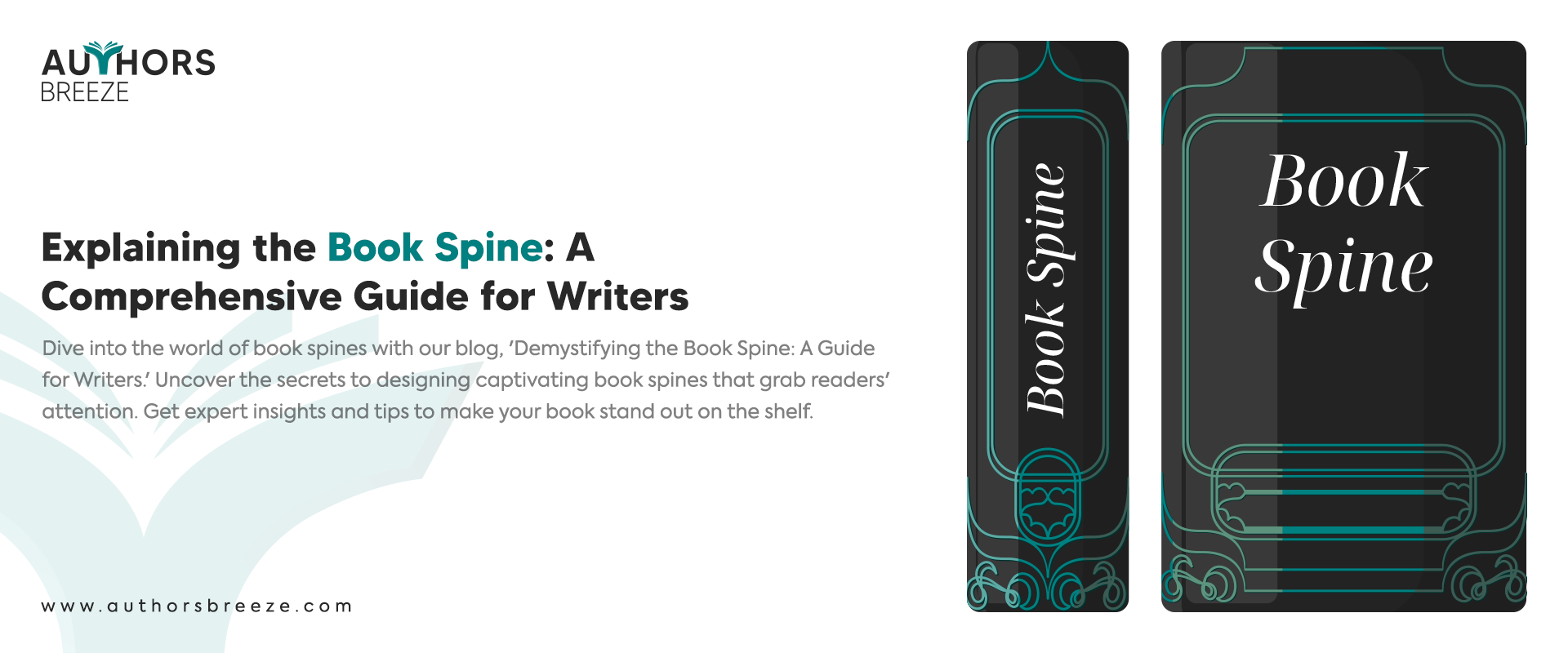
Book Spine Design: How To Impress Readers With Book Spine?

The book spine is what people see on the shelf in a store or library. So, your book spine design should look attractive and give essential information. Even though it is a small space, you can use it to impress readers at first sight. For book spine design, it is a good idea to learn what works best and look at some good book back cover examples.

In early times, people wanted knowledge and also wanted to share it. But then there were no books or, better this way, paper-based books. People used other means. After some time, when paper-based books were introduced, we observed a boom in the knowledge and education sector. There was a sharp spike in the need for books, and they are in demand up till now, growing with time.

So, what makes books so intriguing that everyone needs them and wants to have as many books as they can? Why are there so many libraries? Why do people keep so many books at home? In this blog, we will go on a journey and find out all the answers to these questions and much more.

The Physical Parts Of A Book

In order to design the best book spines, we should know the parts of book binding and the book as a whole. Below is a list of the physical parts of a book.

  • Book Cover
  • Book Spine
  • Front Cover
  • Back Cover
  • Text Block
  • Book Jacket

Importance of Book Spine in Book Design

When it comes to book design, many authors and publishers often focus primarily on the front cover. The front and back of the book are undeniably vital in order to catch the initial attention of the readers. However, the book spine is equally important, and book publishers often underestimate them. Book spines serve both functional and aesthetic purposes and play a crucial role in the overall success of a book design. Here are some of the reasons why the book spine is a critical aspect of book design:

Shelf Visibility

Book spines are the primary reference point for books on shelves. They enable readers to identify and access the books easily. Book spines convey vital information such as the book title, author name, and publisher information.

Aesthetic Appeal

The attractive and interactive book spine design enhances the overall visual appeal of the book. It makes it more enticing to readers.

Enhance Home Décor

Book spines remain visible on bookshelves. It helps enhance the appeal of your book collection and your overall home décor and design.

Design a Flawless Cover for Your Book

Hire us for our book cover services and effectively convey what\’s in your book with a professional book cover design!

Get Book Cover Services

Aesthetic and Functional Aspects of Book Spine Design

Book spines are essential and compile the pages into a proper book. A book spine keeps the pages of the book together. It also helps you hold the book easily in your hand and immerse yourself in the contents of the book.

Apart from this, there are also aesthetic aspects of the book spine design, such as:

  • The intricate patterns used on it.
  • The creative fonts.
  • Graphics
  • The overall aesthetics it embraces on the bookshelf.

What are the Types of Book Spines?

There are mainly two types of book spines that are:

  • Hardcover (case bound)
  • Softcover (paperback)

The main difference of the following are mentioned below:

Hardcover Book Spine

  • Durability: Hardcover spines are significantly more durable than paperback spines. They can withstand wear and tear. It makes hardcovers suitable for long-term use and library collections. This is why they last longer than paperbacks and are a preferred choice for readers.
  • Protection: Hardcover offers better protection for the pages of the book, particularly against bending, folding, and any external damage. They are the best choice as they preserve the book’s condition over time.
  • Aesthetic Appeal: They often have a premium look and feel. They can be more visually appealing due to the use of high-quality materials and printing techniques. This can make them attractive as gift books or even if one wants to collect them.
  • Printing Quality: Hardcover spines allow for high-quality print, which can result in sharper images and text. This can be great for readers as they provide a more premium experience.

Paperback Book Spines

  • Affordability: Paperback spines are generally more cost-effective to produce than hardcovers as they do not use premium materials and techniques. This makes them an attractive option for budget-conscious readers and authors.
  • Portability: Paperbacks are lighter and more compact than hardcovers. So, it makes them a convenient choice for readers who travel a lot. They are easier to carry and fit into smaller spaces.
  • Flexibility: Paperback spines are flexible. It enables them to be more comfortable to hold and read. They adapt to the reader’s posture and can be easier to manage.
  • Wider Accessibility: Paperbacks are more accessible to a broader audience due to their affordability. This makes them a preferred choice for mass-market distribution.
  • Easy Replacement: If a paperback book gets damaged or worn out, it is often less costly to replace than a hardcover.

The choice between the spine of book hardcovers and paperbacks depends on factors such as the intended use of the book, budget, and aesthetic considerations. It totally depends on the reader what they want for themselves while they should also consider the concerning factors.

The Art of Book Spine Design

There are mainly 3 parts of book spine design:

  • The Design
  • The Typography
  • Graphics and Images

We will understand all 3 one by one.

The Design

The basic design principle is that your design should be according to the actual book. If your book is under 500 pages, then your book design will be different. In addition, if your book is over 1000 pages, then your book design will be totally different. Therefore, keep the design balanced both aesthetically and in terms of readability. Choose the materials and printing techniques as per the requirements of your book, your readers, and, most importantly, your budget.

The Typography

After you have chosen the design as per your book, it is time to get on the typography section. Choosing fonts, colors, and layout is essential in the spine of a book and is one of the major parts of it. You will have to select fonts and colors according to the book and its topic.

Choose only those fonts that are visible from a distance. If your book is thick, then you can use such fonts by increasing their size; otherwise, do not use them. Colors have meaning, so use colors as per the theme of the book. If the story is sad or tragic, then it would be best if you use black, white, gray, or dull colors. If the story is cheerful or joyous, then you can use red, pink, purple, or bright colors.

Graphics and Images

Last but not least, among all the vital things, this is the most important one in terms of aesthetics and appeal. The graphics and images play a crucial part when you sell your book. Readers and, most importantly, book collectors love and adore books with great graphics and intricate images. Therefore, incorporate appropriate images and symbols according to your book’s theme.

Note: When you design a book, remember that the spine of the book should be clean, and the text should be clear. The spine of the book should be unique, look good, and give an understandable message to the readers about the book.

FAQ’s

What is Book Spine Design?

A book spine design refers to the designing of the spine of a book. A book spine design usually includes the title, author name, and publisher name. It generally depends on two factors: a paperback or hardcover book and the book's length.

How Do You Make a Book Spine?

Here's how you can make a book spine:
• Determine the spine size.
• Create the design.
• Measure and format.
• Print it.

What Size Font Should a Book Spine be?

While it depends mostly on the book's spine size, the spine on a book with a low page count will potentially be equal to one-tenth of an inch or less than this. In retrospect, to fit the text properly, it should be about 5-6 pt.

How Thick Should the Spine of My Book Be?

This depends on various factors, such as the amount of pages and the type of cover. For instance, if the book is paperback, it will need to be over 3mm. On the other hand, if it is a hardback, it should be over 9mm.

What is the Back Cover of a Book Called?

The back cover of the book is called a 'book jacket' or 'back cover' copy. It is also called a 'summary' or 'blurb'.

Conclusion

If you are a self-publisher, want to self-publish, and are searching for a book spine template to make your book look the best, then wait here. Spines are essential, as we argued in the blog, and if you want to make a great book spine, then you do not have to search for “spine book” everywhere on the internet.

As a company that has been working on writing and publishing as well as designing books, we provide exceptional book spine design services. If you want your book to stand out on the bookshelf, then contact Author Breeze. We have a team of extraordinary designers who have all the experience and expertise to make great book spine designs. Connect with us today and avail yourself of our expert services at the most affordable rates.

Author : Shirley Gibson

A Guide to What is a Book Jacket, and Why Do You Need it?

Book Jacket

There are a lot of factors to consider if you want to create a good-looking book. One of the most important elements of a professional-looking book is the book jacket. Just like a jacket covers you, the book jacket covers the book. However, this is not all, and there is much to it.

So let us explore answers to questions such as what is a book jacket, the anatomy of book jackets, the front and back of a jacket, and more. Without wasting a word, let us move on to our first question.

What is a Book Jacket?

The jacket of the book, also known as a dust jacket, is a cover, a paper book cover, a wrapper, or a dust wrapper. While it is evident in the name, the jacket of the book is a protective detachable outer cover. It is made of paper but slightly firm in nature. In addition, it serves different purposes, such as to avoid dust and scratches from the main book cover.

It is typically used on hardcover books because case-bound books are more vulnerable and should be protected as they are premium, too. However, this does not mean that paperbacks cannot have them. In fact, some softcovers use a jacket as well.

Book jackets are vital for books as they provide critical and helpful information about the book. It consists of folded flaps that help it to hold the book covers.

What is a Dust Jacket on a Book?

A dust jacket is a removable cover made of paper or plastic that wraps around a hardcover book. It is like a shield to protect the book and a way to tell readers what the book is about. Dust jackets first started in the United Kingdom in the 1830s to keep books clean from dust and dirt.

Jacket Parts | Anatomy Of A Book Jacket

The anatomy of a book jacket refers to the jacket parts and components that make up the cover of a book. A jacket of the book typically consists of the following elements:

Front Cover

The front of the jacket is the same as the ebook, paperback, and hardcover. It features the title of the book, the name of the author, and a cover artwork or design. The book’s title and author’s name are often displayed prominently on the front of the jacket. Apart from this, the book jacket may also include any awards that the book got or notable recognition it received.

Spine

The book spine of the jacket runs along the book’s edge and includes the title of the book and the name of the author.

Back Cover

The back of the book jacket usually includes additional information about the book, such as a brief summary, author biography, reviews, and endorsements. It sometimes also has a barcode, an ISBN, a publisher’s logo, and a publication date.

Dust Flap (Front Flap)

The front flap is the part of the jacket that folds inside the front cover. It typically contains a continuation of the book summary, author information, and any critical endorsements or reviews.

Dust Flap (Back Flap)

The back flap folds inside the back cover and may include more information about the author, the publisher, or other books by the same author.

Each of these elements serves a specific purpose. These elements provide information, make the book attractive, and help engage readers. The combination of these components contributes to the overall look and feel of the book jacket. It plays a crucial role in book marketing.

Difference Between Book’s Jacket And Flap

The book jacket and flap may seem familiar, but they are two different things in essence. Both have one main purpose, and that is to protect the book. However, they have some noticeable differences. These differences make them unique and different from each other. Below are the differences between a book’s jacket and its flap:

Book Jacket:

  • The jacket of the book, also known as a dust jacket, is the overall cover of a hardcover book.
  • It consists of the front cover, spine, and back cover, all of which are usually made of a single piece of paper or plastic that wraps around the hardcover book.
  • The jacket is the part of the cover that provides both protection for the book and serves as a canvas for decorative and informational elements.
  • It often includes the title of the book, the name of the author, cover artwork, and various text and design elements.

Book Flap:

  • Flaps, on the other hand, are parts of the book jacket that are folded inside the front and back covers of the book.
  • There are typically two flaps on a jacket: a front flap and a back flap.
  • The front flap of a jacket contains additional information about the book, such as a continuation of the book summary, author bio, and endorsements.
  • The back flap may include details about the author, the publisher, or other books by the same author.

How to Make a Book Jacket?

If you are a self-publisher and want to know how to make book jackets, then you are at the right place. There are some things you need to remember if you want to design your own book cover. Creating a book cover or book jacket is not easy, but by following book jacket examples, you can make the process a bit easier. However, before we get into it, we need to understand what types of books need jacket covers.

Why You Need a Book Jacket?

Here are the top reasons why you, as a self-publisher, need a jacket:

  • Professional Appearance: This is one of the most important reasons why you need a jacket. You should aim for a professional appearance in your books. A well-designed dust jacket can help your book stand out and compete with traditionally published titles.
  • Marketing and Branding: As a self-publishing author, you have to handle your book promotion and marketing. Thus, the dust jacket becomes a vital marketing tool. It can include elements like author bios, photos, endorsements, and reader reviews. This can help build your brand and attract readers.
  • Bookstore Presence: If you plan to sell your book in physical bookstores or libraries, a well-crafted dust jacket can make the book more attractive. It can also increase the chances of acceptance for distribution.
  • Cover Design Investment: You may need to invest in professional book cover design services to create aesthetic and marketable book jackets. A great cover design is critical to attract readers in a crowded market.
  • Cost Management: While you proceed to invest in a high-quality dust jacket design, it is important for you to consider your budget. You may need to find a balance between cost and quality to ensure the book remains affordable.

Must-Have Elements For A Book Jacket Design

All book jackets are unique in design and the basic information it provides. However, there are some must-have elements that every book should have. Below is a list of those elements:

Title of the book

  • Subheading or tagline of the book
  • Author’s name
  • Name of the editor (if any)
  • Name of the publisher (optional)
  • Summary of your book’s story
  • Publisher information (optional)
  • Barcode of ISBN

Apart from the must-have elements, there are some optional details that you can include.

  • Background image or artwork (according to your book’s theme)
  • A book review or a testimonial
  • Author bio and photo to your book jacket

FAQ’s

What Does Book Jacket Mean?

A book jacket refers to a detachable cover, either paper or plastic, which is used to protect the book from dust. This is the reason it is also called a dust jacket.

What is the Point of a Book Jacket?

Book jacket serves a major purpose, and that is saving the book from dust. However, in today’s day and age, it is used for another purpose. It is used to convey a summary of the book, author bio, and other details.

What is the Difference Between a Book Cover and a Book Jacket?

Book cover usually refers to the cover permanently attached to the book. It includes the front cover, back cover, and spine of the book. On the other hand, a book jacket is a detachable cover of the book that protects it from dust and damage.

Why Do Some Books Have Book Jackets?

Book jackets were not part of the books before. However, they were used to protect the books. They still do, but the difference is that we don't throw away them after we get the book home safely.

Does Making a Book Cover Easy?

Making a book cover is not easy. However, by following the best examples, you can easily make book dust jacket covers.

Conclusion

A book jacket is vital for a book. And if you know what it takes to make good dust jacket covers, it is even more important. If you are a self-publisher and want to make a great dust jacket cover for your book, then this blog will surely help you. Whether it is a simple book cover or an intricately designed book dust jacket, it is important to have knowledge about them as an author or a self-publisher.

We at Author Breeze provide all our clients with the best knowledge of books. We can help you make the best dust jackets so you do not have to search “how to make a book cover with paper.” Connect with us today and collaborate with us on the book jacket project to get the best dust cover book selection from our top-notch book jacket designers and make your book stand out.

Author : Caroline Chartrand

The Top 7 Elements of Fiction: A Guide to Creative Writing

elements of fiction

The world of books stretches beyond space-time. They set a deep connection with the reader through the characters concerning the plot. In deep space, we find a conflict between science and nature through the observer’s point of view. So, in the hope of breaking it down in time and space, we are involved in dialogue with each other to understand its theme through our own style. Let us go further to understand these elements of fiction.

This is what a writer is able to do. A writer can craft an immersive world of stories and can breathe life into it. On the other hand, they can write captivating plots and themes. A writer should be able to provoke thoughts and incite deep emotional connection with their readers through the stories. For a writer to do this, they should know the elements of fiction, and we are here to help.

However, to do this is not easy, even as a writer, when you do not know about the basics and key elements of fiction. In this blog, we will swim in the space of worlds of words. Let us not drop a word and start our journey through the stars.

What are the Elements of Fiction?

Before we get into the top 7 elements of fiction, we need to understand what even elements of fiction are. A part of fiction in its core is a block of a building, and there are mainly seven such blocks. The elements of fiction work just like blocks. They work together seamlessly to create a building. In the context of books and writing, this building is the whole story of the book.

Fictional elements are essential in order to write a fiction book, a story, a novel, or anything that includes any sort of fiction in it. The seven elements of fiction include characters (individuals), dialogue (discourse between individuals), plot (sequence of events), and more.

Below, we will explore and understand everything about the top 7 elements, their benefits, their use case in stories, and more.

The Top 7 Elements Of Fiction

There are more than seven elements of fiction. However, you will find seven elements of fiction in almost all stories, no matter what form the story takes. All of these seven characteristics of the fiction genre work together to create a clear narrative. If you want to write a book, then you need to know each of them. These are the building blocks of fiction. The elements are:

  1. Character
  2. Plot
  3. Setting
  4. Theme
  5. Point Of View
  6. Conflict
  7. Style

1- Character

Characters can be defined as players playing a part in the story. It is the most crucial element in fiction, as there should be an occurrence with someone or something in the story in order for the story to go by. Characters within a story can be any, from human beings, animals, objects, or aliens.

If any of them make decisions within the story, then they would be referred to as characters. Almost all books have two or more main characters. Elements of character are also vital in fictional stories because we as human beings read and enjoy stories the most when we see ourselves in them, and it is often through the characters.

Characters can be communicated through their dialogues, how they speak, their physical appearance, the way they interact with other characters in the story, and more. Different tales have different characters, such as protagonists and antagonists. Apart from these common and main ones, there are also other characters that are involved in the story and add greatly to the elements of fiction.

Here are the most common characters involved in stories:

  • Protagonist
  • Antagonist
  • Morally Grey Characters
  • Foil Characters
  • Supporting Character
Protagonist

A protagonist in a story is the main character, the lead, the one the story revolves around. A protagonist makes key decisions that may affect the plot of the story. The character also influences the tale and continues it forward, and often faces the most obstacles.

Antagonist

An Antagonist is the opposite of a protagonist in terms of the main characteristics. These characters are often called ‘villains’ and ‘the bad guys’ who oppose the hero or protagonist. At the same time, antagonists are often portrayed as villains and the protagonist as a hero. However, this is not always the case. The antagonist does not always play as the villain. In some stories, like Light Yagami, the protagonist is a villain, and the antagonist is an opposing hero.

Morally Grey Characters

Morally grey characters are not as simple and plain as the protagonist and antagonist. They are much more complicated than them. Morally grey characters have complex motivations, and they do not fall into either of the two spectrums: protagonists and antagonists. They are neither purely good nor purely evil. They have both good and bad traits.

Foil Characters

A foil character is a simple yet complicated personality in the stories. Such characters contrast the traits and acts of another character, and oftentimes, these characters are protagonists. However, a foil character for the protagonist will not always be the antagonist. Antagonists oppose the protagonist, and sometimes they represent opposing ideas to the protagonist. Thus, they can also be called a foil character.

Supporting Character

A supporting character in a story falls between a main character and a minor character. In other words, supporting characters are not the focus of the story; thus, they are not mentioned much. However, they appear enough times that they are more than just a minor character. Supporting characters are not independent. They rely on a character, but they may develop a backstory on their own.

In some cases, supporting characters may become the main characters if they get much recognition from the audience. These cases include ongoing stories, such as vampire romance books and television series.

2- Plot

You have surely heard of the phrase “I’m watching ‘xyz’ for the plot,” what is it? It comes among the most essential elements of fiction and is referred to as the sequence of events. In simple ways, the events that take place in the story are called a plot. It includes all the turning points that the characters experience, either minor or major.

Generally, all stories have a beginning, a middle, and an end. However, a plot typically has these five main elements:

  • Exposition
  • Inciting Incident
  • Rising Action
  • Climax
  • Falling Action
  • Resolution (Denouement)
Exposition

The exposition is the start of the story, where the setting, main characters, and initial situation are introduced. At the same time, it also establishes the whole aura of the story. It provides the necessary background information for the readers to understand the entire context of the narrative.

Inciting Incident

The inciting incident is an event or circumstance that sets the story in motion and keeps the story in a continuum. It disrupts the ordinary world of the characters and creates a problem or conflict that needs to be resolved. This incident is what kickstarts the plot of the story. This is also required for any tale as there should arise a problem, conflict, or any situation that helps keep the story going.

Rising Action

The rising action is the central part of the story, where the main character faces a series of obstacles or challenges. These complications build tension and suspense, and this drives the plot forward. In this part, the character’s goals become apparent, and they take action to achieve or fulfill them.

Climax

The climax is the crucial point of the story, where the central conflict reaches its peak. It is also known as the turning point of the story. It is the moment of greatest tension and emotional intensity. In this part of the plot, the protagonist often faces a critical decision or confrontation. This determines the outcome of the story.

Falling Action

Following the climax, the falling action involves the consequences and aftermath of the climax. Loose ends are tied up, and the story begins to resolve its conflicts. This part of the plot eases the narrative towards its conclusion. It is also an essential part as it clears the story for the reader. This is also the part that leads to the resolution of the plot.

Resolution (Denouement)

The resolution is the final part of the plot, where all questions that are built into the story are answered. This is the very part in which the story comes to a conclusion, clearing all conflicts (hopefully). This “ending” may or may not be happy or sad, but it sure will be a satisfying one.

This part marks the ending and solves everything, such as any issues, conflicts, or problems. While this may not be the complete end, it depends on the author to either continue the story or end it here once and for all.

Key Takeaway: “The core element of every play is Action.“

3- Setting

This element of fiction is known to be a place for the non-readers. However, for the readers, it is more than just a place. It provides the context for the story and influences the characters, plot, and overall atmosphere of the story. A setting, in essence, can be anything from a physical location (could be real or imaginary) to the social environment of the story (this includes chronology, culture, institutions, etc.).

The two main elements of a setting are time and location. A story’s time period is essential when it comes to themes, conflicts, and the plot’s chronological order of events. Furthermore, the location will also direct the whole genre of the work.

Setting includes both the physical location (place) and the period of time (past, present, or future) in which the story takes place. This can range from a specific geographical location, such as a city or a small town, to a much broader position, like a distant planet or an alternate historical era in time. Following the setting of story examples, you can better understand and improvise it in your own stories.

We Help You Write Wonderful Ebooks

Need assistance in crafting great stories? Our ebook writing services just do that for you.

Hire Ebook Writer

4- Theme

This element of fiction is the one that hides behind the walls of stories. This is why authors do not explicitly state their work’s central message or theme. Instead, they use other elements of fiction in order to hint at their main theme. The theme is an incredibly essential element of fiction, and it is what your story is really about.

All fictional books have themes, either it is intentional or not intentional. Even the authors who are not aware of the theme use it in their stories. The theme is the main idea of the story, but it can also be a lesson or a message. It is a general message or lesson that can fit into many different stories. Writers show the theme usually through the characters, the places they are in, and the things that happen to them.

5- Point of View (POV)

It is too easy to understand, but we will not oversimplify it. This element of fiction has to do with the perspective of someone or something in a story. The Point Of View (POV) in a story is the perspective from which we read the story. It is the scope that is used to convey the story to the reader.

There are mainly three types of POV:

  • First-person
  • Second person
  • Third person (limited and omniscient)
First Person

The first person in the story is regarded as “I” in the story. It implies or gives us a feeling that we are inside the story and are the main character. It is usually or almost all times used for the main characters. This is the most common POV as there should be a main character, and that implies the existence of the first person’s POV.

Second Person

The second person in the story or novel is the “you” point of view. The second-person perspective is when the narrator directly addresses the reader using “you.” This POV is relatively rare in fiction and is less common than first-person (I, we) or third-person (he, she) perspectives.

Third Person Limited

The third person’s POV is pinned as “he,” “she,” or “they.” This is the most used POV in fictional stories. This perspective is showcased as we are reading from the view of a specific character in the story.

Third Person Omniscient

The third-person omniscient is similar to their person limited; however, there are some significant differences. This is the only point of view where we get more than one character’s perspective in a story. Furthermore, the pronouns used in this POV are the same as in the third person limited.

6- Conflict

If we call this element of fiction the ‘heart of the story,’ then it will not be wrong. Conflict is one of the most important and vital elements of fiction and is somehow related to the main character of the story. This is the element of fiction that keeps the story going and keeps the reader interested and invested.

7- Style

This element of fiction refers to the way of a work of fiction. It is not necessarily about what the story is addressing but about how it is actually addressing it. Different authors have different writing styles, which distinguishes them from other authors in the industry.

There are a few factors that determine the writing styles of a story, including:

  • Syntax
  • Imagery
  • Figurative Language

FAQ’s

What are the Five Key Elements of Fiction?

The five key elements of fiction or elements of a novel are, namely, plot, setting, characters, POV, and theme.

What is the Golden Rule of Writing Fiction?

The golden rule of writing of writing is "Show, don't Tell." This means not telling the reader how the character reacts; instead, making the reader feel the reaction.

How Do You Write a Powerful Fiction?

You can write a powerful diction by following the below-mentioned steps:

  • Choose a story idea
  • Define the central conflict
  • Develop your characters
  • Set the stage
  • Plan your key plot points
  • Pick the POV that suits your story
  • Set a writing schedule
  • Review and revise

What are the Three Characteristics of Fiction?

The three main characteristics of fiction are as follows:

  • Character
  • Plot
  • Setting

What is Fiction in Literature?

Fiction is an integral part of literature, and it refers to an imaginative story that has nothing to do with real life or events.

How Do You Define the Setting in Literature?

Setting in literature is the time and place that the author chooses for their literary work. It can be a real period in time and geographical location. It can also be a fictional world and an alternate time period.

How Does the Author Use Fictional Elements to Develop a Theme in "Look Homeward, Angel"?

The author develops:

  • The societal outcast theme through the elements of characterization.
  • The marital harmony theme through plot details.
  • The small-town gossip theme through setting details.
  • The coming-of-age theme through point of view.

Conclusion

These are the most critical elements of the literature that we have discussed. All of these fiction elements work together to make the whole fiction text structure. No matter whether a pro or a beginner, an author should be responsible enough to know the elements of fiction writing. So, you should know the elements in writing in order to make your stories among the best fiction examples.

If you, too, want to write exceptionally good literature, then learn about all the elements in literature. We hope this list of literature elements will help you increase your knowledge of the element of literature. However, if you want help in writing the best stories, at Authors Breeze, our best ghostwriters can help you with that.

Author : Shirley Gibson

13th Oct 2023

Explaining the Book Spine: A Comprehensive Guide for Writers

Book Spine

Some things in the world have a great significance, impact, and deep connection with humans, nature, and existence. One such thing includes books and their book spine; only a handful of people know and understand their true meaning.

Books have been written for decades, and every era saw a spike in their popularity. They are the best way to communicate and share knowledge, and they have been used for this. Books are one of the most essential parts of humanity and learning in general as they are the base of providing knowledge.

However, the question would be, what is a book at its core? What are the physical components of it? And what do you need to know if you want to write a book? In this detailed blog, we will explore things related to a book. We will discuss the components and physical parts of a book, the essentials of designing your book, parts of a book and definitions, how you can create a book, and most importantly, spines and their life.

The Components And Physical Parts Of A Book

Before we crack the book spines (pun intended), it is vital to understand the components and physical parts of a book. Below, we will explain everything in detail.

Parts Of A Book

The physical parts of a book are the components that make up the whole book. Here are the major physical parts of a book and parts of a book binding:

Cover

It is the protective outer layer of a book. It can be hardcover (case bound) or softcover (paperback).

Book Spine

The narrow edge of the book cover, where the pages are bound together, is the most essential part of a book. It displays the book’s title, author, and publisher’s logo.

Front Cover

The front part of the book’s cover often features the book’s title, author, and artwork.

Back Cover

The rear part of the book’s cover includes a brief summary, endorsements, or author information.

Binding

The method used to hold the book’s pages together. Common types include case bound (hardcover) and perfect binding (paperback).

Endpapers

The sheets of paper that attach the book’s pages to the cover. They can be decorative and serve to strengthen the binding.

Text Block

The main body of the book consists of all the pages with the book’s content.

Paper

The material on which the text and images are printed can vary in type and quality. These physical parts collectively make up the physical structure of a book that provides both protection and access to its content.

What is a Book Spine and its Function and its Design Elements

The spine of a book is one of the most important parts of it as it keeps the book’s pages together. Whenever you pull any book from the shelf, you grab it from its spine. However, it is not the only function of it. It plays a crucial part in sticking the book in one place together. It also helps you easily turn over the pages of the book while you fully enjoy and immerse in the contents of the book.

Spine Text And Type Of Information To Include On A Book Spine

The spine text on a book is one of the most vital elements of it as it provides critical information about the book to readers. It also helps in easy identification and organization on bookshelves. Below are the types of details to include on the spine of the book:

Title Of The Book

The title of the book is the most essential element of the book spine as it is the first thing that the readers see. It gives an overview of the topic of discussion inside the book. It helps the readers to know if their topic of interest is at first sight.

Name Of The Author

Just after the title of the book comes the name of the author. It is also crucial as many readers choose books based on authors. For some readers, the author is more important than the title, and it is vital to include too.

Name Or Logo Of The Publisher

It will not be counted as an important part of the spine. However, it is usually included by the publisher of a book themselves. It can also be eye-grabbing for some readers as they look for specific publishers, as some publishers make better books than others.

Volume Number

It is crucial when it comes to a series of books. Mentioning the volume number is essential as it shows the readers that this is an incomplete book and has other parts, too.

Spine Artwork

Spine artwork is not mandatory, but including it can be better for your book. Choosing graphic elements relevant to the book’s topic of discussion is necessary, too.

Genre Or Category Label

This is optional, too, but adding it can give it an eye-catching element. Many readers look for the genre of the book or category label when looking for the books they want.

It is vital to know that the information that can fit on the spine of the book can vary depending on the spine’s size and the design choices. Therefore, the text and information should be presented in a visually appealing and readable manner.

“Quick Tip: Spine text must be centered, and it should be small but not too small. It should be clear while being concise. Furthermore, prioritize important information such as the book title and author’s name. Keep it prominent.”

Keep in mind that the spine is one of the most visible and vulnerable parts of a book. So, take care of its design and maintenance. It is essential for both aesthetics and preservation.

Spine Artwork

Artwork, whether it is on the front page or on the book spine, is equally vital. Here are some basic principles to consider when creating an effective and visually appealing spine artwork.

  • Clarity: The artwork should be clear and easily identifiable.
  • Relevance: The artwork should relate to the book’s content, theme, or genre.
  • Color Combination: Choose colors that complement the overall design of the book cover.
  • Typography: The text on the spine should match the style and font used on the cover.
  • Readability: Ensure that both the text and artwork are easy to read, even from a distance.
  • Space: Leave some room around the artwork and text to prevent overcrowding.

The spine is a crucial element for book marketing and shelf appeal. It is one of the first things a reader sees when they browse a bookstore or personal library. Therefore, it should be visually striking, informative, and reflective of the book’s content and style.

The Art of Spine Design

One might not focus on the art of spine design, but there is a lot going on in this area. There are many things to consider when you design a spine, which includes the below-mentioned ones.

Typography and Font Choices

The first and foremost thing to consider in the spine book is the typography and fonts. The font used on the spine should be proper. The book spine should have a font that is clear, readable, and also stands out. Ensure using block letters that stand out. Use fonts that are visible from a distance and are not too thin.

Your readers should be able to read the title and author’s name from a distance. Therefore, choose your font carefully after researching thoroughly.

Color Schemes

The color scheme is also something that you need to pay attention to. It depends heavily on the topic of the book. However, it can help you if you keep your readers in mind. Think of what you want them to feel/think when they have a look at the book. Since different colors are associated with other emotions and have different meanings, it is key to choose colors carefully.

Positioning of Text

The words on the book’s spine can go up or down. Most books have comments going down the spine. It is vital to put the words in the center so it looks nice and is easy to read.

The Role of Book Spines in Interior Decor

The role of book spines in interior decor is often underestimated. Still, they can have a major impact on the overall look and feel of a space. Here’s how book spines contribute to interior decor:

  • Shelf Arrangement: The way you arrange books on shelves can be an art form in itself. You can create visually pleasing patterns, such as color gradients, alternate horizontal and vertical stacks, or arrange by size to add an artistic touch to your space.
  • Functional Decor: Bookshelves and book spines serve a dual purpose – they are helpful for storage and decorative for interior design. Books on display are also visually appealing and can serve as art pieces in their own right.
  • Conversation Starter: A book collection can be a conversation starter. Guests might notice a favorite book or author. It can lead to interesting discussions about your reading preferences and experiences.

What Are Some Best Practices For Book Spine Design?

Suppose you are working with book publishers near me. In that case, they would have a graphic designer on their team. Often, designers can create extraordinary covers by following the best book back cover examples, including the book spine. However, if you want to self-publish, then you would have to understand some best practices for book spine design. Here are some tips regarding it:

  • Your book spine should have the same font as the font of your book’s back cover. Therefore, if you are using an image or a gradient, then keep it consistent with the spine. When self-publishing, avoid making the spine a different color or style.
  • When designing the spine of your book, add the book title, author name, and publisher on the spine (if applicable).
  • Last but not least, when designing a book spine, remember to choose easy-to-read fonts so your readers can quickly grab the text. You can search for the best book spine template and have an idea.

The Time Of Technology

We are now in modern times, and E-books are getting popular, too, because of the ease they provide. Through an e-book, you can now read your favorite writers and genres wherever you are. It is also easy to publish a book on the web as it does not require materials like papers and binding.

FAQ’s

What is the Back Cover of a Book Called?

The back cover of a book is called a ‘blurb,’ along with ‘backbone,’ ‘back strip,’ or ‘shelf back.’ It consists of a brief detail of the book’s content to potential readers. The content on the back of the book is more of a sales pitch. It describes the book’s conflict and main character. It consists of 100 to 200 words.

Why is it Called the Spine of the Book?

It is evident in the name the spine of a book works just as the backbone of human beings. The spine is on our back, and so does the spine of the book.

What is a Spine in a Storybook?

A story spine is a structure to organize a story. It helps us understand a story easily and create our own stories.

What is the Difference Between the Spine and the Cover of a Book?

The spine of book backs is the back part of the book, and its primary function is to bind pages together. Whereas the cover of a book is a physical component of the book. The cover of a book is a skin and a protector of the pages.

What is the Spine of a New Book?

The back portion of bookbinding that is visible when the book is placed on a bookshelf is known as the "spine." The part of the book's cover is connected to both the front and rear covers at the joints.

Conclusion

In essence, books are unique, and book spines hold their specialty in place. No one could benefit this much and have the necessary knowledge if it was not for book spines. The book’s spine elegance is underrated and is often overlooked.

No matter if you want to write a fiction or nonfiction book, a book spine is equally important for both. The beauty and significance of book spine design are still not explored much, and it awaits to be opened with a charm. Whether old book spines or new book spines, both have had a lasting legacy when it comes to the binding between the books and the readers.

Book spines are essential as far as books and their history is concerned. Therefore, as a book writing company, we not only design a book cover but also help you make exceptional spines for your books. Reach out to us for book cover maker services and add strength and elegance to your books with our book cover design software.

Posts navigation

Older posts
Newer posts

Categories

  • Audio Book
  • Author Website
  • Blog Writing
  • Book Cover
  • Book Editing
  • Book Formatting
  • Book Marketing
  • Book Writing
  • Content Writing
  • Creative Exploration
  • eBooks
  • Fictional Writing
  • Ghost Writing
  • Novel
  • Proofreading
  • Publishing
  • Uncategorized
Authors Breeze Home Logo

We create content that converts. Every asset aligns with your commercial goals, speaks directly to your audience and builds a conversation around your brand.

  • US OFFICE:
  • Address: 5101 Santa Monica Blvd # 8, Los Angeles, CA 90029, United States
  • Phone: +1 (855) 479-4213
  • UK OFFICE:
  • Address: 43 ELM PARK ROAD READING BERKSHIRE RG30 2TP
  • Phone: +44 204 586 1189

Services We Provide :

  • e-Book Cover
  • e-Book Marketing
  • e-Book Formatting
  • e-Book Writing
  • Book Video Trailer
  • Author Website
  • Article Writing
  • Ghost Writing
  • e-Book Editing
  • e-Book Publishing
  • e-Book Proofreading
  • Audio Book
  • Blog Writing
  • Website Content Writing

Company :

  • About Us
  • Testimonials
  • Contact Us
  • FAQ's

    Follow Us

Trust verified, protected by Copy Escape icon Visa, master, Discover Logo
  • © Authors Breeze 2026. All rights reserved.

  • |
  • Terms of Services
  • |
  • Privacy Policy

Disclaimer:
The services provided by Authors Breeze become clients' property once delivered. Authors Breeze will not hold any ownership rights once your work is successfully accepted by a publishing house.

X
Book
Authors Breeze BookPublishing AT 50% OFF
Contact No Incorrect

Signup Today to Claim Your Discount. Get Started before it’s too late!