Skip to content
  • Home
  • Writing Services
    • Ghost Writing
    • e-Book Writing
    • Fiction Writing Services
    • Non-Fiction Writing Services
    • Memoir Writing Services
    • Novel Writing Services
    • Biography Writing Services
    • Autobiography Writing Services
  • Publishing Services
    • E-Book Publishing
    • Amazon Publishing Services
  • Editing Services
    • Book Editing
    • Book Proofreading
    • Book Formatting
  • Other Services
    • Book Marketing
    • Audio Book
    • Book Formatting
    • Blog Writing
    • Website Content Writing
    • Book Cover Design
    • Book Video Trailer
    • Author Website Design
    • Article Writing
  • Resources
    • Blogs
    • Case Studies
    • Testimonials
    • FAQs
    • About Us
    • Contact Us
logo
  • Home
  • Writing Services
    • Ghost Writing
    • e-Book Writing
    • Fiction Writing
    • Non-Fiction Writing
    • Memoir Writing
    • Novel Writing
    • Biography Writing
    • Autobiography Writing
  • Publishing Services
    • E-Book Publishing
    • Amazon Publishing
  • Editing Services
    • Book Editing
    • Book Proofreading
    • Book Formatting
  • Other Services
    • Book Marketing
    • Audio Book
    • Blog Writing
    • Website Content Writing
    • Book Cover Design
    • Book Video Trailer
    • Author Website Design
    • Article Writing
  • Resources
    • Blogs
    • Case Studies
    • Testimonials
    • FAQS
    • Services Rate

    • About Us
    • Contact Us
  • +1 (855) 479-4213
  • Book a Call
  • Get a Quote
  • Live Chat

Author : Christina N Hummel

11th Feb 2026

I Finished My Book Now What? A First-Time Author’s Publishing Roadmap

I Finished My Book
I Finished My Book

Don’t Have Time To Read? Listen To This Article Instead!

https://www.authorsbreeze.com/blogs/wp-content/uploads/I-Finished-My-Book.mp3

Key Takeaways 

  • Finishing your book is just the first step. Preparation and planning are crucial.
  • Editing and proofreading your manuscript ensures a polished and professional book.
  • Decide between self-publishing and traditional publishing based on your goals.
  • Proper manuscript formatting and a professional cover make a big difference.
  • Develop a book marketing plan to reach your target readers.
  • A solid book launch strategy can help maximize sales and visibility.

Finished your book but don’t know what’s next?

You finished your manuscript. Now share it with the world. Get step-by-step guidance on publishing and marketing your first book with Authors Breeze.

Contact Us

Introduction

Congratulations! You’ve poured your heart, creativity, and countless hours into writing your book. That finished manuscript sitting on your computer or in your notebook is a huge achievement. But if you’re a first-time author, finishing your book is just the beginning. The question now is: “I finished my book… now what?”

This blog will serve as a comprehensive first-time author publishing roadmap, guiding you through the steps from manuscript preparation to launching your book into the world. Whether you’re considering traditional publishing or self-publishing, this guide will give you the confidence and clarity to take the next steps in your author journey.

Step 1: Take a Breath – Then Assess Your Manuscript 

After finishing your manuscript, it’s tempting to jump straight into publishing. But before doing anything, step back. Give yourself a few days—or even a couple of weeks—to distance yourself from your work. This mental break allows you to return with fresh eyes and spot areas for improvement.

Once you’re ready, start assessing your manuscript critically. Ask yourself:

  • Does the plot flow smoothly?
  • Are the characters well-developed and consistent?
  • Is the pacing engaging from start to finish?

This is also the time to consider your target audience. Who is your ideal reader? What problem, need, or entertainment value does your book provide? Answering these questions will help you align your book marketing strategies later in the process.

Step 2: Editing and Proofreading – Polish Your Manuscript 

Even the most talented writers need editing. The publishing process begins in earnest here, as a well-polished manuscript is crucial for success.

Editing involves: 

  • Revising structure, pacing, and plot holes
  • Strengthening character arcs and dialogue
  • Enhancing clarity, readability, and style

Proofreading involves: 

  • Correcting grammar, spelling, and punctuation errors
  • Checking formatting consistency

If the budget allows, consider hiring professional editors. You might hire a developmental editor for big-picture issues, a copy editor for line-by-line refinement, and a proofreader for final polish. These steps are essential whether you choose traditional publishing or self-publishing.

Book publishing tip: Never skip editing. First impressions matter, and readers notice mistakes immediately.

You can learn more from: 12 Best Proofreading Companies for Authors In 2025

Step 3: Decide Your Publishing Path 

Once your manuscript is polished, it’s time to choose between traditional publishing and self-publishing. Each has advantages and drawbacks:

Traditional Publishing:

  • You submit your manuscript to publishers or literary agents.
  • They handle editing, design, and distribution.
  • Offers credibility and potential advance payments.
  • Can take months or even years to secure a deal.

Self-Publishing:

  • You maintain full creative control and higher royalties.
  • Faster to market; you can publish within weeks.
  • Requires investment in editing, design, and marketing.
  • You handle all the logistics of getting your book into readers’ hands.

For first-time authors, your choice depends on your goals, timeline, and budget. Many authors start with self-publishing to gain experience, then transition to traditional publishing later.

Step 4: Prepare Your Manuscript for Publication

  • Regardless of your chosen path, your manuscript needs proper preparation before it can be published. This step often involves:
  • Formatting your book for print and digital platforms (e.g., ePub or MOBI for ebooks, PDF for print).
  • Designing a professional book cover, which greatly influences purchasing decisions.
  • Writing a compelling book description to entice readers.

Self-publishing tip for new authors: Use professional tools or hire experts for formatting and cover design. First impressions matter, especially online.

Step 5: Learn How to Publish a Book

For beginners, understanding the book publishing process step-by-step is crucial. Here’s a simplified roadmap:

  • Finalize your manuscript (editing, proofreading, and formatting).
  • Choose your publishing platform: Amazon KDP, IngramSpark, Draft2Digital, or others.
  • Upload your manuscript and cover to the chosen platform.
  • Set pricing and royalties, considering your target audience and book length.
  • Review proofs before the final publication.
  • Publish your book and celebrate!

Meanwhile, if you’re going the traditional route, replace steps 2-5 with querying literary agents or publishers, submitting proposals, and navigating contracts.

Step 6: Build a Marketing Plan for Your Book 

Publishing your book is only half the battle. Without marketing, your book might remain unread. Developing book marketing strategies for first-time authors ensures your work reaches the right audience.

Key marketing steps include:

  • Creating an author website and mailing list.
  • Engaging with readers on social media.
  • Planning a book launch strategy, such as virtual events, giveaways, or influencer promotions.
  • Preparing a book marketing budget, allocating funds for ads, professional reviews, and promotions.

Maximize Your Book’s Potential!

Our professional book marketing team helps authors grow their platform and turn books into bestsellers with exceptional marketing strategies.

Hire Expert Book Marketers

Step 7: Selling Your First Book

Once published, the focus shifts to selling your book. For self-published authors, consider:

  • Optimizing your book page with keywords and categories for visibility.
  • Running targeted ads on Amazon, Facebook, or Instagram.
  • Encouraging readers to leave reviews to boost credibility.

For traditionally published authors, your publisher may handle distribution, but you can still actively participate in marketing and outreach.

Book publishing tip: Track sales data and adjust strategies as needed. Experimenting with pricing, promotions, and ad campaigns can significantly increase sales.

Step 8: Plan Your Next Steps as an Author 

Finishing your first book is monumental, but your journey as an author is just beginning. After your first book, consider:

  • Writing your next book to build momentum and establish a catalog.
  • Exploring different publishing formats, like audiobooks or special editions.
  • Continuing education through courses, webinars, and author communities.

Remember, being a successful author isn’t just about writing a single book; it’s about building a sustainable career. Following a first-time author publishing roadmap will help you grow and avoid common pitfalls.

Step 9: Author Career Tips for Long-Term Success

Here are some additional author career tips to help you thrive beyond your first publication:

  • Network with other authors for collaboration and support.
  • Stay consistent with writing and publishing schedules.
  • Learn self-publishing tips for new authors to reduce trial-and-error mistakes.
  • Keep honing your craft with workshops and critique groups.
  • Celebrate your successes but also learn from setbacks.

Conclusion

Finishing your first book is a huge achievement, but it’s just the beginning. Follow a step-by-step publishing roadmap, from editing and formatting to choosing your publishing path and planning your book launch strategy.

Moreover, if you’re looking for additional guidance, resources, and expert tips to simplify the publishing process, seek help from Authors Breeze. Our publishing experts can help you navigate every step of your writing journey.

So, start your next steps today—your readers are waiting!

Frequently Asked Questions

What is the best publishing roadmap for first-time authors?

A first-time author's publishing roadmap includes editing, choosing between traditional publishing vs self-publishing, formatting, cover design, and marketing strategies. Following a clear step-by-step plan ensures a smoother process.

How do I sell my first book as a new author?

Promote your book through social media, email newsletters, and ads. Optimize your book page with keywords, encourage reviews, and seek help from companies like Authors Breeze for a perfect, polished manuscript.

What should I do after finishing my first book?

After finishing your manuscript, focus on editing, choosing a publishing path, preparing your book for release, and planning a book launch strategy to reach your readers effectively.

Take the next step. Publish your first book.

Take the next step in your writing journey. Publish your book hassle-free. Our publishing experts at Authors Breeze help you self-publish and reach readers worldwide.

Connect with Experts

Author : Charles Maynes

20th Jan 2026

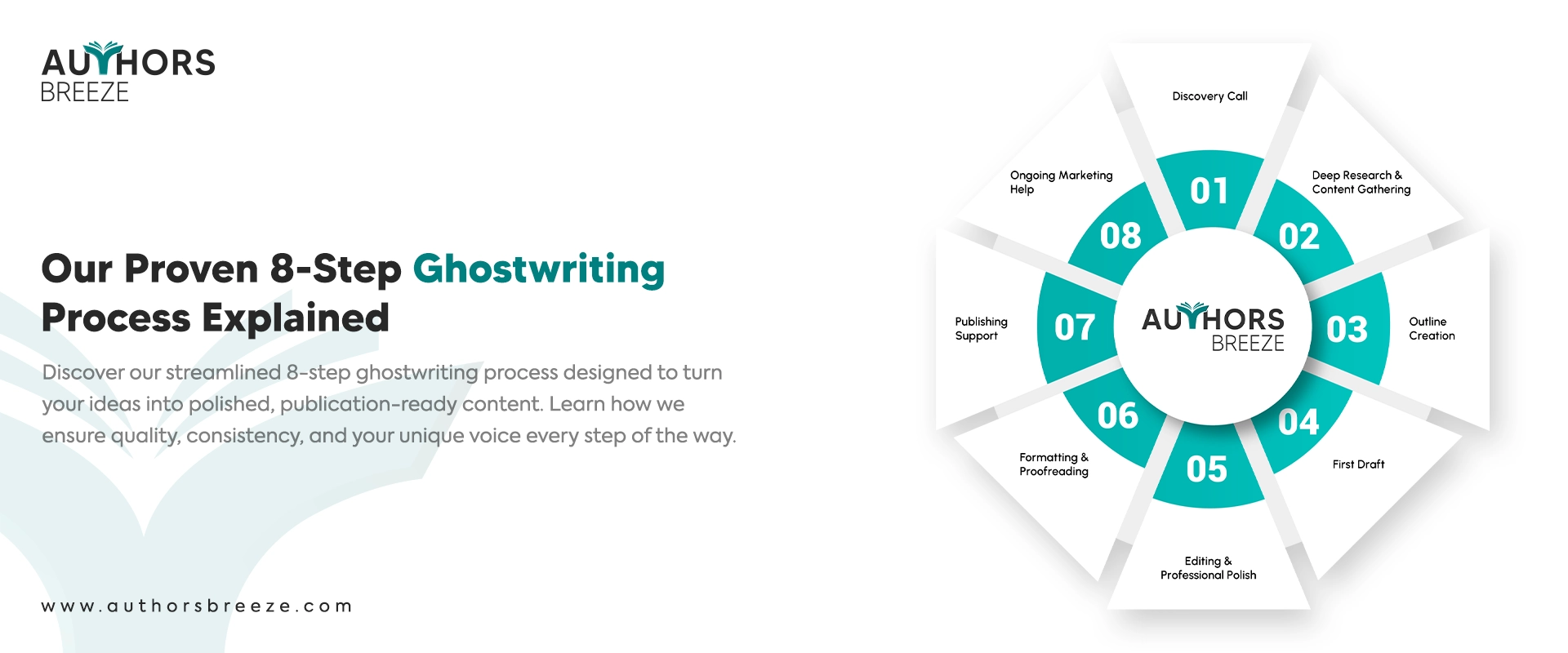
Our Proven 8-Step Ghostwriting Process Explained

Ghostwriting Process

Key Takeaways

  • Ghostwriting is a collaborative process where authors share ideas while professionals handle the writing.
  • A clear step-by-step workflow helps turn rough concepts into a finished manuscript.
  • Professional ghostwriters adapt to the author’s voice, tone, and goals.
  • Regular feedback and revisions keep the project aligned with the author’s vision.
  • Ghostwriting saves time for authors who struggle with consistency or structure.
  • Confidentiality agreements protect the author’s identity and ownership rights.
  • Editing and revisions are built into the process to improve clarity and flow.
  • Ghostwriting supports both fiction and nonfiction projects across genres.
  • Formatting and publishing guidance often follow manuscript completion.

If you’ve ever thought, “I’ve got the idea, but how do I turn it into a book?” — you’re not the only one. At Authors Breeze, we’ve helped countless clients bring their stories to life without the overwhelm, utilizing a simple ghostwriting process.

Today, we will look at exactly how we do it.

Forget stiff procedures or endless back-and-forth. Ours is a people-first, no-guesswork process. Also, you’re always in the loop.

Stuck With an Idea but Not the Words?

Many authors struggle to turn concepts into a structured prose. Authors Breeze ghostwriters help you develop, write, and polish your manuscript from start to finish.

Get Expert Ghostwriting Support

Our 8-Step Ghostwriting Services Process

Step 1. Discovery Call — Where the Story Starts

The ghostwriting process begins with a simple, friendly chat. No forms, no jargon.

  • We want to hear your thoughts,
  • What kind of book are you imagining, and
  • Where do you see it going?

An entrepreneur, expert, or aspiring novelist, whoever you are. This call shapes the foundation of everything ahead.

We also cover expectations, timelines, tone preferences, and confidentiality agreements.

And yes! A formal NDA is signed before anything moves forward.

Step 2. Deep Research & Content Gathering

Once we’re aligned, we start collecting everything you have—notes, voice memos, articles, or even raw ideas from your head. From there, we fill in the blanks with research where needed, especially for nonfiction or technical manuscripts. This ensures depth without dragging you into every detail.

Need help structuring those thoughts? Our “I Want to Write a Book, Where Do I Start?” guide can give you a head start before we even type a word.

Step 3. Outline Creation — The Story Takes Shape

Next, our ghostwriter creates a full outline, chapter by chapter. You get to approve it or tweak it before any actual writing begins. This makes sure we’re aligned on structure and flow before diving in.

Step 4. First Draft — Built Around Your Voice

With the outline approved, we begin writing chapters. But here’s the key: each chapter is reviewed by you as we go. You suggest edits, or let us know if something doesn’t sound quite like you. This step isn’t rushed. We work with you, not just for you.

Many clients say this is the moment when it all starts to feel real.

Step 5. Editing & Professional Polish

Once the draft is completed and reviewed, we hand it to our in-house professional book editors. Spelling, grammar, consistency—everything gets tightened. The tone is refined, so it still sounds like you, just smoother. You’ll feel the difference instantly.

We’ve covered this step in more depth in our types of editing breakdown.

Step 6. Formatting & Proofreading

After the edits are done, we prep the manuscript for publishing. This includes proper chapter breaks, professional font usage, layout design, and a final proofread for stray errors. Whether your book ends up in hardcover, paperback, or eBook, we ensure a clean and professional look.

Want to explore this more? Visit our book formatting services page for a closer look at how we handle this detail.

Step 7. Publishing Support — Get It Out There

Ready to release your story? We’ll handle ISBN assignment, registration, and distribution across major platforms like Amazon, Apple Books, and Barnes & Noble. Your manuscript doesn’t just sit on your hard drive—it finds its audience.

This is also the stage where our self-publishing experts jump in to ensure your book meets all industry standards.

Step 8. Ongoing Marketing Help

Once published, we won’t vanish. If you choose, we’ll support you with promotional strategies: Amazon ads, social media content, book video trailers, branding with author website—you name it. Some of our past clients have landed on the WSJ and NYT bestseller lists. That support is available to you, too.

Curious how authors like Scott Cawthon or Ken Honda did it? We walk through their ghostwriting and launch journeys in our case studies section.

Turn Your Draft into a Polished Layout

Even a well-written manuscript can lose impact without clean formatting. Our experts provide comprehensive book layout and formatting for a polished, publishing-ready book.

Start Book Formatting Now

Final Word: It’s Time To Write Your Book

We don’t believe in a copy-paste approach. Every author is different—and so is every manuscript we write.

If you’ve been sitting on your idea for months (or years), there’s no better time to turn it into a finished book. Our ghostwriting process was built to make it easier, not to pressure you, but to support you.

Ready to get started? Let’s talk. Or if you want to get into more details, visit our ghostwriting services page and see how we can help.

Frequently Asked Questions

How does the ghostwriting process begin?

It usually starts with a consultation where the author shares ideas, goals, and expectations.

Will I be involved during the writing process?

Yes. Authors review drafts, give feedback, and approve revisions at each stage.

Can ghostwriting help if I only have a rough idea?

Yes. Ghostwriters help organize ideas, develop structure, and build a complete manuscript.

Is ghostwriting only for books?

No. Ghostwriting can also be used for articles, memoirs, business content, and blogs.

How long does the ghostwriting process take?

Timelines vary by project length and complexity, but clear milestones keep progress steady.

Have Questions About the Ghostwriting Process?

From concept to final draft, ghostwriting can feel complex and uncertain. Contact Authors Breeze today to get clarity, options, and expert guidance.

Book a Call

Author : Christina N Hummel

19th Jan 2026

What Is Commercial Fiction? A Practical Guide for Modern Authors

Commercial Fiction
Commercial Fiction

Key Takeaways

  • Commercial fiction is written to entertain and appeal to a wide audience.
  • It is usually plot-driven, fast-paced, and easy to read.
  • Literary fiction focuses more on style, themes, and deep characters.
  • Commercial fiction includes genres like romance, thrillers, sci-fi, and women’s fiction.
  • Upmarket fiction blends commercial appeal with literary depth.
  • Big concept fiction uses a strong, simple idea to hook readers.

From Imagination to Market-Ready Fiction

Writing commercial fiction takes more than creativity alone. Hire our fiction writing specialists to develop stories readers actually want to finish.

Get Fiction Writing Services

Introduction

When writers and readers talk about commercial fiction, they’re referring to a category of books that are written with broad appeal in mind — stories that captivate readers, dominate bestseller lists, and keep pages turning. But what exactly makes a book commercial? How does it differ from literary work? And what do subcategories like upmarket and women’s fiction mean in today’s publishing landscape?

Let’s break it down.

What is Commercial Fiction and Literary Fiction

The definition of commercial fiction is simple: it is fiction written primarily to entertain, engage, and appeal to as many readers as possible. These stories are usually plot-driven, fast-paced, and easy to read. They rely on strong hooks, relatable characters, and satisfying resolutions. This type of storytelling is often referred to as commercial storytelling, emphasizing clear, engaging narratives that keep readers turning pages.

In contrast, literary fiction, or a literary novel, prioritizes artistry, thematic depth, and complex character development over plot. Literary novels often explore profound social, psychological, or philosophical ideas and may have an ambiguous ending or slower pacing. While commercial fiction focuses on selling books to a broad audience, literary fiction often seeks critical acclaim and awards.

In short:

  • Commercial fiction = broad appeal, entertainment, plot-driven.
  • Literary fiction = artistic, character and theme-focused, sometimes experimental.

What is Commercial Fiction Genre

This is not a single type of story but a category that includes multiple genres written for mainstream readers. It encompasses romance, thrillers, mysteries, contemporary fiction, sci-fi, fantasy, and women’s fiction — essentially anything that appeals to a large audience.

A fiction novel in the commercial category is typically written with a clear structure, strong narrative drive, and accessible writing style. These novels often aim to become bestselling books because of their broad appeal and engaging plots.

Some core features include:

  • High-concept ideas that hook readers immediately.
  • Relatable characters with clear goals and stakes.
  • Fast-paced and plot-driven narratives that are easy to follow.

Popular commercial fiction genres include:

  • Romance
  • Mystery and thrillers
  • Fantasy and science fiction
  • Contemporary fiction
  • Horror and suspense

Each genre has established reader expectations. Successful commercial storytelling respects those expectations while offering something fresh. In this context, the fiction novel meaning becomes closely tied to genre clarity. Readers want to know what kind of experience they are buying before they commit to a book.

What is Commercial Women’s Fiction

Commercial women’s fiction is a subcategory of commercial fiction that centers on female protagonists and their emotional journeys. These stories often explore relationships, personal growth, family, and life challenges. They are written to resonate emotionally with readers while still following a commercial storytelling style, including clear plotlines, engaging pacing, and satisfying conclusions.

Women’s fiction novels can also be upmarket fiction, which blends mass appeal with deeper literary elements like emotional depth, reflective themes, or stylistic nuance. The main goal is to entertain while providing a meaningful or thought-provoking experience.

What is Upmarket Commercial Fiction

This genre sits between commercial and literary fiction. It is commercial enough to attract a large audience but incorporates the richness, complexity, and literary quality of more artistic works.

Key characteristics:

  • Strong writing style with polished prose.
  • Thoughtful themes alongside plot-driven narratives.
  • Characters with depth, not just archetypal figures.

This type of fiction appeals to both general readers and critics, allowing authors to write stories that are entertaining and intellectually satisfying. It’s a sweet spot for those looking to create books that are both bestselling and critically appreciated.

From Concept to Page-Turner

Unfinished drafts or scattered ideas can hold your story back. Let our ghostwriters bring precision, depth, and market-ready polish to your commercial fiction.

Get Expert Ghostwriting Support

What is a Literary Twist in Commercial Fiction

This means integrating literary qualities into a commercially driven story. This could include:

  • Complex characters with internal conflicts.
  • Symbolism or thematic depth.
  • Sophisticated, evocative language that elevates the plot.

This approach allows a story to maintain its commercial appeal while offering more substance, making it more likely to linger in the reader’s mind long after finishing.

What is Big Concept Commercial Fiction

It is defined by a high-concept premise — a story that can be summarized in a single, compelling sentence. These stories usually have:

  • A strong fiction novel, meaning that it is easy to pitch.
  • A hook that sparks curiosity, like “what if humans could live forever?” or “what if a private detective could read minds?”
  • Potential to become a book commercial success due to its immediate marketability.

Big concept stories are often used in commercial storytelling to grab attention quickly, helping books stand out in a crowded market and appeal to a wide readership.

Conclusion

Commercial fiction is more than just popular books; it is a storytelling approach designed to engage readers, tell compelling stories, and sometimes achieve bestseller status. From women’s fiction to upmarket novels and big concept thrillers, this type of fiction covers a spectrum of stories that balance entertainment, emotional engagement, and narrative appeal.

If you are a reader searching for engaging stories or an author hoping to write a bestselling fiction novel, understanding commercial fiction and its subcategories is key. Platforms like Authors Breeze can help you explore the world of commercial type of fiction, offering expert guidance, fiction writing services, and non-fiction writing services to bring your book ideas to life.

Dive into this exciting world of storytelling, and discover why these stories captivate millions of readers every year.

Frequently Asked Questions

What is commercial fiction?

Fiction written to entertain a wide audience, often plot-driven and easy to read, with the potential to be a bestselling novel.

How is commercial fiction different from literary fiction?

Commercial fiction focuses on plot and entertainment, while literary fiction emphasizes style, themes, and character depth.

What is commercial storytelling?

Commercial storytelling is the art of writing stories that are engaging, accessible, and appealing to a wide audience, often designed to become bestselling fiction novels.

What is the meaning of EN fiction?

EN fiction simply refers to fiction written in the English language.

Want Your Commercial Fiction to Reach Readers?

Writing and publishing a commercial fiction book can feel overwhelming. Partner with us today and get expert support with writing, editing, design, and marketing.

Get a Quote

Author : Christina N Hummel

09th Dec 2025

Children’s Book Publishing 101: A Quick Guide to Publishing Kids’ Books

Children’s Book Publishing

Key Takeaways

  • A successful children’s book starts with a strong, simple, and visual story idea.
  • Your manuscript should match the reading level of your target age group.
  • Professional editing improves clarity, flow, and overall story quality.
  • High-quality illustrations are essential because they bring the story to life for young readers.
  • A clean, bright, and engaging cover design helps attract parents and children.
  • Proper book formatting makes sure text and images look balanced and easy to read.
  • You can choose between traditional publishing or self-publishing, depending on your goals.
  • Print-on-demand helps reduce upfront printing costs, especially for picture books.
  • Marketing is key—use social media, reviews, ads, and school events to reach readers.
  • Working with a full-service children’s book publishing team simplifies the entire process from writing to promotion.

Got a Story Kids Will Love?

Turn your idea into a beautifully published children’s book with our professional publishing services.

Get Expert Publishing Services

Introduction

Publishing a children’s book is one of the most exciting and rewarding creative endeavors an author can take on. Your story has the power to spark imagination, teach important life lessons, and become a cherished part of a child’s library for years to come. However, turning an idea into a finished book is more than just writing words on a page. It involves careful planning, thoughtful writing, professional children’s book illustrations, proper book editing, and the right book publishing service to bring your vision to life.

This guide walks you through every step, from conceptualizing your story to publishing and promoting your book. Whether you plan to self-publish a book or work with a children’s book publishing service, these tips will help you navigate the journey smoothly.

By the end, you will have a clear roadmap to navigate the process with confidence, ensuring your story reaches children in the most engaging and professional way possible.

1. Start With a Strong Story Idea

Every great children’s book starts with a clear, engaging idea. Children’s stories need to be simple, memorable, and visual. Before you begin writing, answer these questions:

  • Who is your target age group?
  • What is the main message or lesson?
  • Who are your characters, and why will children relate to them?
  • How will the story flow from page to page?

Tips for developing a strong story:

  • Keep the plot simple and easy to follow
  • Focus on one core message per book
  • Use characters that children can connect with
  • Write visually, imagining the scenes as illustrations

2. Writing the Manuscript

Once your idea is clear, it’s time to write the manuscript. Remember, your target audience will influence the length, vocabulary, and sentence structure. Picture books often have 300–700 words, while early readers may go up to 1,200 words.

Tips for writing a children’s book:

  • Use short sentences and simple words
  • Keep one idea per page
  • Add repetition or rhyme for rhythm
  • Make dialogue natural and engaging

If you struggle with writing or want a perfectly polished manuscript, you can either read our blog: “How to Write a Children’s Book in 12 Easy Steps? [2025]” or hire our expert ghostwriters to help shape your story, maintain a consistent tone, and ensure it appeals to your target age group.

3. Editing Your Manuscript

Editing is crucial. Even minor mistakes can confuse young readers or distract them from the story. Professional book editing improves readability, pacing, and storytelling quality.

Editors typically check:

  • Grammar and spelling
  • Reading level appropriate for the age group
  • Character consistency and development
  • Page-to-page flow and pacing

Some affordable book publishing services include book editing services as part of their packages, making sure your manuscript is ready for illustrations and design.

4. Choosing the Right Illustrations

Illustrations make children’s books come alive. They help tell the story visually and engage readers. Selecting the right style is essential.

You can work with:

  • Hand-drawn illustrations for a classic, warm feel
  • Digital illustrations for vibrant and versatile images
  • Custom illustrations tailored specifically to your story

You can hire an illustrator for a children’s book through a book illustration firm or an individual professional children’s book illustrator. Experienced illustrators understand how to:

  • Convey emotion and character personality
  • Balance text and images
  • Match illustrations to your story’s tone

Tips when working with an illustrator:

  • Share detailed character descriptions and scene ideas
  • Provide reference images or inspiration
  • Approve sketches before finalizing artwork

High-quality illustrations not only enhance your story but also make your book visually appealing for children and parents alike.

5. Designing Your Book Cover

Your book cover is the first thing potential readers see. Therefore, an engaging book cover design is essential as it can make your book stand out and attract buyers as well.

The following are important elements of a strong book cover:

  • Clear, readable title
  • Eye-catching illustration
  • Bright, appealing colors
  • Simple and clean design

Remember, the cover should match the style and tone of the inside illustrations. However, if it seems a little too much for you, seek help from professional book cover designers. They make sure your book cover is perfectly aligned with your book.

6. Book Layout/Formatting

Once the text and illustrations are ready, the next step is book layout, or you can say book formatting. The layout makes sure text and images complement each other on each page.

Things to consider:

  • Placement of text on the page
  • Image sizes and margins
  • Page numbering
  • Consistency throughout the book

A good book formatting balances visuals and text so that children can follow the story easily.

Formatting Delays Holding Up Your Book Launch?

Small layout errors can slow down the publishing process. Author’s Breeze delivers fast, reliable formatting that keeps your launch on track.

Hire Book Formatters

7. Choosing the Publishing Path

After your book is written, illustrated, and designed, it’s time to publish. You have two main options, i.e, traditional publishing and self-publishing.

Traditional Publishing

  • Offers professional support and distribution
  • Takes longer to get approval and published
  • You may have less control over illustrations and cover design

Self-Publishing

  • Gives you full creative control
  • Faster publishing timeline
  • Services like Amazon Self-Publishing allow global reach

Many authors prefer self-publishing services because they can handle all aspects, such as writing, illustration, editing, layout, printing, and marketing. This approach streamlines the entire children’s book publishing process, especially for first-time authors.

To learn more, read: Self-Publishing vs Traditional in 2025 [Which is Better?]

8. Printing and Binding Your Book

Once your book files are ready, printing is next. Print on demand is a popular choice because it reduces upfront costs. This means you print copies only when someone orders them.

Other printing options:

  • Hardcover or paperback
  • Matte or glossy finish
  • Premium color for vibrant illustrations

Remember: high-quality printing is especially important for picture books, where bright, sharp illustrations are essential.

9. Marketing and Promotion

Publishing is only part of the journey. Marketing makes sure your book stands out and reaches your target audience.

Following are some effective ways to market your children’s book:

  • Share on social media and blogs
  • Submit to book review websites
  • Run Amazon ads
  • Participate in local book fairs or school readings
  • Use book promotion services

Marketing can be daunting for first-time authors. Therefore, you can hire expert book marketers to help your book reach parents, teachers, and librarians effectively.

Benefits of Working with a Full-Service Publishing Team

Publishing a children’s book involves multiple steps: writing, illustrating, editing, designing, printing, and marketing. A full-service team simplifies this process.

Benefits include:

  • One point of contact for all services
  • Access to professional illustrators and editors
  • Integrated book layout and cover design
  • Affordable packages for first-time authors

Professional teams like Author’s Breeze offer complete children’s book illustrations and publishing services, helping you self-publish a book without stress. They manage every detail, so you can focus on your story.

Essential Tips for First-Time Authors

Before publishing, keep these tips in mind:

  • Keep your story simple, visual, and age-appropriate
  • Work with professional illustrators to make your book stand out
  • Invest in editing and layout for a polished final product
  • Choose a publishing model that suits your goals
  • Plan marketing from the start to increase visibility

Writing a children’s book is both creative and rewarding. Thus, with proper planning and professional support, your book can entertain, educate, and inspire young readers.

To get more detailed insights, check our other blog: A Guide For First-Time Authors To Publish Their First Children’s Book

Conclusion

Publishing a children’s book may feel overwhelming, but with clear steps and the right support, it becomes achievable. From writing and editing to layout, printing, and marketing, every stage contributes to a successful book.

If you want a smooth publishing experience with expert guidance, Author’s Breeze offers complete children’s book publishing services. They can help with ghostwriting, professional illustrations, book design, printing, and promotion—everything you need to turn your story into a book children will love.

Frequently Asked Questions

How much does it typically cost to publish a children's book?

The cost to publish a children's book can range from $500 to $5,000, depending on whether you choose self-publishing or a traditional publisher.

How do I get my children's book published?

You can publish your children's book by submitting it to traditional publishers or opting for self-publishing through platforms like Amazon KDP.

What is the best children's book publishing company?

Popular children's book publishers include Authors Breeze, Penguin Random House, and HarperCollins, known for their strong market presence.

How much money can you make off of publishing a children's book?

Earnings vary widely, but authors typically earn 5-15% royalties per book sold, with potential for higher profits through merchandising or adaptation deals.

Your Children’s Book Deserves Professional Care

From story development to final publishing, every step matters. Partner with Author’s Breeze today and start your publishing journey.

Contact Us

Author : Caroline Chartrand

28th Nov 2025

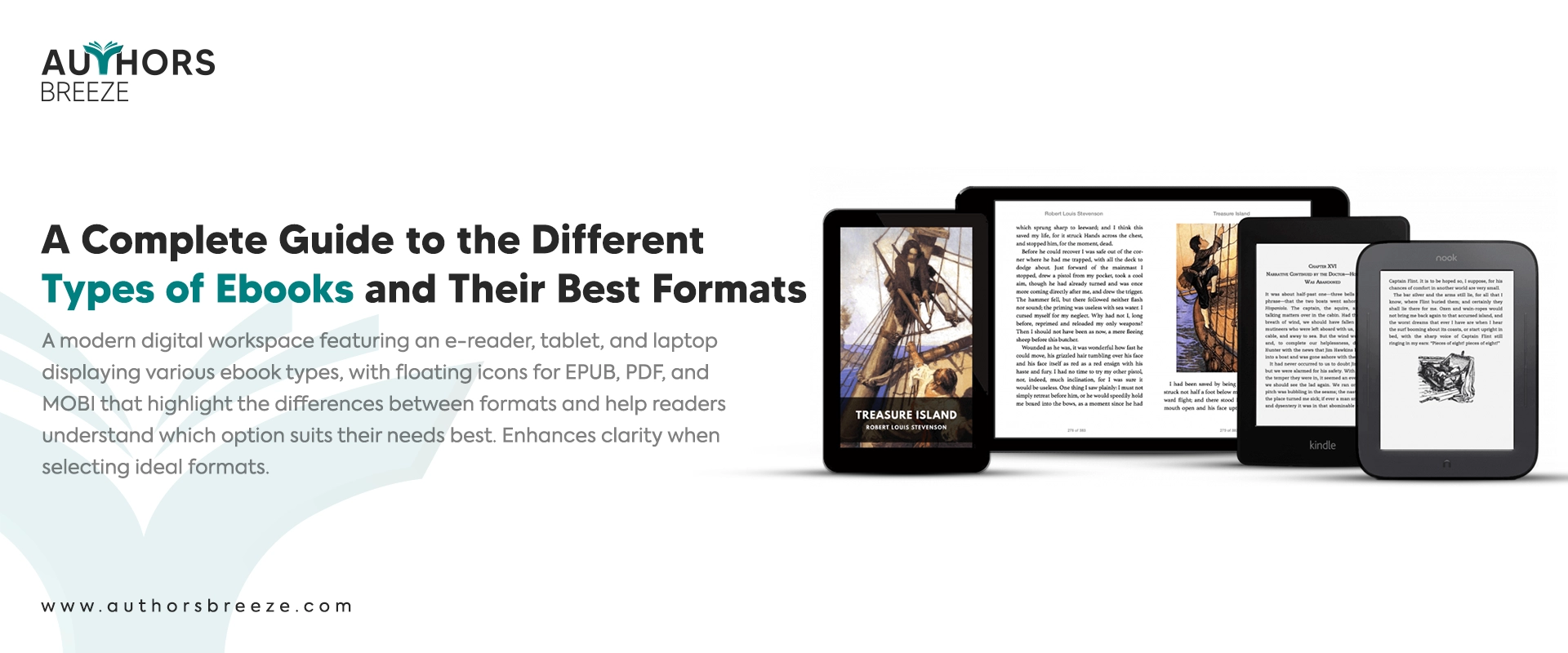
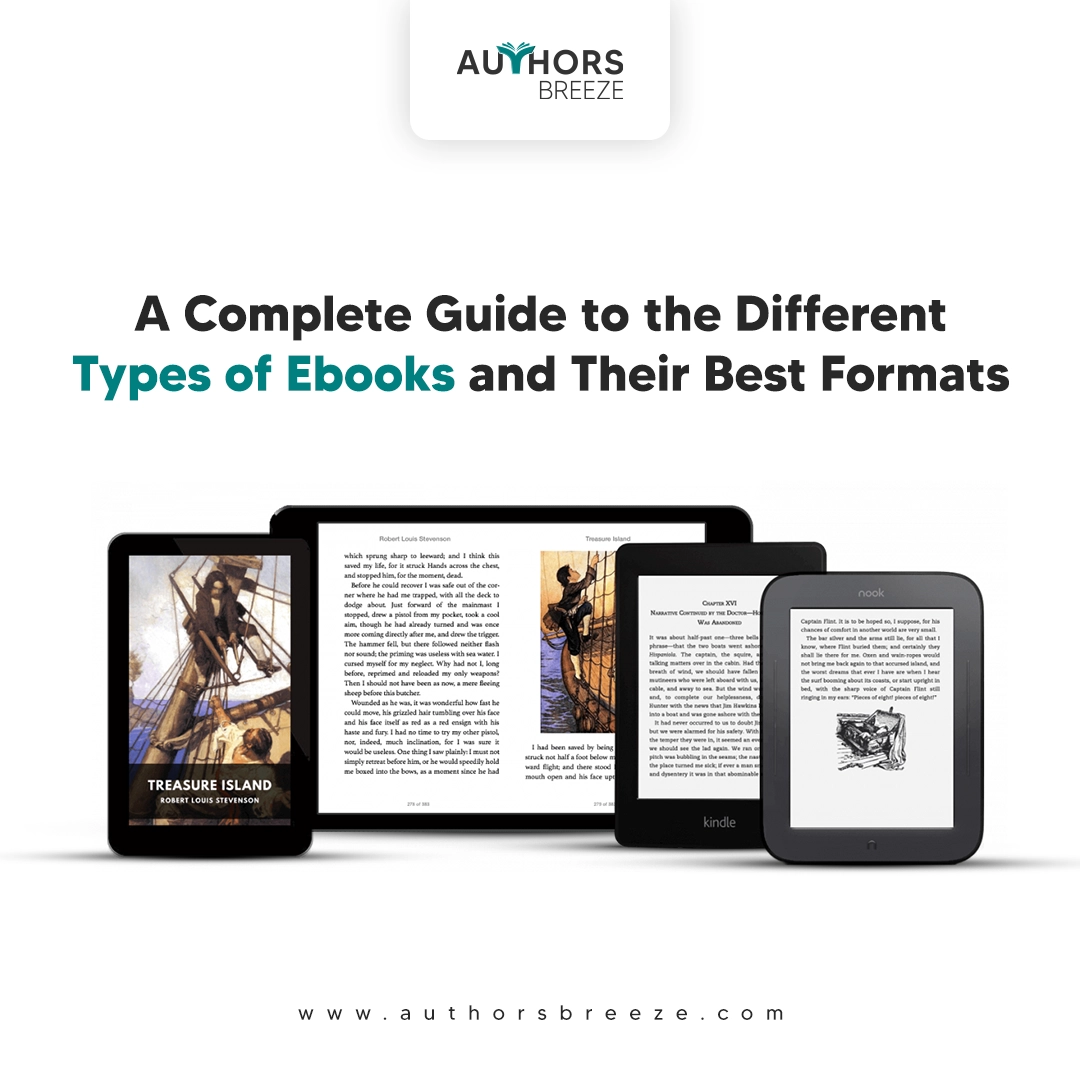
A Complete Guide to the Different Types of Ebooks & Their Best Formats

types of ebook
types of ebook

Key Takeaways

  • Ebooks come in many types, and each serves a different purpose.
  • Choosing the right ebook type helps you reach the right readers and meet your publishing goals.
  • Informational ebooks work best for teaching clear, simple concepts and generating leads.
  • Narrative ebooks focus on storytelling and are ideal for fiction and memoir authors.
  • Educational ebooks provide structured learning and are perfect for teachers, coaches, and trainers.
  • Technical ebooks build authority by sharing specialized or professional knowledge.
  • Marketing and lead-generation ebooks help businesses attract and convert potential customers.
  • Workbooks and interactive ebooks encourage readers to take action through exercises and checklists.
  • Visual ebooks shine when the content relies heavily on images, design, or graphics.
  • Reference ebooks offer quick, organized information that readers revisit often.
  • Picking a profitable niche depends on reader demand, your expertise, and market potential.
  • EPUB is the most flexible and widely supported ebook format across reading devices.
  • MOBI/KFX and AZW are ideal for Amazon Kindle readers and publishing on Amazon.
  • PDFs are best for visual, workbook-style, or formatted ebooks that need a fixed layout.
  • HTML/web-based ebooks allow interactive content and easy online access.
  • Understanding types, niches, and formats helps you create an ebook that sells and serves readers well.

Ready to Create the Perfect Ebook for Your Audience?

Choosing the right ebook type and format is just the first step — let our expert ebook writers craft content that captivates your readers and achieves your goals.

Get Professional eBook Writing Services

Introdution

If you want to self-publish a digital book today, the opportunities are endless. Readers are buying many different types of ebooks more than ever, and authors are using them to share ideas, stories, and expertise with a global audience.

But before you start writing a book, you should understand the different types of ebooks, their genres, and the most common ebook formats. When you know the differences, you can create a product that reaches readers, serves your goals, and generates leads.

At Authors Breeze, we help authors and professionals turn their ideas into ebooks that attract readers and generate sales. This guide will walk you through the major types of digital books, popular niches, the formats you can publish in, and how to choose the best option for your project.

Understanding Various Types of Ebooks

Many new authors assume an ebook is just a digital version of a printed book. However, the truth is different. There are many types of ebooks, and each serves a unique purpose. Some are perfect for storytelling, while others are designed for education, marketing, or lead generation.

Therefore, knowing the best-selling ebook categories with respect to audience can increase your reach and help you build authority.

Popular Types of Ebooks:

Here are the most popular ebooks, used by authors, entrepreneurs, publishers, and educators. Understanding each type helps you decide which one will be most effective for your project.

Informational Ebooks

Informational ebooks are designed to teach or explain something clearly and simply. Readers choose them when they want direct knowledge without distractions.

Examples include:

  • How-to guides
  • Step-by-step manuals
  • Industry explainers
  • Beginner guides on a topic

Best for: Business professionals, entrepreneurs, coaches, and consultants who want to attract leads

Narrative Ebooks

Narrative ebooks focus on storytelling and can be fiction or nonfiction ebooks. They are designed to engage readers emotionally, either through real-life experiences or fictional worlds.

Examples include:

  • Novels
  • Memoirs 
  • Short story collections
  • Creative nonfiction

Best for: Authors looking to publish stories or build a long-term writing career.

Educational Ebooks

Types of educational ebooks provide structured learning with chapters, lessons, and examples. They often include diagrams, images, and exercises for deeper understanding.

Examples include:

  • Study guides
  • Skill-building books
  • Lesson manuals
  • Topic-based educational resources

Best for: Teachers, trainers, and coaches who want to deliver knowledge in a structured format. These ebooks can also be used as part of courses or workshops.

Technical Ebooks

Technical ebooks focus on specialized knowledge in areas such as technology, science, finance, or business. They include clear definitions, accurate information, and practical applications.

Best for: Professionals who want to build authority and attract high-value clients. These types of ebooks are a great way to show expertise and credibility.

Marketing and Lead-generation Ebooks

These ebooks are shorter and designed to attract readers while guiding them toward a solution or product.

Examples include:

  • Free downloadable guides
  • Industry insights
  • Ignite leads ebooks
  • Problem-solution ebooks

Best for: Businesses, entrepreneurs, and authors who want to build credibility and generate sales.

Workbooks and Interactive Ebooks

Workbook formats let readers engage with the content. They include exercises, checklists, and reflection pages.

Best for: Coaches, consultants, and educators who want readers to take action. These can also be used for practical learning.

Visual Ebooks

Visual ebooks focus on design, graphics, and images. They are perfect for lifestyle, art, or photography niches.

Examples include:

  • Recipe books
  • Art portfolios
  • Photography collections
  • Style or design guides

Best for: Authors who need types of digital books that are visually driven. PDF format works best for these.

Reference Ebooks

Reference ebooks provide information readers return to frequently. They are organized, searchable, and designed for quick access.

Examples include:

  • Dictionaries and glossaries
  • Resource lists
  • Research summaries

Best for: Academics, professionals, and industry-focused authors.

Genres and Niches of Ebooks: Finding Your Perfect Fit

Choosing the right ebook niche is one of the most important steps for authors. This is because a clear niche helps you target the right readers, increase engagement, and build authority.

Some of the most high-demand ebook niches are as follows:

Business and Entrepreneurship

Business-focused ebooks are in constant demand. These types of ebooks are used by authors to share expertise, build authority, and attract clients.

The following are different types of ebooks for business:

  • How-to guides on starting a business
  • Marketing or content strategy ebooks
  • Case study ebooks for lead generation

Many authors hire professional ghostwriting services to create professional business ebooks that establish credibility and attract clients without having to write the content themselves.

Self-Help and Personal Development

Self-help is one of the most demanding and evergreen ebook topics in the literary world. Readers look for solutions to improve their habits, mindset, relationships, and personal growth.

Examples include:

  • Motivational guides
  • Mindfulness and productivity ebooks
  • Personal development workbooks

These types of ebooks work well for authors and readers because they deliver practical, actionable guidance in a fast, accessible format that builds trust, solves real problems, and creates lasting value for both sides.

Health and Fitness

Health, wellness, and fitness ebooks are highly popular among readers who want practical advice for a healthier lifestyle.

Examples:

  • Nutrition guides
  • Exercise routines and workout plans
  • Mental health or stress management ebooks

Authors creating these often combine visuals, charts, and checklists to make the content more interactive and engaging.

Technology and Programming

Technical ebooks are designed to share skills, tips, or advanced knowledge. They are often used for educational purposes or professional development.

Examples:

  • Coding tutorials and programming guides
  • Technology trend analyses
  • Software manuals or user guides

These ebooks can be highly profitable because readers seek actionable information that can improve their careers or business.

Education and Academic Resources

Educational ebooks target students, teachers, and lifelong learners. These types of ebooks for students are structured to provide clear lessons, exercises, and practical knowledge.

Examples:

  • Study guides and workbooks
  • Skill-building educational resources
  • Research summaries or academic guides

These ebooks are effectively used to improve learning and engagement.

Marketing and Lead Generation

Marketing ebooks helps businesses attract, educate, and convert readers into clients. They are often short, actionable, and designed for marketing or lead magnets.

Examples:

  • Email marketing guides
  • Social media strategy ebooks
  • Problem-solution or step-by-step guides

These ebooks are also excellent for generating leads, building an audience, and promoting services.

Fiction Genres

Fiction ebooks are all about storytelling and engaging readers emotionally. This includes a wide variety of genres, from romance to mystery to fantasy and science fiction.

Examples:

  • Romance novels
  • Mystery and thriller collections
  • Fantasy books and science fiction series
  • Memoirs and narrative nonfiction

Also Read: Fiction vs Non-Fiction  

Turn Your Digital Book Idea into a Published Ebook

Whether it’s a guide, story, workbook, or visual book, self publishing can be confusing. Authors Breeze handles formatting, distribution, and launch support for you.

Start Your eBook Publishing Journey

Choosing The Right Niche

When deciding which niche to focus on, consider the following things:

  • Reader demand – Are readers actively looking for solutions in your chosen niche?
  • Your expertise or interest – Can you create valuable content consistently?
  • Profit potential – Certain niches like business, self-help, and technical ebooks tend to be more profitable.

Many profitable kinds of ebooks focus on actionable skills, strategies, or information that readers can immediately apply.

By understanding niches, genres, and reader needs, you can position your ebook to succeed—whether you are creating a guide, workbook, narrative story, or a memoir.

Formats Of Ebooks: Choosing the Right One for Your Readers

After selecting the type of ebook and deciding on the niche, the next step is choosing the right ebook format. The format affects how your content looks on different devices, how readers interact with it, and how well it supports your goals. Whether you’re creating types of ebooks for business, educational ebooks, or ebooks for lead generation, picking the right format is essential for a professional and reader-friendly experience.

Here are the most common ebook formats explained in detail:

1. EPUB

EPUB is the most widely used ebook format. It is compatible with most e-readers, including Apple Books, Kobo, Nook, and many apps. Its flexibility allows text to adjust automatically to different screen sizes, making it perfect for informational, educational, or narrative ebooks.

Why it works:

  • Ideal for types of digital books that are mostly text-based
  • Supports images, hyperlinks, and interactive elements
  • Easy for readers to customize font size and style

2. MOBI / KFX

MOBI was Amazon’s long-time ebook format, now largely replaced by KFX for Kindle devices. This format is specifically designed for kindle readers and apps. If you are writing an ebook for amazon or want to reach the vast kindle audience, this format is essential.

Why it works:

  • Optimized for the Amazon Kindle store and devices
  • Supports bookmarks, notes, and highlights
  • Great for popular kinds of ebooks on Amazon

3. PDF

PDFs keep the layout fixed, so your ebook looks exactly as designed on any device. This is perfect for ebooks that rely on visuals, structured content, or interactive elements.

Why it works:

  • Great for visual ebooks, workbooks, and guides
  • Supports charts and images
  • Easy to download, print, or share

4. AZW

AZW is another Amazon-specific format. It supports rich content like images, bookmarks, and interactive features. While similar to MOBI/KFX, AZW is designed for newer Kindle devices and apps, allowing a higher-quality reading experience.

Why it works:

  • Ideal for rich-content ebooks such as illustrated guides or visually engaging stories
  • Supports DRM (digital rights management) to protect your content

5. HTML / Web-based ebooks

HTML ebooks are published online and read via a browser or web app. These are highly interactive, often including videos, links, quizzes, and forms. They are excellent for various types of ebooks for marketing, lead magnets, or online courses.

Why it works:

  • Perfect for interactive learning or marketing-focused content
  • Can be updated easily without republishing
  • Compatible with multiple devices and browsers

Also Read: EPUB vs MOBI: Which Ebook Format is Best for You?

Final Thoughts

Understanding types of ebooks, genres, and formats is the first step to publishing a successful ebook. When your ebook meets your readers’ needs and matches your goal, it becomes a powerful tool for leads, credibility, and sales.

Whether your goal is to educate, entertain, or generate leads, Authors Breeze is ready to guide you. Start your ebook journey today and turn your idea into a digital book readers will love.

Connect with Authors Breeze’s expert ebook writers and make your ebook dream a reality.

Frequently Asked Questions

What are the types of ebooks I can publish?

You can publish a variety of types of ebooks, including informational guides, educational resources, narrative stories, technical manuals, workbooks, marketing ebooks, and visual or interactive ebooks. Choosing the right type depends on your goal and audience.

Which type of ebook is best for beginners?

For beginners, informational or educational ebooks are usually the easiest to create and distribute. They provide clear guidance, are shorter in length, and work well for building an audience or generating leads.

What are the top-selling ebook niches?

Some high-demand ebook niches include business and entrepreneurship, self-help and personal development, health and fitness, technology and programming, education, marketing, and fiction genres such as romance, mystery, fantasy, and science fiction.

What ebook formats should I use?

The main formats are EPUB (flexible and widely compatible), MOBI/KFX (for Kindle devices), PDF (fixed layout for visual or workbook-style ebooks), AZW (Amazon-specific), and HTML/web-based ebooks (interactive, great for courses or lead magnets).

Not Sure Which Ebook Type Will Sell Best?

From lead generation guides to narrative stories, choosing the right type can make a huge difference. Contact Authors Breeze to plan a strategy that targets your audience and boosts engagement.

Contact Us to Plan Your Ebook Strategy

Author : Christina N Hummel

13th Nov 2025

What Is Purple Prose? Definition, Tips, Examples, and How to Avoid It

Don’t Have Time to Read? Listen to this Article Instead!

https://www.authorsbreeze.com/blogs/wp-content/uploads/Purple-Prose.mp3

Key Takeaways

  • Purple prose is overly flowery writing that distracts from the story.
  • It differs from flowery language because it overwhelms readers.
  • Common signs include long sentences, too many adjectives, and overwriting in fiction.
  • Writers can avoid purple prose by following the show, don’t tell, using shorter sentences, and applying feedback.
  • Understanding purple prose helps with prose criticism, fiction writing, and improving writing style overall.

Make Your Writing Clear and Reader Friendly

Purple prose can slow your story and distract readers from the plot. Our editing experts can help refine your writing and keep your prose clean, engaging, and polished.

Hire Expert Editors

Introduction

If you’ve ever been reading a novel and paused because the sentences felt too fancy or too detailed, you might have encountered purple prose. But what exactly is it, and how can writers recognize and avoid it?

In this guide, we explain what is purple prose in literature, show examples of purple prose in novels, discuss why it can be a problem, and provide practical writing tips and editing tips for writers to avoid it. Whether you are working on creative writing, fiction writing, or story writing, understanding purple prose will help you improve your prose style and make your writing clear and engaging.

Let’s dive in.

What Is Purple Prose in Literature?

Purple prose is a type of descriptive writing or narrative style where the language becomes too fancy, overdone, or flowery. It often uses many literary devices like metaphors, similes, and adjectives. While description can improve a story, purple prose focuses too much on style instead of the story itself. As a result, it can distract readers from the plot or characters, making your writing feel heavy or hard to follow.

For example, instead of writing:

“The garden was beautiful in spring.”

Purple prose might read:

“The garden, bathed in the golden light of the sun, overflowed with flowers of every color, their fragrance swirling in a mesmerizing dance, as if the world itself had paused to celebrate the miracle of spring.”

This shows how overwriting in fiction can slow the story and take attention away from the main events.

Key Characteristics of Purple Prose

You can spot purple prose in your writing by looking for these signs:

Too Much Description

Long paragraphs with many adjectives, adverbs, or detailed imagery can overwhelm readers.

Flowery Language

Words or phrases that sound poetic but don’t move the story forward.

Interruptions in Narrative Style

Overly long or complicated sentences can slow the story.

Too Many Literary Devices

Overusing metaphors, similes, or other figurative language can confuse readers.

Showing Too Much

While “show, don’t tell” is important, purple prose often shows unnecessary details, turning small moments into long descriptions.

Lack of Clear Meaning

If sentences read beautifully but the main idea is unclear, your writing may lean toward bad prose.

Purple Prose vs Plain Prose

It’s important to know the difference between purple prose vs plain prose:

  • Plain prose is simple, clear, and keeps readers focused on the story.
  • Purple prose is too ornate, distracts from the plot, and can make reading tiring.

For Example:

  • Plain: “He felt nervous as he walked into the dark room.”
  • Purple: “His heart thudded violently, a relentless drum echoing in his chest, as he gingerly stepped into the obsidian darkness, shadows clawing at his mind with icy fingers of dread.”

Meanwhile, both sentences convey the same idea, but purple prose slows the story with too much descriptive writing.

Famous Examples of Purple Prose in Novels

Here are some famous purple prose passages from literature:

  • Thomas Hardy – Tess of the d’Urbervilles
    Hardy’s nature descriptions are rich and detailed, sometimes overwhelming modern readers.
  • Oscar Wilde – The Picture of Dorian Gray
    Wilde often used fancy language to set the mood, sometimes slowing the story.
  • Edith Wharton
    Her writing contains highly detailed settings with many literary devices, which can make scenes feel long.

These examples show that purple prose has a long history, but most readers today prefer a prose style that balances description with story writing clarity.

Don’t Let Flowery Writing Undermine Your Story

Overwriting and unnecessary descriptions can turn readers away. Seek help from professional proofreaders to tighten language and improve readability.

Hire Professional Proofreaders

Why Purple Prose Can Be a Problem

Purple prose can sound pretty, but it has certain drawbacks, such as

  • It slows reading. Too much flowery language or excessive description in writing can It distracts from the plot and characters. Readers may remember a sentence but forget what happened.
  • make the story feel long.
  • It can make writing feel inexperienced. Even in fiction writing, a simple and clear narrative style works best.
  • It can push readers away. Fast-paced genres such as romance, mystery, or thriller need clear writing.

In short, purple prose is a problem when it gets in the way of the story instead of supporting it.

How to Identify Purple Prose

Check your manuscript for these signs:

  • Count Adjectives and Adverbs
    Using too many often signals purple prose.
  • Check Sentence Length
    Very long sentences with many clauses can slow the story.
  • Read Aloud
    Awkward or dramatic phrasing is easier to spot when spoken.
  • Seek Feedback
    Prose criticism from editors or beta readers helps identify overly descriptive parts.
  • Highlight Literary Devices
    Too many metaphors or similes can make sentences feel heavy.

How to Avoid Purple Prose

Following are some practical ways to improve writing clarity and avoid descriptive writing mistakes:

  • Focus on storytelling: make sure every word moves the plot forward or shows something about your characters.
  • Limit adjectives and adverbs: strong nouns and verbs usually make writing clearer than too many descriptive words.
  • Balance description and action: describe scenes enough to create a picture, but don’t slow down the story.
  • Show, don’t tell carefully: only show details that are important to the plot or character, and avoid overloading readers.
  • Edit your work: cut extra adjectives, simplify long sentences, and remove unnecessary literary devices.
  • Get professional feedback: professional editors can help you find parts that are too heavy, making your writing smoother and easier to read.

Purple Prose vs Flowery Language

Many authors often confuse purple prose with flowery language. However, they are very different from each other. Some of the prominent differences between purple prose and flowery language are as follows:

FeaturePurple ProseFlowery Language
PurposeFancy style that can confuseAdds beauty without slowing the story
ClarityHard to followClear and readable
Sentence LengthVery long with many clausesBalanced and moderate
Literary DevicesOveruses metaphors, similes, adjectivesUses devices sparingly
Story FlowSlows the storySupports story naturally
Reader ExperienceCan feel tiringEngaging and enjoyable

Editing Tips for Purple Prose

Every writer should follow these editing tips to polish their manuscript:

  • Highlight long, elaborate passages.
  • Ask if each sentence is necessary or could be simpler.
  • Focus on plot, character development, and pacing over fancy descriptions.
  • Get professional feedback to refine your prose style.

If the editing process overwhelms you, get help from expert editors and get rid of purple prose from your manuscript.

Purple Prose and Self-Publishing

For authors planning to self-publish a book, understanding purple prose is important. Readers want stories that are easy to read but still immersive. Too much flowery language can affect reviews and sales.

By following these tips, you can maintain a strong narrative style, avoid overwriting in fiction, and produce polished work. Furthermore, professional publishing services can also help writers remove purple prose while keeping their unique voice.

Final Thoughts

Purple prose is not always bad. But too much descriptive writing, lowery language, or overwriting can slow the story and confuse readers. Writers should balance creativity with clarity while focusing on plot, character, and story writing.

Techniques, i.e. reading aloud, limiting adjectives, and getting feedback, help turn your writing into good prose. Avoid purple prose while letting your voice shine, keeping readers engaged from start to finish.

Self-publishing companies such as Author’s Breeze can help writers avoid purple prose. Our expert ghostwriters can refine their writing as per their needs and make their manuscripts a good read.

Frequently Asked Questions

Why do they call it purple prose?

It is called purple prose because the writing is so fancy that it draws attention to itself instead of the story. The term comes from Latin, describing writing that stands out like purple ink.

What are the key characteristics of purple prose?

  • Long, complicated sentences
  • Too many adjectives and adverbs
  • Overuse of metaphors or similes
  • Dramatic or overdone tone
  • Distracts from plot or characters

How can I identify purple prose in my writing?

Look for heavy, confusing, or overdone sentences. Reading aloud helps spot overly descriptive passages.

What are some famous purple books?

  • David Copperfield by Charles Dickens
  • The Faerie Queene by Edmund Spenser
  • Romantic-era novels with rich, detailed language

What is the difference between poetic and purple prose?

Poetic prose adds rhythm, imagery, and emotion without slowing the story. Purple prose uses too much decoration and distracts from the plot.

Struggling With Overwritten or Confusing Passages?

Identifying purple prose on your own can be tough, especially mid project. Contact Authors Breeze to get expert help refining your writing and strengthening your narrative flow.

Connect With Us

Author : Charles Maynes

16th Oct 2025

Top 10 Best NaNoWriMo Alternatives for Writers In 2026

NaNoWriMo Alternatives

Don’t Have Time to Read? Listen to this Article Instead!

https://www.authorsbreeze.com/blogs/wp-content/uploads/NaNoWriMo-Alternatives.mp3

Key Takeaways: The Top 10 Best NaNoWriMo Alternatives for Writers In 2026

  • National Novel Writing Month may have slowed in 2026, but writers can still find motivation through exciting new NaNoWriMo alternatives.
  • The Reedsy Novel Sprint 2026 helps writers stay focused and achieve short-term goals.
  • ProWritingAid Novel November blends writing and editing to create stronger drafts.
  • Order of the Written Word offers structure, guidance, and mentorship for committed writers.
  • World Anvil NovelEmber supports fantasy and sci-fi authors with great worldbuilding tools.
  • AutoCrit Novel 90 gives writers a steady 90-day plan to finish and refine their novels.
  • StoryADay encourages creativity by challenging writers to craft a new story each day.
  • National Blog Posting Month helps bloggers stay consistent and improve their writing flow.
  • Ray Bradbury’s 52-Week Challenge inspires writers to complete one story every week.
  • Rogue’s Amazing Word Rush keeps writing fun with quick sprints and fresh prompts.
  • The 60-Day Novel Challenge motivates writers to complete a full novel in just two months.
  • Tools like 4thewords, Pacemaker, TrackBear, Scrivener, and Novlr help organize projects and track goals.
  • Communities such as Scribophile, My Write Club, and London Writers’ Salon keep writers connected and inspired.

Struggling to Hit Your Writing Goals?

Writing consistently is tough, and month-long challenges aren’t for everyone. Hire our ghostwriting experts to help you complete your manuscript with structure, pacing, and market-ready polish.

Hire Professional Ghostwriters

Introduction

For more than two decades, NaNoWriMo (National Novel Writing Month) has been a beloved event for writers everywhere. Every year, in the month of November, millions of authors would come together to write 50,000 words in just 30 days. But as we stepped into 2026, things took an unfortunate turn.

In recent years, NaNoWriMo has faced serious challenges such as funding issues, staff reductions, and limited community programs. Particularly because of these problems, NaNoWriMo has made an exit this year. Due to this sudden decision, many writers felt disappointed and nostalgic. They realized that a once-vibrant tradition has slowed down. It’s a little sad, especially for those who made lifelong memories during those writing marathons.

But here’s the good news: the spirit of NaNoWriMo isn’t gone, it’s evolved. There are now plenty of NaNoWriMo Alternatives that keep the passion alive. They offer similar motivation, structure, and accountability without being tied to one month or platform. Whether you’re into creative writing, novel writing, or even non-fiction writing, these modern writing challenges can help you. They can help you stay inspired, track your word count goals, and connect with like-minded writers.

So, let’s explore the top 10 best NaNoWriMo Alternatives in 2026. Furthermore, we’ll also look at some extra tools and communities to help you keep your creativity flowing all year long.

Top 10 Best NaNoWriMo Alternatives for Writers

1.     The Reedsy Novel Sprint 2026

Overview:

The Reedsy Novel Sprint is a short, focused challenge. It’s designed to help you complete big goals in small bursts. It happens several times throughout the year. Plus, it’s perfect for writers who thrive under time pressure.

Key Highlights:

  • Daily and weekly writing goals for better focus
  • Real-time progress tracking tools
  • Optional writing prompts to spark ideas
  • An active writing community to cheer you on

Best for:

Writers who prefer fast, high-energy sessions instead of long marathons. It’s perfect if you want quick progress while drafting a novel without long-term pressure.

2.     ProWritingAid Novel November

Overview:

ProWritingAid’s Novel November adds an editorial twist to the usual challenge. You’ll write and polish your novel using ProWritingAid’s built-in grammar and style tools.

Key Highlights:

  • Smart editing assistance while you write
  • Custom reports to track tone and structure
  • Word-count tracking and milestone celebrations
  • Helpful insights to overcome editing challenges

Best for:

Writers who want cleaner first drafts and immediate feedback. If your focus is both speed and quality, then this alternative keeps your writing sharp from start to finish.

3.     Order of the Written Word

Overview:

Order of the Written Word (OTWW) feels like joining a guild of dedicated writers. It combines structure, mentorship, and accountability in a creative environment.

Key Highlights:

  • Weekly assignments and writing missions
  • Feedback from mentors and peers
  • Private forums for sharing and support
  • Regular motivation and writing tips

Best for:

Writers who value structure and collaboration. If you like learning alongside others, then OTWW helps you grow your craft while staying consistent.

4.     World Anvil NovelEmber

Overview:

World Anvil’s NovelEmber blends storytelling with worldbuilding. It’s ideal for writers who love to create rich, detailed worlds. At the same time, it helps you keep your writing momentum.

Key Highlights:

  • Tools for maps, timelines, and character profiles
  • Word-count goals that match your story pace
  • Track both writing and worldbuilding progress
  • Connect with a creative global community

Best for:

Fantasy and sci-fi writers who love developing settings as much as stories. If your imagination thrives on detail, then NovelEmber keeps you inspired.

Struggling With Plot or World-Building?

Your sci-fi or fantasy idea is amazing, but turning it into a coherent story takes skill. Work with our expert fiction writers to develop intricate worlds, compelling plots, and fully-realized characters.

Get Help from Fiction Writers

5.     AutoCrit Novel 90 Writing Challenge

Overview:

The AutoCrit Novel 90 offers a realistic approach to finishing your novel in 90 days. It’s less intense than NaNoWriMo but just as motivating.

Key Highlights:

  • A 90-day writing roadmap with checkpoints
  • Style and pacing analysis from AutoCrit
  • Ongoing encouragement and accountability
  • Time to plan, write, and revise effectively

Best for:

Writers who prefer steady progress over speed. If you balance writing with work or life, then this challenge gives you the flexibility you need.

6.     StoryADay

Overview:

StoryADay is a month-long challenge that encourages you to write one complete short story every day. It’s fun, flexible, and fantastic for boosting creativity.

Key Highlights:

  • Daily writing prompts and themes
  • A welcoming and supportive community
  • Helpful podcasts and writing advice
  • A great way to experiment with new genres

Best for:

Writers who love short fiction and variety. It’s also a wonderful fit for anyone exploring poetry writing or quick story formats.

7.     National Blog Posting Month (NaBloPoMo)

Overview:

NaBloPoMo is perfect for bloggers or nonfiction writers. The challenge is simple: publish one blog post every day for a month.

Key Highlights:

  • Daily topic ideas and motivation
  • Flexible schedule and content themes
  • Peer support and blogging groups
  • Improves writing habits and consistency

Best for:

Writers interested in content or non-fiction writing. It’s a creative way to grow your blog, reach readers, and strengthen your writing discipline.

8.     Ray Bradbury’s 52-Week Short Story Challenge

Overview:

Inspired by Ray Bradbury’s creative philosophy, this 52-week short story challenge helps you write one story per week for a full year.

Key Highlights:

  • Weekly writing targets to build discipline
  • Optional genre prompts for fresh ideas
  • Encouragement to finish and move on
  • Helps build a full story collection

Best for:

Writers who enjoy steady, long-term goals. It’s ideal for those who want to grow a body of work without daily deadlines.

9.     Rogue’s Amazing Word Rush (RAWR)

Overview:

RAWR is a playful, community-based challenge. It’s filled with spontaneous writing sprints and creative prompts.

Key Highlights:

  • Timed writing sessions to boost productivity
  • Surprise prompts and themed events
  • Fun competitions and rewards
  • A laid-back, encouraging environment

Best for:

Writers who want motivation without pressure. If you like fast writing bursts and social interaction, then RAWR makes writing genuinely fun.

10.The 60-Day Novel Challenge

Overview:

This 60 day novel challenge is all about finishing your novel in two months. It’s intense, structured, and packed with motivation.

Key Highlights:

  • Two-month schedule with word-count targets
  • Check-ins and progress reminders
  • Supportive community and feedback
  • Encouragement to revise as you write

Best for:

Writers who want to stay focused and finish fast. If you love a challenge but still want balance, then this is a solid pick.

Writing Communities to Join

Besides the writing challenges mentioned above, you can also join various writing communities as NaNoWriMo alternatives. This is because surrounding yourself with fellow writers often makes a real difference.

The following are a few great groups that you can explore:

·        Scribophile

A feedback-based writing community where writers exchange critiques and support each other’s growth.

·        Facebook Groups

There are thousands of active writing groups where you can share goals, tips, and encouragement.

·        My Write Club

A supportive online hub for tracking goals, setting challenges, and celebrating progress together.

·        Shut Up & Write

Virtual and local writing sessions that help you focus in real time. It’s perfect for accountability.

·        London Writers’ Salon

A global writing community offering live sessions, mentorship, and structured write-ins to keep your creativity alive.

Other Helpful Tools and DIY Options

Not every writer thrives in a formal challenge. If you prefer flexibility, then try these great tools as NaNoWriMo alternatives to stay organized and motivated:

·        4thewords

A gamified writing platform where you “battle monsters” by writing words. It turns writing into an adventure and keeps you accountable.

·        Pacemaker

A smart goal tracker that adjusts your word count goals based on your progress. You can set flexible timelines and stay on track.

·        TrackBear

A simple online tracker that helps visualize your writing streaks and consistency.

·        Scrivener

A professional writing software that organizes chapters, notes, and outlines in one workspace. It is great for large projects.

·        Novlr

A clean and distraction-free writing tool that auto-saves your work, tracks stats, and helps you focus.

Conclusion

Although NaNoWriMo may be slowing down, your writing journey doesn’t have to. In fact, the world of NaNoWriMo Alternatives now offers plenty of ways to stay inspired. Whether your passion lies in creative writing, novel writing, or even poetry writing, there’s a challenge or community waiting to inspire you.

Moreover, at AuthorsBreeze, we truly believe every story deserves to be shared. Therefore, as a self-publishing company, we help writers turn their ideas into beautifully published books.

So, even if NaNoWriMo has closed, don’t lose hope. Instead, keep writing, keep dreaming, and let your words shine brightly in 2026 and beyond.

Frequently Asked Questions

Is NaNoWriMo actually shutting down?

No, NaNoWriMo is not shutting down; it continues to be an annual event for writers globally.

Is NaNoWriMo happening in 2026?

Yes, NaNoWriMo will take place in 2026, as it happens every November.

What to do after NaNoWriMo?

After NaNoWriMo, focus on editing, revising, and potentially submitting your novel for publication.

Need Help Completing or Publishing Your Book?

Whether you’re stuck on writing, formatting, or publishing, professional guidance makes all the difference. Contact Authors Breeze today and get expert support for every stage of your book.

Contact Us Today

Author : Caroline Chartrand

18th Feb 2025

How to Market an Ebook on a Low Budget with Authors Breeze

How to Market an Ebook

Key Takeaways

  • Marketing an ebook does not always require expensive advertising campaigns or large promotional budgets.
  • Identifying a specific audience helps authors focus their ebook marketing efforts and improve engagement.
  • A strong landing page, email list, and content marketing plan can drive consistent visibility.
  • Social media platforms provide affordable ways to promote your ebook and connect with readers.
  • Early reviews and visual content improve credibility and increase reader trust.
  • Strategic discounts, promotions, and smart ebook strategy planning can increase downloads and visibility.
  • Professional support from an ebook marketing agency like Authors Breeze can help authors maximize results even with limited resources.

Promote Your Ebook Without Overspending

Marketing an ebook on a small budget can be challenging. Let Authors Breeze create a smart ebook marketing strategy that increases visibility, reviews, and downloads.

Explore Our Ebook Marketing Services

Introduction

Publishing an ebook is an exciting milestone, but reaching readers requires thoughtful promotion. Many new authors worry about marketing costs, assuming that successful promotion demands expensive advertising campaigns and large budgets. In reality, effective strategies can help authors gain visibility without overspending.

Understanding how to market an ebook effectively allows writers to focus on the tactics that truly matter. Instead of relying on costly advertising, authors can build a strong marketing foundation through audience research, social media engagement, email marketing, and strategic promotions.

Low-budget marketing works best when authors combine consistent content creation with a clear promotional plan while learning how to market an ebook effectively. This includes building an online presence, sharing valuable insights related to the ebook’s topic, and encouraging readers to interact with the content.

Authors Breeze supports writers by offering professional guidance and practical solutions that simplify ebook marketing strategies. By combining affordable promotion techniques with expert support, authors can attract readers, build credibility, increase the sales and ebook performance without stretching their budget.

Identify the Right Audience Before Marketing

The first step in learning how to market an ebook successfully is understanding your readers. A clear audience profile helps authors craft messages that resonate with the people most likely to enjoy the book.

Many beginner authors attempt broad promotion, but targeted campaigns usually perform better. Knowing your audience allows you to create more effective content and improve overall ebook promotion results.

Consider the following questions when identifying your audience:

  • What genre or topic does your ebook cover?
  • What type of reader would benefit from your content?
  • Which online platforms do your readers use most frequently?
  • What problems or interests does your book address?

For example, a business guide will attract entrepreneurs, students, and professionals interested in growth. A romance story will appeal to readers who enjoy emotional storytelling and character-driven narratives.

When authors clearly define their audience, they can build a focused plan for how to market an ebook effectively and develop an effective ebook marketing strategy that connects directly with interested readers.

Build a Landing Page for Your Ebook

A dedicated landing page acts as the central hub for all promotional efforts. Instead of directing potential readers to multiple platforms, a landing page gathers all essential information in one place.

An effective ebook landing page typically includes:

  • A compelling book description
  • Author introduction
  • Key highlights or benefits of the ebook
  • Sample excerpts or preview chapters
  • Reader testimonials or early reviews
  • A clear call-to-action for purchasing or downloading

This page also becomes the foundation of your ebook base, where interested readers can learn about your book and decide whether it matches their interests.

Even on a small budget, authors can create simple landing pages using blogging platforms or website builders. A well-structured page increases credibility and helps convert visitors into readers.

Use Social Media to Promote Your Ebook

Social media platforms play a key role in how to market an ebook without a large budget. Instead of posting constant promotional messages, authors should focus on creating engaging and valuable content.

Some effective ideas include:

  • Sharing quotes or highlights from your ebook
  • Posting writing insights or behind-the-scenes content
  • Hosting discussions or polls with readers
  • Creating short educational posts related to your topic

This type of content helps build a community and encourages readers to interact with your work.

While organic content is valuable, authors can also experiment with low-cost ebook ads to expand their reach. Even small campaigns can increase visibility if they target the right audience.

By maintaining consistent activity on social media, authors can strengthen their presence and gradually learn how to promote your ebook effectively.

Build an Email List for Long-Term Promotion

Email marketing is another powerful tool when learning how to market an ebook effectively. Unlike social media platforms that rely on algorithms, email allows authors to communicate directly with subscribers.

To grow an email list, authors can offer incentives such as:

  • Free chapters from the ebook
  • Bonus guides or worksheets
  • Exclusive content related to the book’s theme
  • Early announcements for upcoming releases

Once readers subscribe, authors can nurture the relationship through newsletters that share insights, updates, and recommendations.

This direct connection makes email one of the most valuable tools for long-term epub marketing and audience building.

Use Content Marketing and Guest Blogging

Content marketing helps authors attract readers organically by sharing useful or entertaining information related to their ebook topic.

Some common content marketing approaches include:

  • Writing blog articles related to your ebook’s subject
  • Publishing educational guides or tutorials
  • Sharing insights on online communities and forums
  • Creating social posts that highlight key ideas from the book

Guest blogging is another effective tactic. Writing articles for established websites exposes your work to new audiences who may not have discovered your ebook otherwise.

For instance, niche industries sometimes produce resources such as mortgage marketing ebooks 2 u, demonstrating how targeted content can reach highly specific audiences. Similar niche strategies can work for many types of ebooks.

By consistently publishing valuable content, authors strengthen their authority and increase reader trust.

Grow Your Audience with Expert Blog Writing

Struggling to create content that connects with readers? Our experts craft engaging, SEO-friendly blogs that attract readers and grow your audience.

Get Blog Writing Services

Collect Reviews and Early Feedback

Reviews are a critical element in understanding how to market an ebook successfully. Many readers rely on feedback from others before deciding to download or purchase a book.

One way to generate reviews is by sharing advance reader copies before the official ebook launch. These copies are typically provided to:

  • Bloggers
  • Influencers
  • Loyal email subscribers
  • Active community members

Early feedback creates social proof and encourages additional readers to explore the ebook.

Working with experienced ebook marketers can also help coordinate review campaigns and ensure the book reaches the right audiences.

Use Visual Content to Increase Engagement

Visual content can make ebook promotion more appealing and shareable. Eye-catching graphics often perform better on social media than plain text posts.

Examples of effective visual promotion include:

  • Quote graphics featuring memorable lines from the ebook
  • Infographics summarizing key ideas
  • Promotional banners announcing discounts or updates
  • Slide posts explaining useful concepts

Visual storytelling helps authors communicate ideas quickly while making their marketing content more engaging.

This type of approach supports both marketing epub efforts and broader online visibility.

Experiment with Affordable Advertising

Paid promotions can support how to market an ebook when used strategically. While organic promotion is essential, small advertising campaigns can also help increase visibility. Learning how to advertise ebooks allows authors to reach audiences beyond their existing network.

Affordable advertising options include:

  • Social media promotions
  • Sponsored posts on niche blogs
  • Newsletter promotions
  • Low-cost search ads

These campaigns should always target readers who are likely to enjoy the book. Careful targeting ensures that even a modest advertising budget produces meaningful results.

Many authors partner with an ebook marketing agency like Authors Breeze to develop campaigns that balance cost and impact.

Track Results and Improve Your Strategy

Marketing is most effective when authors monitor performance and adjust their approach over time.

Key metrics to track include:

  • Website visits
  • Email open rates
  • Social media engagement
  • Ebook downloads and purchases

By reviewing these insights, authors can refine their promotion efforts and strengthen their overall ebook marketing approach.

Over time, this data helps shape a stronger and more effective ebook strategy that supports consistent growth.

Conclusion

Promoting an ebook successfully does not require a large budget. By focusing on audience research, content creation, social engagement, and strategic promotions, authors can build strong visibility and attract readers organically.

Understanding how to market an ebook helps writers concentrate on the tactics that produce real results. Strategies such as email marketing, guest blogging, early reviews, and visual promotion can dramatically improve discoverability without excessive spending.

Authors Breeze supports writers by offering practical guidance and professional solutions that simplify ebook promotion. With the right planning and consistent effort, authors can build a powerful marketing foundation and confidently promote your ebook to the readers who will appreciate it most.

Frequently Asked Questions

What are the best ebook marketing strategies for beginners?

Beginner authors should focus on audience research, social media engagement, email marketing, guest blogging, and collecting reviews to increase credibility.

How can I promote my ebook with a small budget?

You can use free marketing channels such as social media, blogging, online communities, and email newsletters to build awareness and attract readers.

Do ebook ads really work?

Yes, targeted ebook ads can increase visibility and reach new audiences, especially when they are directed toward readers interested in your genre.

Why are reviews important for ebook marketing?

Reviews help build trust and encourage potential readers to try your ebook. Positive feedback also improves visibility on many ebook platforms.

Can an ebook marketing agency help increase sales?

Yes, working with professionals such as Authors Breeze can help authors develop effective campaigns, reach the right audience, and improve overall marketing results.

Ready to Grow Your Ebook Sales?

Let Authors Breeze help you promote your ebook with affordable strategies designed to reach more readers and increase downloads.

Contact Us

Author : Christina N Hummel

The Best Fantasy Book Publishers

Fantasy Book Publishers

Key Takeaways: The Best Fantasy Book Publishers in 2026

Quickly learn about fantasy book publishers:

  • Fantasy novels are important because they let us explore new worlds and ideas beyond the limits of reality.
  • Fantasy book publishers such as Penguin Random House, Macmillan Publishers, HarperCollins, Hachette Livre, and Simon and Schuster are among the best options. They offer comprehensive services. These companies are also considered the top five companies.
  • One of the best options for you is self-publishing your fantasy book with Authors Breeze. However, if you are looking for mid-sized or small fantasy book publishers, then you can choose companies such as The Parliament House, Talos Press, Text Publishing, Canelo, and Uproar Books.
  • Keep in mind that it is vital to explore fantasy book publishers’ sites before submitting your book, as it will give you an idea of what they are looking for and if they are suitable for you in terms of royalties and location.

Publish Your Fantasy Book

Don’t let your manuscript decline. Get it publication-ready with the help of our book publishing team.

Acquire Self-Publishing Services

Introduction

Feeling weird? Accept it! Fantasy flourishes on the strange, the unexpected, and the stuff that might make your grandma raise an eyebrow. We all love getting lost in fantastical worlds brimming with magic, mythical creatures, and epic quests. So, you want to be a fantasy author and score a book deal with a top-notch company? That’s awesome! But finding one of the best fantasy book publishers for your wild story can feel like wrestling a dragon – tricky business.

Fortunately, there are a number of publishers that offer to publish fantasy novels. However, each offers unique chances for writers to share their imaginative stories with the world. This guide will introduce you to some of the best fantasy book publishers. We also provide essential details about their imprints and guidelines for submission. So, start reading.

Why Finding the Right Publisher is Crucial for Fantasy Authors?

For fantasy authors, the right publisher is like a trusted guide for a complicated maze. A publisher goes beyond just printing and selling books. They play a vital role in the following:

Building Unique Worlds

Fantasy authors often create detailed, unique worlds. A good publisher understands how to give feedback. Thus, they help you make sure the world feels real and engaging for readers. They can help balance world-building with character growth and the story itself so it doesn’t get stuck in too many details.

Specialized Marketing

Fantasy has loyal readers. A publisher who knows the genre can effectively promote the book to the right audience. That is by using social media, book reviews, and other methods. Publishers also know the best places where fantasy readers gather, helping to market the book in the right spots.

Understanding Fantasy Trends

Fantasy is constantly evolving. A good publisher keeps up with these changes. In addition, they can help the author adjust their work to fit what current readers are interested in. They can also warn authors about common issues in the genre, like using overdone ideas or clichés.

Editorial Support

Publishers offer helpful advice to improve the story. They also make sure the writing is engaging and polished. They usually have skilled book editors who help with grammar and style and make sure everything is clear.

Distribution and Sales

A trusted publisher has connections with distributors and bookstores. Their help ensures the book gets in front of as many readers as possible. Publishers know how to boost sales with tactics such as discounts, Goodreads giveaways, and book signings.

In short, the right publisher is a valuable partner. They help fantasy authors navigate the tricky world of publishing and bring their creative stories to life.

List of Top Fantasy Book Publishers

1. Penguin Random House

Penguin Random House is one of the five big publishers – a famous firm that publishes books worldwide. It was created in 2013 when two older companies, Penguin Books (started in 1935) and Random House (started in 1927), joined together. Now, it has more than 300 different brands that publish books.

The people who work at Penguin Random House are experts at helping authors make their books the best they can be. They use their connections worldwide, new ways of doing things, and close teamwork with authors to give their books the best chance of success. The firm also protects the author’s ideas and supports their right to say what they want.

They have imprints specializing in different kinds of stories, such as:

  • Fiction,
  • Romance,
  • Science fiction,
  • Fantasy,
  • And mystery.

It also makes them great at helping new authors get started and assisting popular authors to continue their careers. They also know how to keep up with what’s popular. Most of their imprints don’t accept submissions without literary agents. So, hire a literary agent if you want your book to be published by them. If you don’t know how? Then, read our guide:

“How to Get a Literary Agent for Your Book?”

Here are some of their book publisher imprints that publish fantasy books:

Berkley

Accepts submissions without an agent? No

Publisher: Mid-size

DAW Books

Accepts submissions without an agent? Yes

Publisher: Mid-size

Ace Books

Accepts submissions without an agent? No

Publisher: Mid-size

Del Rey Books

Accepts submissions without an agent? No

Publisher: Mid-size

Spectra

Accepts submissions without an agent? No

Publisher: Mid-size

Penguin Random House India

Accepts submissions without an agent? No

Publisher: Largest

Source Books

Accepts submissions without an agent? Yes

Publisher: Mid-size

2. HarperCollins

HarperCollins Publishers is a big book company that has been around for more than 200 years. It started as a small family business but grew with hard work to become one of the biggest publishers in the world. Also, they have offices in 15 countries. More than 4,000 people work for them, helping authors publish about 10,000 new books every year in many different languages.

In addition, they offer a wide variety of books in both print and digital formats. The firm wants to share stories from people and cultures all over the world with readers everywhere because they believe in helping authors and their work. So, they give expert advice, promote their books, and help them connect with bookstores.

They have published many famous writers who have won major awards. Their imprints produce exciting and engaging stories for people of all ages. They offer many kinds of books, from stories about everyday life to fantasy. So, let’s explore the list of their book publishers imprints that accept fantasy novels:

Inkyard Press

Accepts submissions without an agent? No

Publisher: Small

Carina Press

Accepts submissions without an agent? No

Publisher: Mid-size

Harper Voyager

Accepts submissions without an agent? Yes

Publisher: Mid-size

Harper Collins India

Accepts submissions without an agent? No

Publisher: Small

Are you not familiar with imprints? Then, you can read our blog post:

“What is Imprint in Publishing?”

3. Macmillan Publishers

Macmillan is a famous book company from Britain that began in 1843. Started by two brothers named MacMillan, it has grown into a giant company. Today, it is owned by another company called the Holtzbrinck Publishing Group. And it works in more than 40 countries. Well-known for publishing books by talented writers, they also discover new authors.

Macmillan has many imprints. Each focuses on making different types of books, such as fiction stories, nonfiction, or children’s books. They have books for everyone, regardless of age or what you enjoy reading. Macmillan has published many popular and award-winning books. So, have a look at the imprints that publish fantasy novels:

Tor/Forge

Accepts submissions without an agent? No

Publisher: Mid-size

Pan Macmillan Australia

Accepts submissions without an agent? No

Publisher: Largest

Pan Macmillan India

Accepts submissions without an agent? No

Publisher: Largest

4. Hachette Livre

Hachette Livre is a famous French book company that started in 1826. Part of the Lagardère Group, they have offices in countries such as the UK, Australia, and the US. It owns many different imprints that publish all kinds of books in many languages, from stories to textbooks. They are good at finding and promoting talented writers.

They publish various kinds of books, for example, mysteries, nonfiction, romance, sci-fi, and fantasy. So there is something for everyone. Now that you know which type of books they distribute, take a look at which of their imprints act as fantasy book publishers:

Hachette Book Group

Accepts submissions without an agent? No

Publisher: Largest

Orbit

Accepts submissions without an agent? No

Publisher: Mid-size

Hachette Australia

Accepts submissions without an agent? No

Publisher: Largest

5. Simon and Schuster

Owned by Kohlberg Kravis Roberts, Simon & Schuster is a famous American book company. They look for books that show different ways of thinking and share stories that can teach readers something new, make them happy, inspire them, and help people learn and grow. Also, they want to make each book memorable and get it to as many people as possible.

In addition, they have an extensive collection of ebooks that you can read online. Since 2015, one of their imprints, or particular branches, has published books about fantasy, horror, science fiction, and other creative stories. With this in mind, let’s explore more about its imprint that publishes fantasy novels:

Saga Press

Accepts submissions without an agent? No

Publisher: Mid-size

6. Authors Breeze

One of the best self-publishing companies, Authors Breeze, is known for helping fantasy authors publish their fantasy books. We not only provide ebook writing services so writers can reach more readers, but also, in the case of unfinished manuscripts, our ghostwriting services help you complete your fantasy story, and our certified proofreaders refine it to perfection.

At Authors Breeze, we also provide book formatting services so you can prepare your book for both digital and print publishing, making it visually appealing and easy to read on every device.

Accepts submission without an agent? Yes

Publisher: Mid-size

7. Bonnier Books

Started as a small bookstore in Sweden long ago, Bonnier Books is a parent company with many book publishers and stores across Europe. It has grown a lot since then. As a matter of fact, you can find them in Sweden, Finland, Norway, Germany, Poland, Denmark, and the UK. Controlled by the Bonnier Group, the same family has owned it for seven generations.

They believe amazing stories can come from anywhere. So, they want to share fantasy stories with as many people as possible. This simple idea has helped them become one of the best book publishers in the country.

Accepts submissions without an agent? No

Publisher: Largest

Stunning Cover Design That Delivers

Our designers bring your vision to life, transforming the essence of your story into a compelling visual experience.

Hire a Book Cover Designer

8. Bloomsbury

Started in 1986 by Nigel Newton, Bloomsbury Publishing is a company based in London, UK. Since then, it has become a vital part of the publishing world. Experts in publishing both fiction and nonfiction books, they also have offices in New York, New Delhi, Sydney, and Oxford.

Accepts submissions without an agent? No

Publisher: Largest

9. Talos Press

Talos Press is a book company (an imprint of a giant company, Skyhorse Publishing). It focuses on science fiction, fantasy, and horror stories. They publish both new and older books to share exciting and thought-provoking stories with readers.

The company aims to publish stories that readers will enjoy. They have worked with many famous writers and are also looking for new ones. They believe that readers today want exciting and challenging books.

Accepts submissions without an agent? Yes

Publisher: Mid-size

10. Allen and Unwin

Allen & Unwin is a very successful book company from Australia. After all, they publish around 250 new books on many different topics each year. Also, they have won the top award for publishing in Australia 15 times. Overall, they publish fantasy, real-life stories, advice books, and books for kids and teenagers.

Accepts submissions without an agent? Yes

Publisher: Mid-size

11. Montag Press

Montag Press is a publisher based in the Bay Area. Also, their focus is on original fiction stories and dramas. It publishes books in both paperback and ebook formats. Montag Press distributes its books all over the world through Amazon and other top online retailers.

For the most part, they are interested in unique and uncommon fiction. It includes experimental, strange, provocative, speculative, science, historical fiction, and horror stories. Whether it is a story or a play, they look for submissions with solid plots, characters that are created well, and engaging voices.

Accepts submissions without an agent? No

Publisher: Small

12. Titan Books

Good at creating comics and books about entertainment and pop culture, Titan Books is a UK company started in 1982. It became famous for publishing popular stories such as Judge Dredd. In the 1980s, Titan Books worked with DC Comics, bringing graphic novels to the UK. From then until now, it has grown and now makes books about movies, TV shows, magazines, and even new original stories.

Accepts submissions without an agent? Yes

Publisher: Mid-size

13. Lucid House Publishing

Lucid House Publishing is a unique publishing firm owned by authors who know what other authors need. They work with a small group of talented writers. They also helped many of them win awards for their books. Lucid House is all about building solid relationships with its authors. The company publishes a wide range of fiction and nonfiction books and supports excellent stories as well as the remarkable voices that create them.

Accepts submissions without an agent? No

Publisher: Small

14. Blind Eye Books

Blind Eye Books is a publisher with a creative flair. It focuses on science fiction, fantasy, mystery, and romance stories featuring LGBTQ heroes. They prefer not to publish books that are shorter than 70,000 words or longer than 150,000 words. Also, they don’t publish short story collections, poetry, erotica, horror, or nonfiction.

Accepts submissions without an agent? Yes

Publisher: Small

15. Text Publishing

Text Publishing is a company in Melbourne, Australia. Despite being a small business, it has won many awards for being good at what they do. They make books that lots of people like to read, such as stories with actual facts. Text Publishing wants to create books that make a difference in people’s lives. Their motto is that reading should be a great experience so that it can change someone’s life, even just a little bit.

Accepts submissions without an agent? Yes

Publisher: Small

16. Quirk Books

Quirk Books started in 2002 and crafts fun, unique, and exciting books for adults and kids. Some of their best-selling titles include the following:

  • “Miss Peregrine’s Home for Peculiar Children”
  • “My Best Friend’s Exorcism”

Even though Quirk Books is located in a historic part of Philadelphia, you can find their books worldwide.

Accepts submissions without an agent? Yes

Publisher: Small

17. The Parliament House

The Parliament House is a small publishing company. It works closely with authors to create bold in tune, unforgettable, and original stories. They focus on publishing high-quality urban fantasy and paranormal fiction featuring solid characters and unusual plots. The company is dedicated to giving a voice to those who are often not heard and to creating stories that inspire and engage readers.

Accepts submissions without an agent? Yes

Publisher: Small

18. Canelo

Canelo is a publishing company based in the United Kingdom that was started in 2015 by Iain Millar, Michael Bhaskar, and Nick Barreto. The company focuses on creating digital books, both fiction and nonfiction. Canelo combines traditional publishing methods, such as careful editing and close author collaboration, with modern techniques for designing ebooks.

Polish Your Fantasy Book

Work with our specialists for top-tier book editors. Ensure your book stands out with perfect editing.

Acquire Professional Editing Services

19. Jo Fletcher Books

Jo Fletcher Books is a publishing company specializing in science fiction, fantasy, and vampire romance books. It is part of the Quercus publishing group. Jo Fletcher Books is known for publishing exciting and captivating stories. Their authors write a variety of books. Moreover, it includes everything from mysterious crime stories with fantasy elements to romantic paranormal tales.

Accepts submissions without an agent? Yes

Publisher: Small

20. Uproar Books

Uproar Books is a book company that focuses on science fiction and fantasy stories. They started making books in 2019. Uproar Books sells its books in the United States, Canada, and the United Kingdom. They also sell digital books everywhere. Furthermore, they are not looking for new stories to publish.

Accepts submissions without an agent? Yes

Publisher: Small

21. Small Beer Press

Small Beer Press is a book company that makes fantasy and particular kinds of stories. It was started by Gavin Grant and Kelly Link in the year 2000. They make full-length books, short story collections, and books with many different stories. They also make smaller books called chapbooks and special limited edition books. Plus, they bring back old classic stories in a new series.

Accepts submissions without an agent? Yes

Publisher: Small

22. Stairway Press

Accepts submissions without an agent? No

Publisher: Small

23. Northodox Press

Accepts submissions without an agent? Yes

Publisher: Small

24. Skyscape

Accepts submissions without an agent? No

Publisher: Mid-size

25. 47North

Accepts submissions without an agent? No

Publisher: Mid-size

26. Madville Publishing

Accepts submissions without an agent? Yes

Publisher: Small

27. 5 Prince Publishing

Accepts submissions without an agent? Yes

Publisher: Mid-size

28. Desert Palm Press

Accepts submissions without an agent? Yes

Publisher: Small

29. Bella Books

Accepts submissions without an agent? Yes

Publisher: Small

30. Inimitable Books

Accepts submissions without an agent? Yes

Publisher: Small

31. Tuxtails Publishing, LLC

Accepts submissions without an agent? No

Publisher: Small

32. Wildling Press

Accepts submissions without an agent? Yes

Publisher: Small

33. Library Tales Publishing

Accepts submissions without an agent? Yes

Publisher: Mid-size

34. Tartarus Press

Accepts submissions without an agent? Yes

Publisher: Small

35. Pothi

Accepts submissions without an agent? Yes

Publisher: Small

36. Speaking Tiger

Accepts submissions without an agent? Yes

Publisher: Small

37. Wraithmarked

Accepts submissions without an agent? No

Publisher: Small

38. Literary Wanderlust

Accepts submissions without an agent? Yes

Publisher: Small

39. Eraserhead Press

Accepts submissions without an agent? Yes

Publisher: Small

40. Polis Books

Accepts submissions without an agent? Yes

Publisher: Small

41. Roli Books

Accepts submissions without an agent? Yes

Publisher: Small

42. Mountaindale Press

Accepts submissions without an agent? Yes

Publisher: Small

43. Pantera Press

Accepts submissions without an agent? Yes

Publisher: Small

44. Luna Press Publishing

Accepts submissions without an agent? Yes

Publisher: Small

45. Rupa Books

Accepts submissions without an agent? Yes

Publisher: Small

46. Srishti Publishing

Accepts submissions without an agent? Yes

Publisher: Small

47. Flame Tree Press

Accepts submissions without an agent? Yes

Publisher: Small

48. Sunbury Press Books

Accepts submissions without an agent? Yes

Publisher: Small

49. Dark Regions Press

Accepts submissions without an agent? No

Publisher: Small

50. Bold Strokes Books

Accepts submissions without an agent? Yes

Publisher: Mid-size

51. Pirates

Accepts submissions without an agent? Yes

Publisher: Small

52. Angry Robot

Accepts submissions without an agent? Yes

Publisher: Small

53. Grimbold Books

Accepts submissions without an agent? Yes

Publisher: Small

54. Albert Whitman & Company

Accepts submissions without an agent? Yes

Publisher: Small

55. Odyssey Books

Accepts submissions without an agent? Yes

Publisher: Small

56. Mythos and Ink

Accepts submissions without an agent? Yes

Publisher: Small

57. Rare Bird Books

Accepts submissions without an agent? No

Publisher: Mid-size

58. Tachyon Publications

Accepts submissions without an agent? No

Publisher: Small

59. Head of Zeus

Accepts submissions without an agent? Yes

Publisher: Small

60. Solaris Books

Accepts submissions without an agent? No

Publisher: Mid-size

61. Aethon

Accepts submissions without an agent? Yes

Publisher: Small

62. Baen Books

Accepts submissions without an agent? Yes

Publisher: Mid-size

63. Supposed Crimes

Accepts submissions without an agent? No

Publisher: Small

64. Speaking Volumes

Accepts submissions without an agent? Yes

Publisher: Small

65. Bloomsbury Australia

Accepts submissions without an agent? No

Publisher: Mid-size

66. Interlude Press

Accepts submissions without an agent? Yes

Publisher: Small

67. Juggernaut Publishing

Accepts submissions without an agent? Yes

Publisher: Small

68. Edge Publishing

Accepts submissions without an agent? Yes

Publisher: Small

69. Tell-Tale Publishing

Accepts submissions without an agent? Yes

Publisher: Small

70. Severed Press

Accepts submissions without an agent? Yes

Publisher: Small

71. Arkham House Publishers

Accepts submissions without an agent? No

Publisher: Small

72. Entangled Publishing

Accepts submissions without an agent? Yes

Publisher: Mid-size

73. Chaosium Inc.

Accepts submissions without an agent? Yes

Publisher: Small

74. Enclave Publishing

Accepts submissions without an agent? Yes

Publisher: Small

75. Cosmic Egg Books

Accepts submissions without an agent? Yes

Publisher: Small

76. Escape Publishing

Accepts submissions without an agent? Yes

Publisher: Small

77. Tanglewood Publishing

Accepts submissions without an agent? Yes

Publisher: Small

78. Snowbooks

Accepts submissions without an agent? Yes

Publisher: Small

79. Ink Smith Publishing

Accepts submissions without an agent? Yes

Publisher: Small

80. Future House Publishing

Accepts submissions without an agent? Yes

Publisher: Small

81. Subterranean Press

Accepts submissions without an agent? No

Publisher: Small

Self-Publishing vs. Traditional Publishing: What to Choose for Fantasy Books?

Each route, whether self-publishing or traditional, has advantages and drawbacks. So, the best decision depends on your goals, resources, and risk tolerance. However, let us compare both so you can decide better:

Self-Publishing vs. Traditional Publishing for Fantasy Books

FeatureSelf-PublishingTraditional Publishing
ControlHighLow
SpeedFastSlow
CostsInitial investmentNone (usually)
RoyaltiesHigherLower
DistributionDIY or platformsPublisher’s network
MarketingAuthor’s responsibilityPublisher’s team
ExpertiseLimitedExtensive
CredibilityVariesOften higher
Rejection RateLowHigh
Advance PaymentsNoPossible

As you can see, self-publishing has an edge over the traditional way. Still, it is up to your preference. However, we encourage you to take the self-publishing route. It is within easy reach for new authors or authors with limited resources and expertise.

How to Submit Your Fantasy Book to Publishers?

Write Your Query Letters

A well-crafted query letter is your manuscript’s first introduction to a potential publisher. So, it should:

  • Hook the agent or editor. Therefore, grab their attention with a compelling opening sentence.
  • Briefly summarize your story. Hence, highlight the main plot points and the unique selling points.
  • Showcase your writing style. Thus, include a short sample of your prose to demonstrate your abilities.
  • Highlight your target audience. So, specify the age group and genre you’re aiming for.
  • Mention relevant credentials, such as if you’ve won awards or have previous publications, and include them.

Prepare Your Fantasy Manuscript

Before you submit your manuscript, ensure it adheres to the publisher’s specific guidelines. Generally, these include:

Formatting

  • Use a standard font (e.g., Times New Roman) and consistent margins.

Word Count

  • Adhere to the publisher’s word count limits.

File Format

  • Submit your manuscript as a PDF or DOCX file.

Synopsis

  • Provide a detailed synopsis that outlines the entire story.

What Fantasy Publishers Look For?

Fantasy publishers always seek fresh and innovative takes on the genre. The following are some key elements they often look for:

  • Unique Settings
  • Diverse Characters
  • Fresh Takes on Fantasy Tropes
  • Strong Character Development
  • Original Plot
  • Engaging Prose

Additional Tips

  • Get to know the submission rules of the publisher and take a look at the book they have recently accepted.
  • Research publishers that focus on fantasy books and have a track record of publishing similar works.
  • The book publishing process can take time. So, do not get discouraged if you receive rejections.
  • You can also join a writing group or hire a beta reader to get helpful feedback.

Follow these guidelines and understand what fantasy publishers look for. As a result, you can increase your chances of securing a publishing deal for your book.

Conclusion

It is an important step for any authors to pick the right fantasy book publishers if they want to succeed. This guide highlights some of the best out there. These companies have a great track record of finding new writers and sharing incredible stories with readers everywhere.

In addition, it doesn’t matter if you’re just starting or have been writing for a while and want to try fantasy; it’s a good idea to check out these publishers to see which one is the best match for your book. However, if you’re struggling to publish your fantasy book, Authors Breeze can help.

Ready to Become a Bestseller?

Authors Breeze creates high-impact book marketing campaigns that drive sales. Let us turn your fantasy book into a bestseller.

Hire Book Marketing Services

Author : Caroline Chartrand

17th Jan 2025

All About the Writing Style of William Shakespeare

Shakespeare Writing Style

Key Takeaways: The Writing Style of William Shakespeare

  • The writing style of Shakespeare is characterized by a masterful command of language, employing a rich vocabulary, striking imagery, and a variety of literary devices that contribute to the enduring power of his plays and sonnets.
  • His works feature deeply complex, flawed, and relatable characters who grapple with universal themes like love, ambition, revenge, mortality, and identity, making his stories timeless and resonant.
  • Shakespeare effectively used dramatic techniques, such as soliloquies (inner thoughts spoken aloud), monologues (speeches to other characters), and varied tones and moods to engage audiences and explore the inner lives of his characters.
  • Through his plays, poems, and sonnets, Shakespeare left an indelible mark on the English language and literature, influencing countless writers and continuing to be performed and studied centuries later.

Uplift Story Just Like Shakespeare

Let our quill craft words that stir hearts and endure the test of time. So engage our ghostwriting artistry today, and have thy story written in immortal ink!

Get Ghostwriting Services

Introduction

William Shakespeare is a name that almost everyone knows, whether they’ve read his works or not. Often called the “Bard of Avon,” Shakespeare is one of the most famous writers in history.

His plays and poems have been performed, studied, and admired for centuries.

But what makes Shakespeare so special?

His unique writing style is a big reason why he is still celebrated today.

The writing style of Shakespeare combines creativity, intelligence, and emotion in ways that few writers have ever matched. He had a way of using language to express complex ideas, create memorable characters, and tell stories that connect with people on a deep level.

Whether it’s the tragedy of Hamlet, the romance of Romeo and Juliet, or the humor in A Midsummer Night’s Dream, his works cover a wide range of emotions and themes.

In this blog, we’ll explore everything about the writing style of Shakespeare, from his use of language to his ability to create unforgettable characters. But first, let’s take a closer look at Shakespeare’s life, family, and career to understand the man behind the words.

The Life, Family, and Career of William Shakespeare

William Shakespeare was born on April 23, 1564, in the small town of Stratford-upon-Avon in England.

His father, John Shakespeare, was a glove maker and an alderman, while his mother, Mary Arden, came from a wealthy farming family.

Shakespeare was the third of eight children, though many of his siblings did not survive childhood—a common occurrence in those days.

Early Life and Education

Shakespeare likely attended the local grammar school in Stratford, where he would have studied Latin, classical literature, and rhetoric.

While there are no detailed records of his education, it is clear from his works that he was well-read and had a deep understanding of history, mythology, and human behavior.

Marriage and Family

At the age of 18, Shakespeare married Anne Hathaway, who was 26 at the time.

They had three children: their first daughter, Susanna, and then twins, Hamnet and Judith.

Sadly, Hamnet died at the age of 11, an event that may have influenced Shakespeare’s later works, particularly the themes of grief and loss.

Career in London

By the late 1580s or early 1590s, Shakespeare moved to London to pursue a career in theatre. He became an actor, playwright, and eventually a shareholder in the Lord Chamberlain’s Men, a popular acting company. This group later became the King’s Men when they gained the patronage of King James I.

Work

Shakespeare wrote 39 plays, 154 sonnets, and several long narrative poems.

His works spanned genres, including tragedies like Macbeth, comedies like Twelfth Night, and histories like Henry V.

His plays were performed at the famous Globe Theatre, where audiences from all walks of life gathered to watch his masterpieces.

Legacy

Shakespeare’s career lasted over two decades, and his works left an indelible mark on English literature. His ability to capture the human experience with such depth and creativity is why his plays and poems are still widely read, performed, and studied.

William Shakespeare’s Greatest Influences

Just like all of us, Shakespeare didn’t come up with his amazing plays and poems all by himself. He was inspired by many things! Let’s see what some of those key influences were:

Ancient Stories

Shakespeare studied classic Greek and Roman books. He loved authors like Ovid and Virgil. This helped him write about timeless themes like love, betrayal, and how things change, just like in stories we tell today.

Real-Life History

Shakespeare wrote plays about real English kings and queens, like “Henry IV” and “Richard III.” These plays entertained people and also talked about important things like good leadership and what’s right and wrong.

Everyday Life

Shakespeare was brilliant at understanding how people really feel. His characters, like the jealous Othello and the ambitious Macbeth, feel real because they have the same emotions we all experience.

Key Insight: 

“Othello and Macbeth are some of the best examples of round characters.”

Other Writers

Shakespeare learned from other talented writers of his time, like Christopher Marlowe and Geoffrey Chaucer. The competition with other playwrights in London pushed him to be even more creative.

The Bible

Religion was very important in Shakespeare’s time. The Bible influenced many of his plays, like “Hamlet,” by exploring ideas about sin, forgiveness, and what’s morally right.

The Linguistic Brilliance of William Shakespeare

One of the most remarkable aspects of William Shakespeare’s work is his mastery of language. His ability to play with words, create new ones, and use them in powerful ways has cemented his reputation as one of the greatest writers in the English language.

Let’s take a closer look at what makes his use of language so brilliant.

Inventing Words and Phrases

Shakespeare didn’t just use English; he made it bigger. He created or made over 1,700 words popular, many of which we still use today, such as:

“bedazzled,” “swagger,” “lonely,” and “majestic.”

He also gave us common popular phrases.

For instance:

“Break the ice,” “Wild-goose chase,” and “Heart of Gold.”

This shows how creative he was and how he made language more expressive.

Wordplay and Double Meanings

Shakespeare loved puns and wordplay, often using words with two meanings. This added humor, depth, or even tension to his plays.

For example:

“In Romeo and Juliet, Mercutio uses funny puns, adding humor to a sad story.”

This clever use of language made people think and laugh.

Key Insight: 

“Mercutio is a foil character to Romeo, highlighting Romeo’s romantic seriousness with his own wit and playful cynicism.”

Mixing Formal and Informal Speech

Shakespeare wrote for everyone, from kings and queens to regular people. He used fancy, poetic language for rich characters and simple, funny language for everyday characters. This made his plays enjoyable for everyone in the audience, whether they were educated or not.

Emotional Power in Language

Shakespeare’s language could make you feel all sorts of emotions: love, anger, fear, sadness.

For instance:

In Macbeth, Lady Macbeth’s famous line about guilt, “Out, damned spot!” is very chilling.

Also,

In Romeo and Juliet, Juliet’s speech about love shows the innocence and passion of young love.

Poetic Techniques

Shakespeare used poetic techniques such as:

  • Alliteration (repeating sounds)
  • Metaphors (comparing things)
  • Imagery (using descriptive language to create pictures in your mind)

These made his lines memorable and added deeper meaning.

For example:

In Hamlet, the metaphor “slings and arrows of outrageous fortune” shows how Hamlet struggles with bad luck.

Blank Verse and Iambic Pentameter

Shakespeare often wrote his plays using a style in writing called “blank verse,” which is like a type of poetry. This style made his plays sound musical but also like natural speech.

Blank verse is poetry without rhymes at the end of the lines. It follows a specific rhythm, usually “iambic pentameter.” Even though it doesn’t rhyme, it still feels organized because of this rhythm. This style was popular when Shakespeare was writing.

Iambic pentameter means each line has ten syllables, divided into five pairs called “iambs.” Each iamb has one unstressed syllable followed by one stressed syllable, like a heartbeat: da-DUM.

For instance:

The writing style of Shakespeare in Romeo and Juliet’s line,

“But soft, what light through yonder window breaks?“

follows this rhythm:

da-DUM da-DUM da-DUM da-DUM da-DUM.

Blank verse helped Shakespeare make his characters sound important and poetic, but also like real people talking.

Sometimes, Shakespeare changed the rules of blank verse to make the story more interesting. For example:

  1. He changed the number of syllables: Sometimes, he added or took away syllables to show a character’s strong emotions.
  2. He used regular speech (prose): Sometimes, he used regular, non-poetic speech, especially for lower-class characters or funny scenes. This made the poetic parts stand out more.
  3. He broke the rhythm: Sometimes, he changed the da-DUM rhythm to show a character’s inner struggles, like when Hamlet is upset.

For instance:

In Macbeth, Lady Macbeth says, “Out, damned spot! Out, I say!” The broken rhythm here shows how guilty and frantic she feels.

Blank verse and iambic pentameter were important tools for Shakespeare. They helped him write lines that were expressive, rhythmic, and full of emotion. This is one reason why his plays are still popular today.

Rich Vocabulary

William Shakespeare’s writing is famous for its incredible vocabulary. He had an unmatched ability to find the perfect word to capture a moment, express a feeling, or describe a character. His extensive vocabulary not only added beauty and depth to his works but also enriched the English language as a whole.

Expanding the English Language

Shakespeare introduced or popularized over 1,700 words, many of which are still used today. He created words by:

1- Adding prefixes or suffixes

For example:

“Uncomfortable” (Romeo and Juliet)

2- Combining existing words

For instance:

“Bloodstained” (Macbeth)

3- Changing word forms – Turning nouns into verbs

For example:

“Elbowed” (King Lear)

His creative use of language helped shape modern English, giving it flexibility and expressiveness.

Words That Have Endured

Here are just a few examples of words Shakespeare either invented or brought into common usage:

“Accommodation” (The Taming of the Shrew)

“Swagger” (A Midsummer Night’s Dream)

“Luggage” (Henry IV, Part 1)

“Eventful” (As You Like It)

Memorable Phrases and Expressions

Shakespeare didn’t just create words—he also coined phrases that have become part of everyday language.

For example:

“All that glitters is not gold” (The Merchant of Venice)

“In a pickle” (The Tempest)

“Break the ice” (The Taming of the Shrew)

“The world is my oyster” (The Merry Wives of Windsor)

These expressions capture universal truths and situations, which is why they’ve stood the test of time.

Metaphors and Imagery

One of William Shakespeare’s greatest strengths as a writer was his ability to use metaphors and imagery to make his works vivid and emotionally powerful. These literary devices helped him paint mental pictures for his audience, allowing them to see, feel, and connect deeply with the scenes and characters.

Let’s explore how Shakespeare used metaphors and imagery to bring his writing to life. Shakespeare’s metaphors often went beyond simple comparisons, delving into the emotions and themes of his plays.

For example:

In As You Like It, he writes:

“All the world’s a stage, and all the men and women merely players.”

This metaphor compares life to a theatre, suggesting that people take on different roles throughout their lives.

In Hamlet, he uses a metaphor to describe corruption:

“Something is rotten in the state of Denmark.”

Here, the word “rotten” suggests decay and moral decline, setting the tone for the play’s exploration of betrayal and power.

Imagery That Stirs the Senses

Shakespeare’s imagery often appealed to multiple senses, making his scenes more immersive.

For instance:

 In Macbeth, he describes the blood on Macbeth’s hands:

“Will all great Neptune’s ocean wash this blood clean from my hand?”

The vivid image of an ocean incapable of cleansing guilt captures the depth of Macbeth’s remorse and moral corruption.

In Romeo and Juliet, Juliet’s beauty is compared to light:

“It seems she hangs upon the cheek of night like a rich jewel in an Ethiope’s ear.”

This imagery emphasizes Juliet’s radiance and beauty against the dark backdrop of night.

Shakespeare often used nature imagery to symbolize emotions, life cycles, and conflicts. In Sonnet 18, he compares a lover to a summer’s day to express their beauty and eternal nature:

“Shall I compare thee to a summer’s day? Thou art more lovely and more temperate.”

Soliloquies and Monologues

Soliloquies and monologues are two of William Shakespeare’s most famous storytelling tools. These extended speeches give audiences a rare glimpse into a character’s thoughts, emotions, and motivations. Shakespeare used them to deepen the audience’s understanding of his characters and to move the plot forward.

Let’s take a closer look at how these devices worked in his plays.

“A soliloquy is a speech delivered by a character who is alone on stage, speaking directly to the audience or to themselves.”

It reveals their innermost thoughts, emotions, and struggles—things they might not share with other characters.

For example:

In Hamlet, the famous “To be, or not to be” soliloquy explores Hamlet’s internal conflict about life and death:

“To be, or not to be, that is the question:

Whether ’tis nobler in the mind to suffer

The slings and arrows of outrageous fortune,

Or to take arms against a sea of troubles,

And by opposing end them? To die: To Sleep;”

This soliloquy reveals Hamlet’s deep existential crisis and sets the tone for his indecision throughout the play.

“A monologue is a speech delivered by a character to other characters or the audience.”

Unlike a soliloquy, the character is not alone, but the monologue still offers insight into their perspective.

For example:

In The Merchant of Venice, Shylock’s monologue demands empathy and questions prejudice: 

“Hath not a Jew’s eyes? Hath not a Jew hands, organs, dimensions, senses, affections, passions? If you prick us, do we not bleed? If you tickle us, do we not laugh? If you poison us, do we not die?”

Why Did Shakespeare Use Soliloquies and Monologues?

  • Character Development: These speeches reveal the complexity of Shakespeare’s characters, showing their struggles, desires, and transformations.
  • Audience Engagement: Soliloquies, in particular, create a direct connection between the character and the audience, making them feel like confidants.
  • Advancing the Plot: Shakespeare used these speeches to share crucial information, such as a character’s plans or dilemmas, without relying on exposition.

Refine Your Manuscript Enhance Your Writing

Our budget-friendly editing services polish your book to perfection, eliminating errors and enhancing clarity. Partner with us to craft a literary masterpiece.

Get Book Editing Services Today

Figurative Language and Imagery

William Shakespeare was a master of figurative language—using literary devices such as similes, metaphors, personification, and hyperbole to enrich his writing. These tools added beauty, depth, and layers of meaning to his works, making them vivid and emotionally compelling.

Shakespeare frequently used similes and metaphors to draw comparisons and make abstract ideas more relatable.

  • Similes: Comparisons using “like” or “as.”

For example:

In Romeo and Juliet, Romeo describes Juliet:

“It seems she hangs upon the cheek of night

Like a rich jewel in an Ethiope’s ear;”

This simile compares Juliet’s beauty to a dazzling jewel, emphasizing her radiance.

  • Metaphors: Direct comparisons.

For instance:

In Macbeth, life is compared to a meaningless performance:

“Life’s but a walking shadow, a poor player

That struts and frets his hour upon the stage

And then is heard no more.”

This metaphor conveys Macbeth’s despair and disillusionment.

Varied Tone and Mood

William Shakespeare’s plays are renowned for their ability to evoke a wide range of emotions. He skillfully shifted tone and mood within and across his works to keep audiences engaged, convey complex themes, and mirror the emotional journeys of his characters.

Shakespeare masterfully adjusted both tone and mood to suit different moments, creating a dynamic and engaging experience. He often juxtaposed lighthearted scenes with darker, more serious ones to create contrast and balance. This interplay made his works more engaging and reflective of life’s complexities.

For example:

“In Macbeth, the dark and foreboding tone of the witches’ prophecies contrasts sharply with the comedic relief of the Porter’s drunken ramblings.

This shift in tone gives the audience a brief reprieve before diving back into the play’s tragic themes.”

Also:

“In Romeo and Juliet, the romantic and poetic mood of the balcony scene sharply contrasts with the tense, violent atmosphere of Mercutio and Tybalt’s duel.”

Shakespeare’s ability to build tension and suspense through tone is evident in plays like Julius Caesar.

For instance:

Before Caesar’s assassination, the mood becomes increasingly ominous as characters sense that something terrible is about to happen.

The conspirators’ nervous dialogue and the soothsayer’s warnings contribute to this tone of impending doom.

Pun and Wordplay

One of the most delightful aspects of the writing style of William Shakespeare is his brilliant use of puns and wordplay. These linguistic techniques added humor, wit, and depth to his works, engaging his audience on multiple levels.

Whether used for comic relief or to reveal deeper meanings, Shakespeare’s wordplay is a testament to his mastery of language.

Examples of Shakespeare’s Puns

In Romeo and Juliet, Mercutio makes a pun even as he’s dying:

“Ask for me tomorrow, and you shall find me a grave man.”

Here, “grave” means both serious and dead, blending humor with tragedy.

In Hamlet, when Claudius asks Hamlet where Polonius is, Hamlet responds:

“Not where he eats, but where he is eaten.”

This grim pun plays on the idea of Polonius being consumed by worms after his death.

Shakespeare’s puns often lightened the mood in his plays, especially in tense or serious moments. For example:

 In Twelfth Night, Feste the clown quips:

“Better a witty fool than a foolish wit.”

This clever wordplay highlights Feste’s sharp intelligence despite his role as a clown.

Shakespeare often used puns to add layers of meaning to his dialogue. In Julius Caesar, a cobbler jokes about his profession:

“A mender of bad soles.”

The word “soles” can refer to both shoe soles and human souls, reflecting the themes of moral and political repair in the play.

Sentence Structure

The sentence structure of William Shakespeare is a key element of his writing style. His innovative and flexible approach to crafting sentences allowed him to convey complex ideas, evoke strong emotions, and give his characters distinctive voices.

Inverted Syntax

Shakespeare often used unconventional word order, known as inverted syntax, to emphasize specific words or maintain the rhythm of iambic pentameter. This flexibility added variety and poetic beauty to his lines.

Example of Inverted Syntax

In Romeo and Juliet, Juliet says:

“What light through yonder window breaks?”

Instead of the standard word order (“What light breaks through yonder window”), the inversion places emphasis on “light” and “window,” creating a more dramatic and poetic effect.

Sentence Length Variation

Shakespeare varied the length of his sentences to suit the tone, mood, and purpose of a scene.

Short Sentences for Tension

In Macbeth, the witches speak in short, rhythmic sentences to create a sense of mystery and foreboding:

“Double, double toil and trouble;

Fire burn and cauldron bubble.”

Long Sentences for Reflection

Hamlet’s famous soliloquy, “To be, or not to be,” is filled with long, flowing sentences that reflect his deep philosophical pondering.

Complex Characters and Themes

One of William Shakespeare’s greatest strengths as a writer is his ability to create complex, multi-dimensional characters and explore profound, universal themes. His characters are far from one-dimensional—they are flawed, conflicted, and deeply human. At the same time, his works dig into themes that continue to resonate with audiences across time and cultures.

Let’s explore how Shakespeare achieved this balance:

Complex Characters

Shakespeare’s characters are known for their depth and individuality. Whether they are tragic heroes, cunning villains, or comic reliefs, his characters reflect a wide range of human emotions and experiences.

Ambiguity and Flaws

Shakespeare created characters that are neither purely good nor purely evil.

For instance:

  • Hamlet is a hero, but his indecisiveness and obsession with revenge lead to tragedy.
  • Macbeth begins as a loyal soldier but succumbs to ambition and becomes a tyrant.
  • This complexity makes his characters relatable and compelling.

Internal Conflict

Many of Shakespeare’s characters grapple with internal struggles, making them feel real and human.

For example:

  • In Othello, Othello’s love for Desdemona clashes with his growing jealousy, leading to his downfall.
  • In Julius Caesar, Brutus wrestles with his loyalty to Caesar versus his duty to Rome.

Dynamic Growth

Shakespeare’s characters often undergo significant development. In King Lear, Lear evolves from a proud and reckless king to a humbled and regretful father, making his journey both tragic and poignant.

Key Insight: 

“King Lear is a dynamic character because he changes a lot throughout the play!”

Universal Themes

Shakespeare’s works address timeless themes that continue to resonate today. Let’s explore some of the most prominent ones:

Love

From the passionate romance of Romeo and Juliet to the comedic misunderstandings in A Midsummer Night’s Dream, Shakespeare explored the many facets of love.

Also Read: “Blood Bound Passion: Explore the Best Vampire Romance Books“

Power and Ambition

In Macbeth, the destructive nature of unchecked ambition is a central theme, as Macbeth’s desire for power leads to his ruin.

In Richard III, Richard’s cunning and ruthless quest for the throne highlights the corrupting influence of power.

Revenge and Justice

In Hamlet, the theme of revenge is explored through Hamlet’s moral dilemmas and the cycle of violence it creates.

In The Merchant of Venice, the quest for justice and mercy is central to the conflict between Shylock and Antonio.

Human Mortality

Many of Shakespeare’s works confront the inevitability of death and the meaning of life. For example, in Hamlet, the gravedigger scene and Yorick’s skull symbolize mortality.

Identity and Self-Discovery

In Twelfth Night, characters like Viola disguises themselves, leading to questions of identity and self-awareness.

In Othello, themes of race and belonging challenge Othello’s sense of self.

Shakespeare’s Relevance

The complexity of Shakespeare’s characters and themes ensures his works remain relevant today. His exploration of ambition, love, jealousy, identity, and justice continues to resonate with audiences because these are universal aspects of the human experience.

Memorable Supporting Characters

In addition to creating compelling protagonists, Shakespeare excelled at crafting memorable supporting characters.

  • In King Lear, the Fool provides wisdom and insight disguised as humor.
  • In Hamlet, characters like Polonius and Ophelia add depth and emotional complexity to the story.

Also Read: “Best Fictional Characters Of All Time“

Sonnets

A sonnet is just a 14-line poem that follows a certain pattern of rhyming and structure.

Shakespeare wrote 154 sonnets (short poems), and they’re really great examples of poetry with lots of feeling. They’re about things like love, beauty, time passing, and death.

Shakespeare was really good at putting big ideas into these short, organized poems. He used a specific type called the English (or Shakespearean) sonnet.

Differences with Contemporaries

Shakespeare lived during a time with lots of talented writers. While he had things in common with them, he was also very different.

Here’s how:

  • Shakespeare made up hundreds of words and phrases we still use today. He was much more creative with language than most other writers of his time.
  • Unlike some writers whose characters sounded overly poetic, Shakespeare’s characters talked like real people with real emotions.
  • Shakespeare switched between poetic language (verse) and regular speech (prose) depending on the scene. Important characters often spoke in verse, while common people used prose.
  • Shakespeare’s characters had deep emotions and complicated personalities. For example, Hamlet is famous for his deep thinking and moral struggles.
  • Many other writers at the time focused on characters with only one main trait or who were clearly good or bad.
  • Shakespeare wrote about universal themes like love, ambition, jealousy, and death, which are still relevant today. For example, Othello’s jealousy and Macbeth’s ambition are feelings everyone can understand.
  • Shakespeare’s plays were popular with both rich and poor people. He combined deep ideas with entertaining stories.
  • While there were many good writers at the time, Shakespeare’s unique combination of creativity and universal themes made him the greatest playwright of his time and arguably of all time.

Similarities to Other Writers

Shakespeare wasn’t working in a vacuum. He was part of a lively writing scene in England during the Elizabethan and Jacobean eras. He shared many things with other writers of his time, which helped us understand how literature worked back then.

Here’s a breakdown of some of these shared elements:

  • Using Ideas from Ancient Greece and Rome. Like many writers of his time, Shakespeare borrowed heavily from classical literature.
  • Just like writers such as Christopher Marlowe and Edmund Spenser, Shakespeare used Greek and Roman myths in his plays. For example, the characters Theseus and Hippolyta in A Midsummer Night’s Dream come from Greek myths.
  • The way plays were structured, like using five acts, was influenced by Roman playwrights like Seneca and Plautus.
  • Many writers explored similar themes that were important to people at the time.
  • Like Shakespeare’s Romeo and Juliet, plays like Thomas Kyd’s The Spanish Tragedy and Christopher Marlowe’s Hero and Leander explored the complexities and consequences of love.
  • Shakespeare’s Macbeth is similar to Marlowe’s Tamburlaine the Great in showing how ambition can lead to destruction.

The Writing Style of William Shakespeare in Hamlet

Shakespeare’s play Hamlet is known for its great writing. It’s a sad story about revenge, madness, and death.

Here’s what makes the writing style of Shakespeare special:

  • Inner Thoughts (Soliloquies): Characters talk to themselves aloud, sharing their private thoughts, like Hamlet’s famous “To be or not to be” speech about life and death.
  • Complex Characters: The characters aren’t simple. Hamlet, for example, is complicated and struggles with decisions, sadness, and anger.
  • Vivid Language (Metaphors and Imagery): Shakespeare uses comparisons and descriptions to make the story more powerful, like comparing the world to a “garden full of weeds.”
  • Mixed Emotions: Even though it’s a tragedy, there are funny moments, too, making the play more interesting.
  • Big Ideas (Universal Themes): The play deals with big themes like revenge, morality, and the meaning of life, which is why it’s still popular today.

Some Popular Books of William Shakespeare

1. Romeo and Juliet

Genre: Tragedy

Why It’s Popular?

This tale of two “star-crossed lovers” is one of Shakespeare’s most famous works. It explores themes of love, family conflict, and fate in a way that resonates deeply with readers.

2. Hamlet

Genre: Tragedy

Why It’s Popular?

Hamlet is celebrated for its complex characters, especially the introspective Prince Hamlet, and its exploration of themes like revenge, mortality, and the nature of existence.

3. Macbeth

Genre: Tragedy

Why It’s Popular:

Known as “The Scottish Play,” Macbeth is a gripping tale of ambition, power, and guilt. The supernatural elements and the psychological unraveling of Macbeth and Lady Macbeth make it a perennial favorite.

Retirement and Death

As William Shakespeare grew older, he gradually stepped away from the bustling world of London’s theatre and retired to his hometown of Stratford-upon-Avon. The final chapter of his life offers insights into his personal priorities, his legacy, and the peaceful conclusion to a remarkable career.

Around 1613, Shakespeare retired from the London theatre scene and returned to Stratford-upon-Avon, where his family resided. Although largely retired, Shakespeare collaborated on a few plays during this period, including The Two Noble Kinsmen and Henry VIII, often working with younger playwrights like John Fletcher.

Shakespeare spent his final years with his family, including his wife Anne Hathaway, and focused on managing his estate. William Shakespeare passed away on April 23, 1616, at the age of 52. This date coincides with what is believed to be his birthday, making it a poetic end to his life.

The exact cause of his death remains unknown, but records indicate he had been in poor health in the months leading up to his passing.

You May Find Interesting: Spooky and Spectacular: The Best Goth Cartoon Characters

Conclusion

The writing style of William Shakespeare, marked by linguistic brilliance, complex characters, and universal themes, has made him a literary icon. His mastery of blank verse, unforgettable characters, and timeless stories have allowed his works to stand the test of time. If you want to become a writer like Shakespeare, contact Authors Breeze; they will help you become an established author.

Frequently Asked Question

What type of writing is Shakespeare best known for?

Shakespeare didn’t have just one writing style, but he’s most famous for using a type of writing called blank verse. It is the style that William Shakespeare used for poetry and story writing, but it doesn’t usually rhyme.

What is the Shakespearean acting style?

Shakespearean acting is dramatic and focuses on delivering the language to the audience. So, the actors connect less with each other and more with the viewers.

What type of literature does William Shakespeare write?

William Shakespeare wrote plays (tragedies, comedies, and histories) and poems. He is most famous for his plays.

Why does Shakespeare use prose?

Shakespeare used prose (regular, non-rhyming writing) to show different things about his characters. He often used it for witty or funny conversations, not because it was “better” than poetry (verse).

Convert Your Ideas into a Professional Ebook

Have a story to tell, expertise to share, or a message to spread? Our professional ebook writer turns your vision into a polished, market-ready masterpiece.

Avail Ebook Writing Services

Posts navigation

Older posts
Newer posts

Categories

  • Audio Book
  • Author Website
  • Blog Writing
  • Book Cover
  • Book Editing
  • Book Formatting
  • Book Marketing
  • Book Writing
  • Content Writing
  • Creative Exploration
  • eBooks
  • Fictional Writing
  • Ghost Writing
  • Novel
  • Proofreading
  • Publishing
Authors Breeze Home Logo

We create content that converts. Every asset aligns with your commercial goals, speaks directly to your audience and builds a conversation around your brand.

  • US OFFICE:
  • Address: 5101 Santa Monica Blvd # 8, Los Angeles, CA 90029, United States
  • Phone: +1 (855) 479-4213
  • UK OFFICE:
  • Address: 43 ELM PARK ROAD READING BERKSHIRE RG30 2TP
  • Phone: +44 204 586 1189

Services We Provide :

  • e-Book Cover
  • e-Book Marketing
  • e-Book Formatting
  • e-Book Writing
  • Book Video Trailer
  • Author Website
  • Article Writing
  • Ghost Writing
  • e-Book Editing
  • e-Book Publishing
  • e-Book Proofreading
  • Audio Book
  • Blog Writing
  • Website Content Writing

Company :

  • About Us
  • Testimonials
  • Contact Us
  • FAQ's

    Follow Us

Trust verified, protected by Copy Escape icon Visa, master, Discover Logo
  • © Authors Breeze 2026. All rights reserved.

  • |
  • Terms of Services
  • |
  • Privacy Policy

Disclaimer:
The services provided by Authors Breeze become clients' property once delivered. Authors Breeze will not hold any ownership rights once your work is successfully accepted by a publishing house.

X
Book
Authors Breeze BookPublishing AT 50% OFF
Contact No Incorrect

Signup Today to Claim Your Discount. Get Started before it’s too late!